Blocked drains in your Southern England home can quickly disrupt daily routines and threaten your property’s structure. Every homeowner faces issues with stubborn blockages caused by everyday debris such as fat, oil, hair, or soap residue. Ignoring the need for drain repairs leads to flooding, damp, and health risks that are both costly and stressful. Discover how efficient, technology-driven solutions like CCTV surveys can pinpoint problems fast and restore the comfort and safety of your home.
Table of Contents
- What Are Drain Repairs and Why Needed
- Types of Drain Repairs and Methods Used
- How Cctv Drain Surveys Transform Repairs
- Emergency Services Versus Planned Maintenance
- Costs, Legal Duties and Potential Consequences
Key Takeaways
| Point | Details |
|---|---|
| Importance of Drain Maintenance | Regular drain maintenance prevents costly repairs and health hazards, ensuring smooth wastewater flow and protecting your home’s integrity. |
| CCTV Drain Surveys | Implementing CCTV surveys allows precise identification of drain issues, leading to targeted, cost-effective repairs without unnecessary excavation. |
| Emergency vs Planned Repairs | Choosing planned maintenance over emergency repairs can save homeowners 40-60% in costs and mitigate risks associated with urgent situations. |
| Legal Responsibilities | Property owners are legally obliged to maintain drains within their boundaries to avoid penalties, liability, and potential damage to property value. |
What Are Drain Repairs and Why Needed
Drain repairs involve the maintenance and fixing of drainage pipes that remove wastewater from your home, including the pipes beneath your kitchen sink, bathroom, and toilets. When these pipes fail, water cannot flow properly away from your property, creating a cascade of problems that affect both your daily life and your home’s structural integrity. Think of your drains as the circulatory system of your house. Just as blood needs to flow freely through veins, wastewater needs unobstructed passage through pipes. When blockages or damage occur, the entire system backs up, leading to expensive repairs and potential health risks.
You need drain repairs for several practical reasons. Blockages occur frequently from everyday debris such as fats, oils, hair, soap residue, and objects accidentally flushed down toilets. Left unaddressed, these blockages cause water to back up into your sinks, showers, and baths, creating unpleasant situations that worsen daily. Beyond blockages, drains suffer from cracks, leaks, and structural failure. Older properties across Southern England often have clay or cast iron pipes that deteriorate over decades. Tree roots penetrate cracks searching for moisture, expanding damage over time. These structural issues cause flooding beneath your property, damaging foundations and creating damp problems that spread throughout your home.
The responsibility for repairs depends on location. Homeowners are generally responsible for drains within their property boundary, whilst water companies maintain public sewers and lateral drains outside your property limits. In Southern England, many properties share drainage systems or connect to lateral drains that cross neighbouring land, creating shared responsibility situations. Acting promptly on drain problems prevents health hazards from raw sewage exposure, eliminates foul odours that drive neighbours to complain, and stops structural damage that costs thousands to remedy.
Pro tip: Schedule a CCTV survey of your drains every 2 to 3 years to catch problems early before they escalate into emergency situations requiring costly excavation work.
Types of Drain Repairs and Methods Used
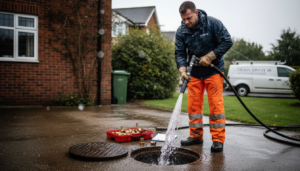
Drain repairs come in various forms depending on what’s gone wrong with your system. The most common type is unblocking, where debris accumulates inside pipes and stops water flowing freely. Manual clearing using plungers or drain rods works well for minor blockages in accessible areas like kitchen sinks or bathroom drains. For tougher blockages deep within your drainage system, high-pressure water jetting becomes necessary. This method uses intense streams of water to blast away fat deposits, mineral buildup, and stubborn obstructions without damaging the pipe itself. In some cases, robotic cutters equipped with cameras navigate through pipes to identify and remove blockages whilst allowing engineers to see exactly what they’re dealing with.
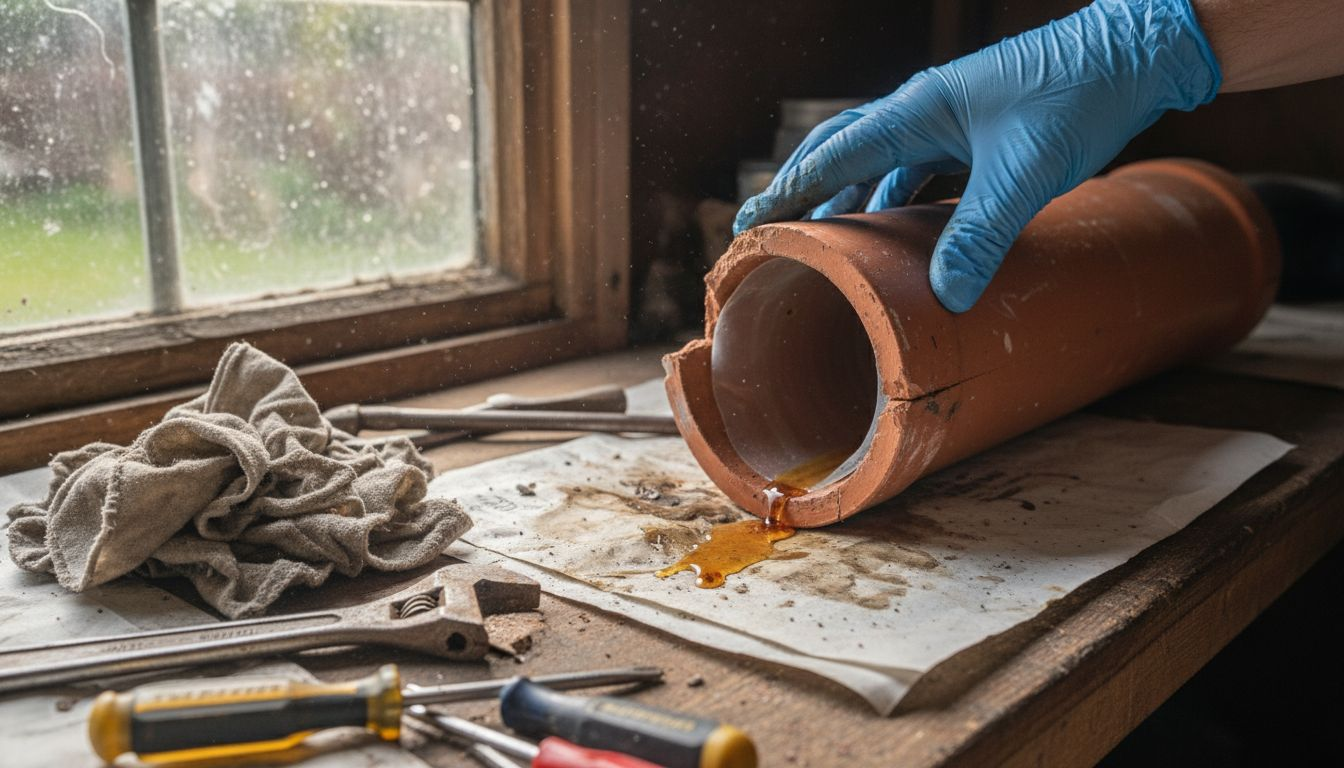
When pipes themselves are damaged, repair methods depend on the severity. Cracked or leaking pipes can sometimes be sealed with epoxy coatings, a process that hardens inside the pipe to create a waterproof barrier. For more serious structural damage like collapsed sections, drain relining involves inserting a new pipe inside the old one, which avoids the need for excavation and reduces disruption to your garden. Traditional pipe replacement may still be necessary for severely deteriorated clay or cast iron pipes common in older Southern England properties. Modern replacements use durable plastic piping that resists root intrusion and lasts decades longer than original materials.
Beyond pipe repairs, surface water management solutions protect your foundation from water damage. French drains redirect surface and subsoil water away from your property using a perforated pipe laid in a gravel-filled trench with filter fabric. This affordable solution prevents damp problems in older buildings and stops water pooling around foundations. Your specific situation determines which method suits you best. A CCTV survey identifies the exact problem, allowing engineers to recommend the most cost-effective solution rather than guessing what’s happening beneath your property.
Here is a comparison of common drain repair methods used in Southern England:
| Repair Method | Typical Use Case | Disruption Level | Longevity of Solution |
|---|---|---|---|
| Manual clearing | Small blockages in sinks | Minimal, quick | Short-term fix |
| High-pressure jetting | Deep or stubborn debris | Low, no excavation | Medium, may recur |
| Pipe relining | Cracked/collapsed pipes | Moderate, trenchless | Long-term durability |
| Pipe replacement | Severely damaged pipes | High, excavation needed | Very long lasting |
Pro tip: Avoid pouring cooking oil down drains and use sink strainers to catch hair and food debris, since these simple habits prevent blockages and reduce your need for expensive repairs significantly.
How CCTV Drain Surveys Transform Repairs
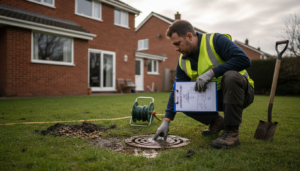
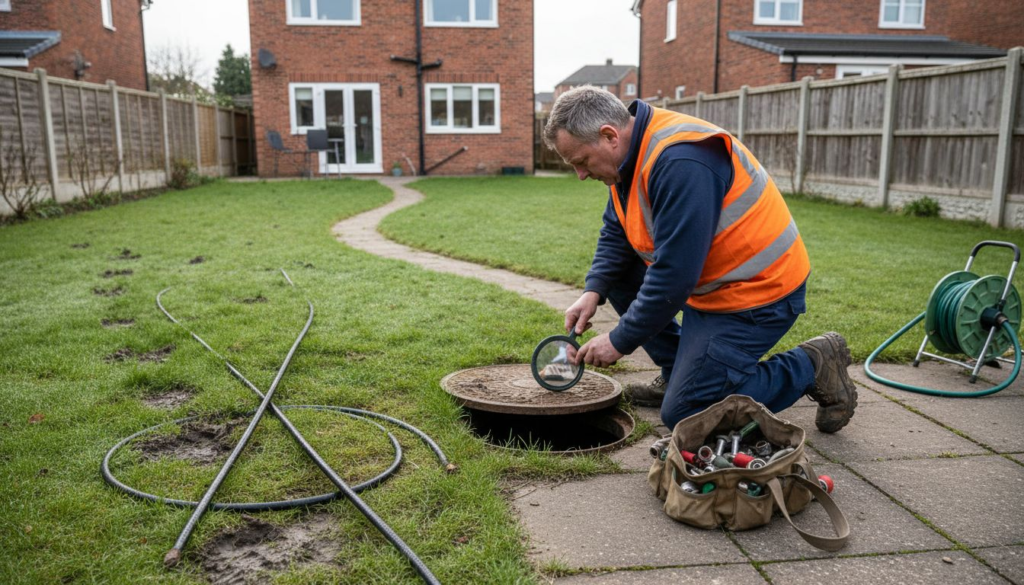
CCTV drain surveys represent a breakthrough in how drainage problems get diagnosed and fixed. Instead of digging up your garden based on guesses, engineers now insert a small camera down your drain to see exactly what’s happening inside the pipes. Closed-circuit television cameras inspect the inside of underground drain pipes, allowing precise identification of blockages, cracks, and structural damage without any excavation needed. This technology eliminates the uncertainty that once plagued drain repairs in Southern England, where homeowners would watch contractors dig massive trenches only to discover the actual problem was metres away.
The transformation happens in two crucial ways. First, accuracy improves dramatically. Before CCTV surveys, engineers relied on symptoms and experience to pinpoint problems. Now they can see the exact location and nature of every issue. A crack three metres down your drain becomes visible on screen. Tree roots penetrating a specific section appear clearly. Blockages show their composition, allowing engineers to select the best removal method. This precision means repairs target the real problem rather than treating symptoms. Second, cost savings are substantial. Traditional excavation methods might require digging a ten-metre trench to access a problem occurring in just one location. CCTV surveys allow targeted repairs, reducing labour costs, machinery hire, and garden restoration expenses. Many Southern England homeowners save thousands by avoiding unnecessary digging.
Beyond identifying problems, CCTV surveys document your drainage system’s condition for future reference. You receive recorded footage showing the pipe condition before and after repairs, creating a valuable record for future sales or insurance claims. This documentation proves particularly useful when dealing with shared drains or lateral connections where disputes arise about maintenance responsibility. Before committing to expensive repair work, the survey gives you confidence that the proposed solution addresses the actual problem. You’re not making decisions based on assumptions but on clear visual evidence of what needs fixing.
Pro tip: Request a CCTV survey before accepting any major repair quote, as the survey results allow you to compare multiple engineers’ recommendations and choose the most cost-effective solution rather than accepting the first quotation.
Emergency Services Versus Planned Maintenance
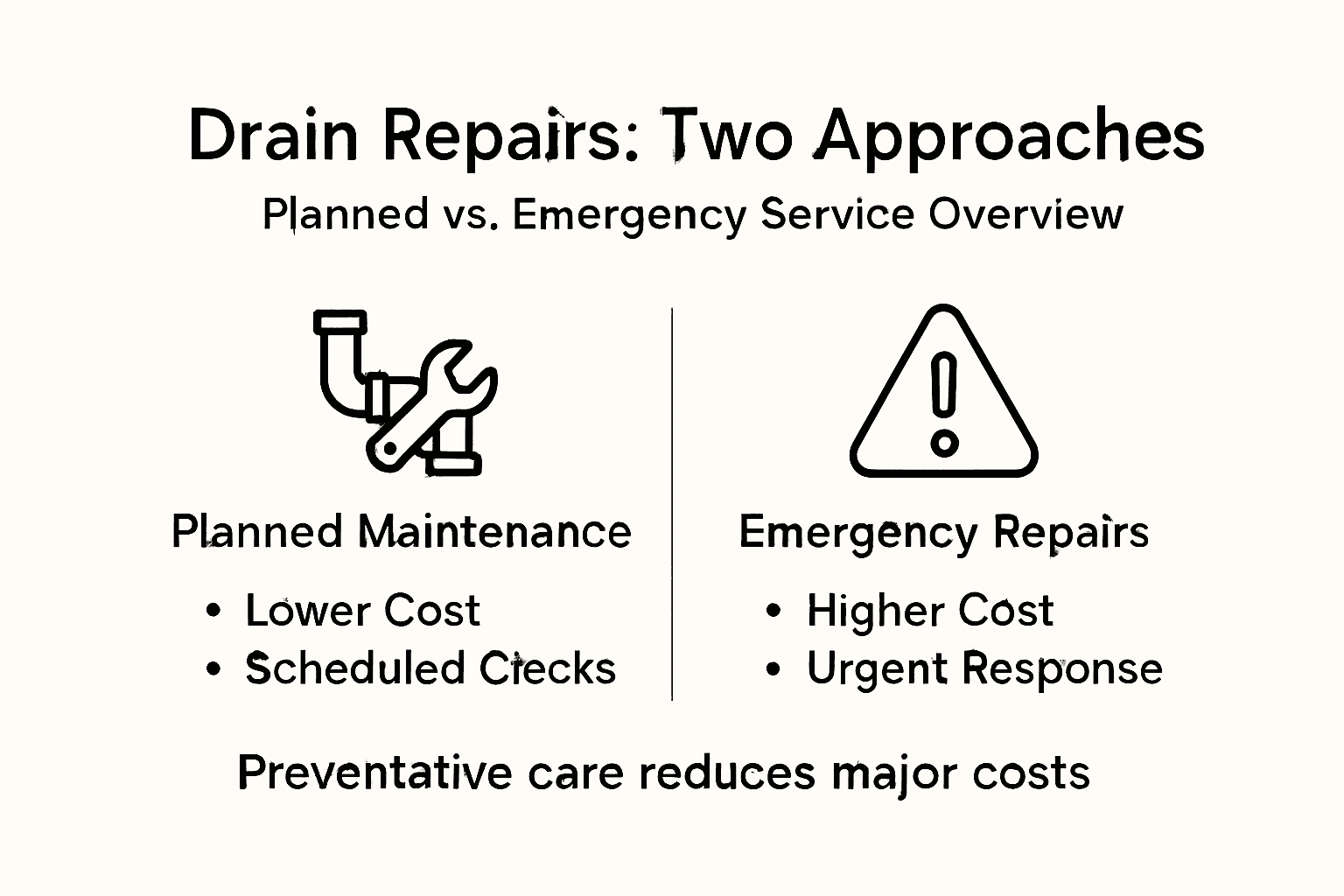
You face a choice every time your drains show signs of trouble. One path leads to panic, late-night phone calls, and premium pricing. The other involves regular inspections and scheduled work that costs less and protects your home proactively. Emergency drain repairs happen when a blockage or break causes immediate flooding or damage requiring urgent response. Your toilet backs up into your bathroom. Water pools in your garden. Raw sewage appears in your kitchen. These situations demand immediate action, and emergency services rightly charge higher fees for rapid response, weekend availability, and faster turnaround times. Planned maintenance, by contrast, involves routine inspection, cleaning, and scheduled repairs to prevent emergencies from happening at all.
The financial difference between these approaches proves significant. Emergency repairs typically cost 40 to 60 percent more than planned maintenance addressing the same issue. An engineer arriving at midnight on a Sunday to clear a blockage costs substantially more than the same engineer clearing accumulated debris during a scheduled Tuesday morning visit. But the cost difference extends beyond labour rates. Emergency reactive repairs often come with higher costs, safety risks, and potential disruption to occupiers, whereas planned maintenance minimises these concerns. When an emergency strikes, you might need temporary accommodation whilst major excavation work disrupts your garden and driveway. Neighbouring properties can suffer damage from rushed work. Your insurance company might dispute claims if you failed to maintain drains properly. Planned maintenance prevents all these problems.
The preventative approach works by catching small problems before they become catastrophic. A CCTV survey identifies minor cracks whilst they remain easy and affordable to seal. A blocked section gets cleared before it accumulates to the point of backing up raw sewage. Regular jetting removes fat deposits and tree roots before they damage pipe walls. Planned maintenance is generally more cost-effective and minimises risk compared to emergency reactive repairs, making it the smarter choice for Southern England homeowners. You control the timing, choose your contractor carefully, and spread costs predictably across the year rather than facing sudden large bills during crises.
Pro tip: Schedule a CCTV survey and drainage inspection every two to three years, booking the work during quieter seasons like autumn or winter when engineers have more availability and pricing tends to be lower.
Costs, Legal Duties and Potential Consequences
Drain repairs carry financial obligations that extend beyond the simple cost of labour and materials. Property owners are generally responsible for the cost of repairing drains within their boundary unless damage is caused by others, meaning the financial burden falls squarely on your shoulders. A straightforward blockage clearance might cost between 150 and 300 pounds, but a collapsed pipe requiring relining could exceed 3000 pounds. Major excavation work replacing sections of severely damaged drainage can reach 5000 to 8000 pounds or more. These aren’t optional expenses you can defer indefinitely. Legal duties require maintaining drains to prevent pollution and health hazards, turning what might seem like a private matter into a matter of public health and environmental protection. Your local council has enforcement powers and can take action against property owners who neglect drainage maintenance.
The legal consequences of avoiding repairs escalate quickly. Failure to carry out repairs can result in enforcement action, legal penalties, and increased costs from escalating damage. An enforcement notice from your local authority requires completion of repairs within a specified timeframe, typically 28 days. Ignoring this notice leads to the council undertaking repairs themselves and billing you for the work, often at premium rates. Criminal prosecution becomes possible if you cause pollution incidents affecting neighbours or public waterways. Additionally, your property becomes harder to sell if surveys reveal unrepaired drainage issues. Mortgage lenders refuse to advance funds on properties with known drain problems, and buyers negotiate significant discounts once issues surface.
The following table summarises the potential consequences of neglecting drain repairs:
| Consequence | Impact on Homeowner | Impact on Property Value | Legal Ramifications |
|---|---|---|---|
| Structural foundation damage | Costly repairs required | Substantially reduced | Enforcement notices issued |
| Sewage backup or flooding | Health hazard and loss | Difficulty selling | Fines and repairs enforced |
| Damp/mould growth | Poor living conditions | Decreased buyer interest | Prosecution for neglect |
For rental properties, the stakes are even higher. Landlords have a legal obligation to maintain rental properties including drainage systems to ensure they are safe and habitable, and tenants can pursue legal claims if you neglect this responsibility. A tenant experiencing backed-up sewage or flooding caused by your failure to maintain drains can claim compensation for damaged belongings, temporary accommodation costs, and health effects. They can withhold rent, request the council take enforcement action, or break their lease without penalty. Local authorities can issue penalty notices to landlords, reaching up to 32000 pounds for serious breaches. Across Southern England, housing standards enforcement has become increasingly strict, making drain maintenance a non-negotiable legal requirement rather than an optional home improvement.
Pro tip: Keep detailed records of all drainage inspections, maintenance work, and repairs completed, as this documentation protects you legally if disputes arise and demonstrates due diligence to council inspectors or property buyers.
Protect Your Southern UK Home with Expert Drain Repairs Today
The challenges posed by blocked, cracked or deteriorating drains can threaten your property’s safety and your peace of mind. Whether it is the risk of costly foundation damage, unpleasant flooding or legal consequences from neglecting maintenance, these urgent drainage issues demand professional, reliable solutions. At Local Services Drainage, we specialise in protecting Southern UK homes with advanced techniques like CCTV surveys, no-dig drain relining and emergency unblocking to address problems quickly and thoroughly. Our services are designed to stop small issues becoming costly emergencies.

Don’t wait until blockages or breakdowns disrupt your daily life or endanger your property. Visit Local Services Drainage now to book a CCTV drain survey or emergency repair. Take control today with trusted experts who guarantee long-term results in Southern England. Protect your home and wallet by acting before minor faults escalate into expensive structural damage or legal headaches.
Frequently Asked Questions
What are drain repairs and why are they necessary?
Drain repairs involve fixing drainage pipes that carry wastewater away from your home. They are necessary to prevent blockages, damage, and potential health risks due to sewage backup and structural issues.
How can I tell if my drains need urgent repairs?
Signs that your drains may need urgent repairs include slow drainage, foul odours, water pooling in your garden, or sewage backing up into your property. Acting quickly can prevent more serious damage and costs.
What methods are commonly used for drain repairs?
Common methods for drain repairs include unblocking with manual tools, high-pressure water jetting for stubborn blockages, pipe relining to repair cracks without excavation, and traditional pipe replacement for severely damaged pipes.
How often should I have a CCTV survey of my drains done?
It’s advisable to schedule a CCTV survey of your drains every 2 to 3 years to catch any potential problems early before they escalate into costly emergencies.