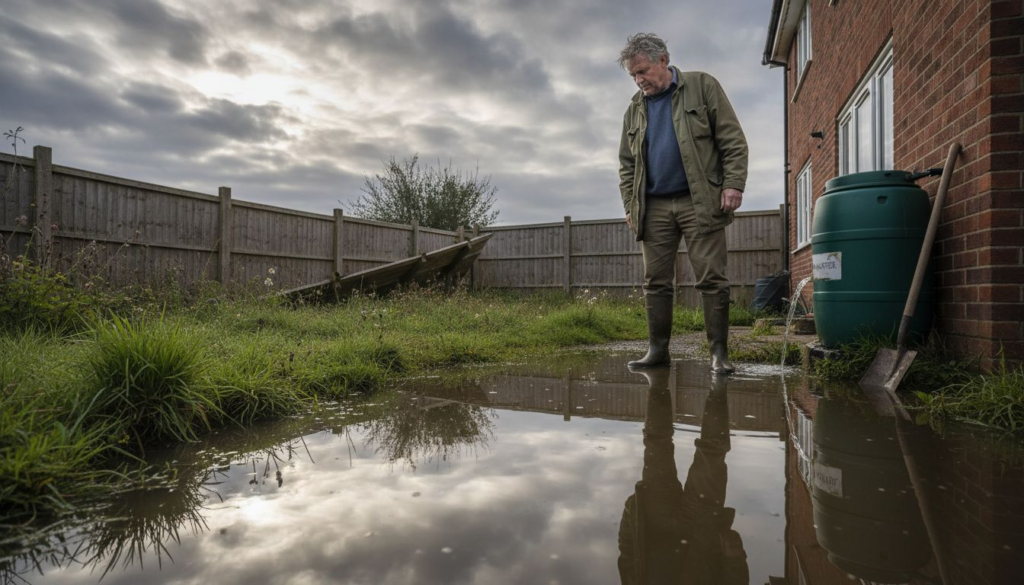
Flooded gardens and persistent damp patches around your home are more than a nuisance for Southern UK property owners. Poor drainage quickly leads to weakened foundations, erosion, and costly repairs if ignored. Whether water pools on concrete driveways or seeps beneath your house, the impact spreads and worsens with every storm. This article explores property drainage issues, their causes, signs, and practical methods to ensure your property stays dry and safe.
Table of Contents
- What Are Property Drainage Issues?
- Common Causes and Types of Drainage Problems
- Recognising Damage and Warning Signs
- UK Legal Responsibilities for Property Owners
- Effective Solutions and Preventive Steps
Key Takeaways
| Point | Details |
|---|---|
| Understanding Drainage Issues | Property drainage problems can cause structural damage and legal liabilities if not addressed promptly. Regular inspection and maintenance are essential. |
| Common Causes | Drainage problems often originate from poor grading, impervious surfaces, and soil composition. Identifying these factors is crucial for effective remediation. |
| Warning Signs | Indicators of drainage issues include persistent puddling, foundation cracks, and musty smells indoors. Early recognition aids in preventing costly repairs. |
| Maintenance Responsibilities | UK property owners must maintain drainage systems and comply with easement obligations to avoid legal disputes and financial penalties. |
What Are Property Drainage Issues?
Property drainage issues occur when water cannot escape from your land effectively, causing it to pool, flood, or saturate the soil around your home. When surface or subsurface water is not effectively removed, problems develop quickly.
These issues aren’t always obvious at first. You might notice damp patches in your garden, water pooling near your foundations, or soggy ground that stays wet weeks after rainfall. Over time, poor drainage damages structures, erodes soil, and creates conditions that threaten your property’s stability.
Common Causes of Drainage Problems
Drainage fails for several interconnected reasons:
- Impervious surfaces like concrete driveways, roofs, and patios prevent water absorption into the ground
- Poor grading means your garden slopes towards your house rather than away from it
- Soil composition affects how quickly water drains; clay soil retains water far longer than sandy soil
- Blocked or damaged pipes prevent water from reaching the main drainage system
- Inadequate drainage infrastructure that can’t handle rainfall volumes in your area
- Vegetation issues where tree roots block pipes or dying plants indicate waterlogging
Poor drainage doesn’t fix itself—it worsens over time and spreads to neighbouring properties downslope, potentially creating legal liability.
Why This Matters to Your Home
Water pooling around your property causes real damage. Standing water weakens foundations, promotes mould growth in basements, and destroys landscaping. When stormwater runoff overwhelms your land’s absorption capacity, flooding and erosion become inevitable.
Your home’s structure bears the cost. Prolonged moisture exposure rots wooden elements, corrodes metal components, and compromises the integrity of walls and foundations. What starts as “a bit of dampness” becomes structural failure within years.
Signs You Have a Drainage Problem
Look for these warning indicators around your property:
- Persistent puddles or waterlogged areas that don’t drain within 24 hours of rain
- Cracks in foundations or walls, especially after heavy rainfall
- Musty smells or visible mould in cellars and basements
- Plant damage or unexplained vegetation death in certain areas
- Water stains on external walls near ground level
- Soft or spongy ground underfoot
If you spot any of these signs, drainage intervention becomes necessary. The longer you wait, the more expensive remedial work becomes.
Pro tip: After heavy rainfall, walk your property and note where water lingers—these are precisely the areas your drainage system is failing to manage.
Common Causes and Types of Drainage Problems
Drainage problems stem from two distinct sources: natural conditions and decisions made on your property. Understanding both helps you identify what’s gone wrong and how to fix it.
Water causes the core issue. When excess water from rainfall saturates soil beyond its capacity to absorb, pooling and waterlogging follow. Your garden’s ability to drain depends on soil type, slope, and how well the underlying drainage system functions.
Natural and Human-Made Causes
Multiple factors conspire to create drainage failure:
Natural factors:
- Soil texture (clay holds water; sand drains quickly)
- Landscape slope and how water naturally flows across your land
- High water tables where groundwater sits close to the surface
- Local rainfall patterns and seasonal variations
Human-made factors:
- Poor grading during construction that slopes toward rather than away from structures
- Compacted soil that resists water penetration
- Blocked gutters and downspouts directing water incorrectly
- Tree roots infiltrating and damaging underground pipes
- Inadequate or deteriorated drainage infrastructure
- Changes in how you use your property (new buildings, paving, landscaping)
Often, it’s a combination. Poor grading combined with clay soil and heavy rainfall creates the perfect storm for drainage failure.
Surface versus Subsurface Drainage Problems
Drainage failures occur at different levels, requiring different solutions:
Surface drainage issues happen above ground where you see standing water, pooling in your garden, or water running toward your foundations rather than away. These are immediately visible after rainfall and affect landscaping and structural areas.
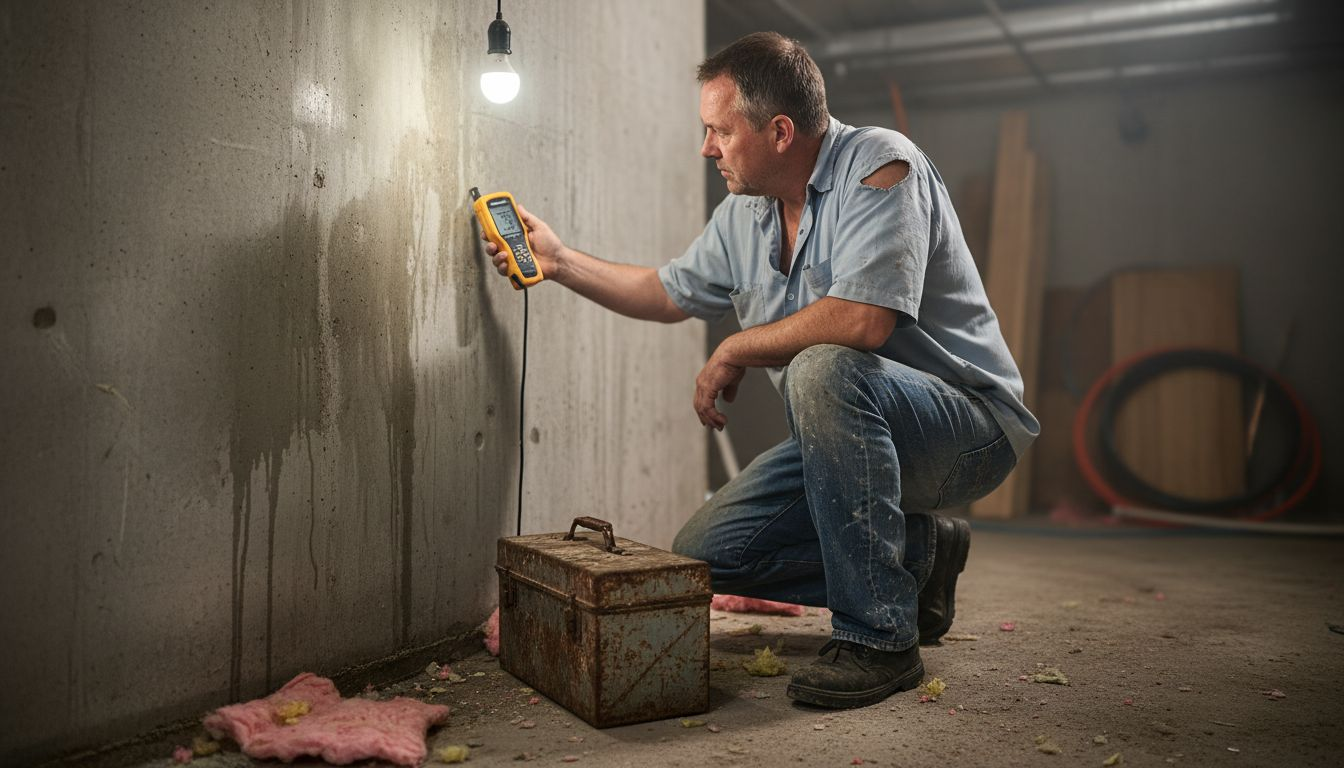
Subsurface drainage problems occur underground where excess water saturates soil around roots and foundations. You won’t see it pooling on the surface, but the damage accumulates—weakened foundations, dying vegetation, and basement dampness reveal the problem.
To help distinguish between common types of drainage problems, see this comparison:
| Type of Drainage Issue | Main Symptoms | Risk if Ignored |
|---|---|---|
| Surface drainage failure | Pools of water, visible run-off | Foundation erosion, landscaping damage |
| Subsurface drainage failure | Persistent damp, musty odours indoors | Structural instability, mould buildup |
Both types demand attention. Surface issues cause immediate visible damage; subsurface problems cause hidden structural deterioration that becomes catastrophically expensive.
Types of Drainage Failures
Your property might experience one or multiple drainage problems simultaneously:
- Standing water and ponding where puddles persist for days after rain
- Soil saturation indicating groundwater or excess moisture in the root zone
- Runoff and erosion where water flows rapidly, washing away topsoil and landscaping
- Nutrient leaching degrading soil quality over time
- Foundation and structural issues from prolonged moisture exposure
The severity varies. Minor surface ponding in a corner is manageable. Subsurface saturation threatening your foundation requires professional intervention through common drainage repairs or system upgrades.
Pro tip: Observe your garden during and immediately after rain—where water lingers reveals whether you need surface solutions like grading adjustments or deeper subsurface drainage system work.
Recognising Damage and Warning Signs
Damage from poor drainage often develops quietly. By the time you notice something wrong, the problem has usually progressed significantly. Catching warning signs early makes repairs cheaper and prevents structural disaster.
Your home tells you when drainage fails. Look for both obvious and subtle indicators that water management has broken down around your property.
Visible Water Problems
These signs appear immediately after rainfall or during wet seasons:
- Pooling water that sits in your garden for more than 24 hours
- Soggy or waterlogged soil that stays saturated weeks after rain
- Flooded basement or crawlspace where water enters lower levels
- Water stains on external walls near ground level
- Muddy areas that never seem to dry out properly
- Gutters and downspouts overflowing or directing water toward foundations
These are drainage screaming for attention. Standing water breeds mosquitoes, damages landscaping, and weakens anything it contacts.
Structural Damage Indicators
Damage and weakening of building foundations represents the most serious consequence of poor drainage. Watch for these warning signs:
- Foundation cracks appearing or widening, especially after heavy rain
- Bowing or leaning walls indicating pressure from saturated soil
- Doors and windows sticking or refusing to close properly
- Basement dampness or mould that keeps returning despite cleaning
- Concrete settling unevenly creating visible gaps or slopes in floors
These signals mean soil saturation is actively damaging your home’s structural integrity. Delay makes repairs exponentially more expensive.
Landscape and Vegetation Damage
Your garden reveals drainage problems through plant stress and soil degradation:
- Yellowing or dying vegetation in specific areas despite regular watering
- Poor plant growth that doesn’t respond to feeding or care
- Soil erosion where water flows create visible channels or gullies
- Algae or moss growth indicating constant moisture and poor drainage
- Tree roots exposed where soil has eroded away
Plants cannot survive in waterlogged conditions. Dead patches in your lawn or failing shrubs point to waterlogged soils reducing oxygen availability to root systems.
Spot these signs and act within weeks, not months. Drainage damage accelerates exponentially once structural elements become saturated.
Indoor and Pest Problems
Drainage failures extend beyond visible water damage:
- Musty odours indicating mould growth in walls or beneath floors
- Increased pest activity as standing water creates breeding grounds
- Damp smells that persist despite ventilation efforts
- Visible mould or mildew on walls or ceilings
Pro tip: Schedule a professional inspection after noticing any single warning sign—catching drainage problems at early stages costs a fraction of waiting until structural damage requires full foundation remediation.
UK Legal Responsibilities for Property Owners
Drainage isn’t just a maintenance issue—it’s a legal obligation. UK property owners face specific responsibilities that, if ignored, can result in fines, lawsuits, and forced remediation at significant cost.
Understanding your legal duties protects both your property and your wallet. Neighbours can pursue legal action if your drainage problems flood their land or damage their structures.
Drainage Easements and Access Rights
Many properties have drainage easements running across them. These legal agreements grant others (usually local authorities or utility companies) the right to install, maintain, and repair drainage systems on your land.
Your obligations include:
- Keeping easement areas clear of permanent structures, sheds, or obstacles
- Removing debris, vegetation, and blockages that obstruct water flow
- Allowing access to drainage systems for inspection and maintenance
- Not damaging or interfering with underground pipes and channels
- Notifying the easement holder of any problems you discover
You cannot build a garage, patio, or garden wall across a drainage easement without written permission. Violations can result in forced removal of structures at your expense.
Public Versus Private Easements
Public and private drainage easements operate under different rules but carry equal legal weight. Public easements typically serve municipal drainage systems where local authorities maintain roads and communal water management.
Private easements involve agreements between neighbouring landowners, allowing water to cross property boundaries. Both require compliance with their specific terms or you face penalties.
Breaking easement terms creates liability for flooding, obstruction claims, and expensive legal disputes with authorities or neighbours.
Your Maintenance Obligations
You must maintain drainage systems on your property. This means:
- Clearing gutters and downspouts regularly
- Inspecting underground drains for blockages or damage
- Repairing or replacing damaged pipes promptly
- Ensuring water diverts away from neighbouring properties
- Keeping grading and slopes properly angled for water run-off
Neglecting maintenance and allowing water to damage a neighbour’s property gives them grounds for legal action. You become liable for their repair costs.
Neighbour Disputes and Liability
If your poor drainage causes flooding or damage to a neighbouring property, you may face a civil claim. Property owners must understand drainage easement restrictions that prevent obstructing water flow and creating hazards.
Landlords face additional responsibilities. If you rent out property, you’re legally obligated to maintain drainage systems. Tenants cannot be held responsible for structural drainage failures.
The financial stakes are significant. A single flooding incident can cost neighbours thousands in damage claims, and you could be held liable.
Pro tip: Request a drainage survey when buying property and obtain copies of any easement documents—knowing your legal obligations from day one prevents costly disputes and unexpected liabilities later.
Effective Solutions and Preventive Steps
Drainage problems have solutions. Whether your property suffers from active flooding or you’re preventing future issues, proven strategies exist to manage water effectively and protect your home.
The key is acting before minor problems become structural disasters. Combining immediate repairs with long-term preventive measures gives you lasting protection.
Grading and Surface Water Management
Proper grading redirects water away from your property. This single step prevents pooling and foundation saturation.
Effective grading requires:
- Sloping ground away from buildings at a minimum gradient of 1:40 (one unit drop per 40 units forward)
- Creating swales or shallow channels that guide water toward drainage areas
- Ensuring downspouts extend at least 1.5 metres away from foundation walls
- Avoiding low spots near your home where water naturally collects
- Removing soil that’s settled against walls, exposing foundations to standing water
Proper grading of land directs water flow away from structures and prevents the majority of surface drainage problems. This costs far less than repairing water damage.
Installing Underground Drainage Systems
For subsurface saturation, underground solutions become necessary. These systems capture and divert excess groundwater before it damages foundations.
Common systems include:
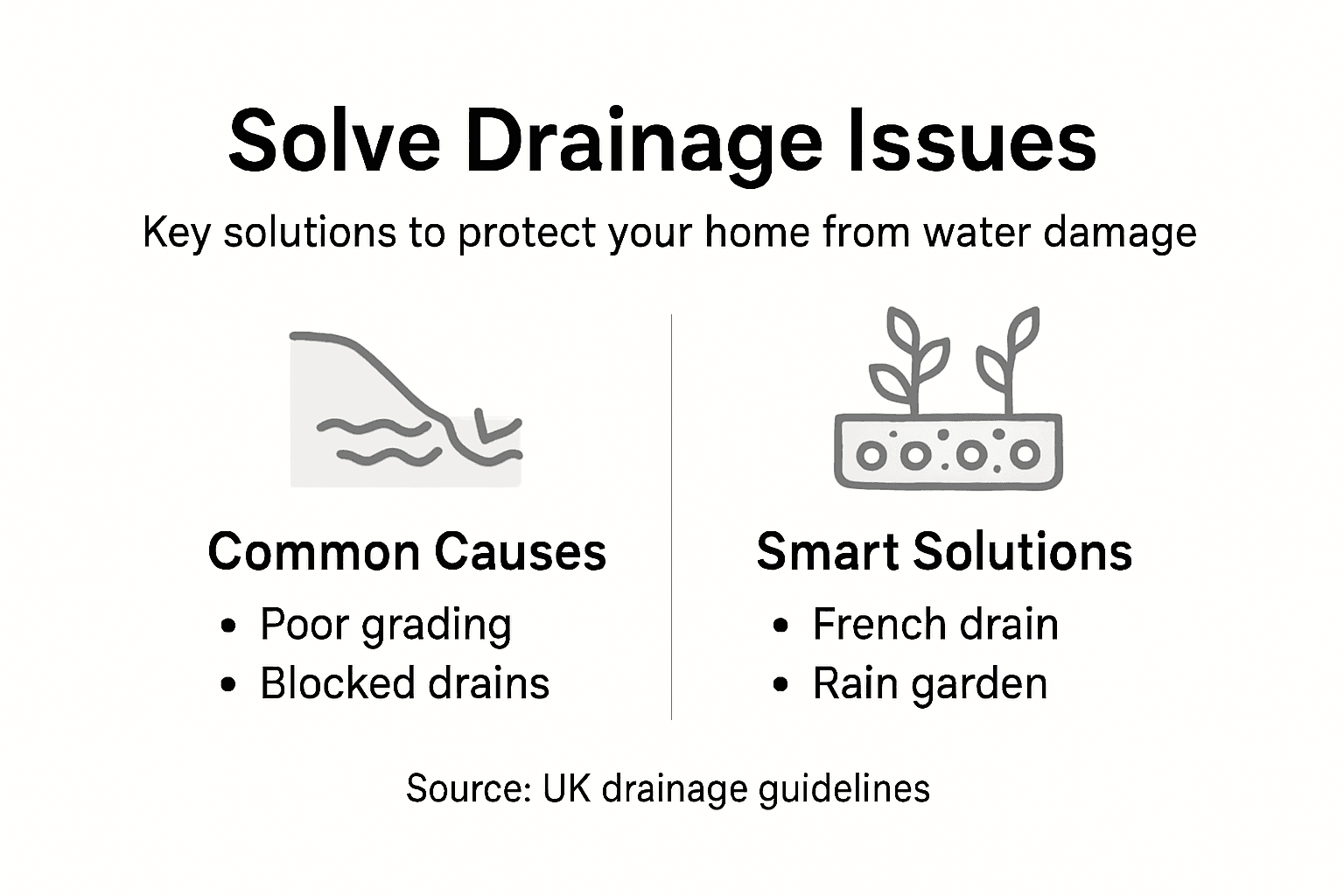
- French drains that collect water through perforated pipes buried in gravel-filled trenches
- Dry wells or soakaway pits that allow water to infiltrate into deeper soil layers
- Sump pumps that actively remove accumulated water from basements and crawlspaces
- Perimeter drainage around foundations that intercepts groundwater before it reaches walls
French drains, dry wells, rain gardens, and bioinfiltration swales manage water through detention, dispersion, and infiltration. Each suits different site conditions.
Below is a summary of popular drainage solutions and their ideal situations:
| Solution Type | Best Used For | Key Benefit |
|---|---|---|
| French drain | Subsurface water near foundations | Prevents long-term foundation damage |
| Swale/channel | Redirecting surface run-off | Reduces garden flooding incidents |
| Permeable paving | Hardscaping areas prone to pooling | Decreases surface water accumulation |
| Sump pump | Basements/cellars with water ingress | Enables active water removal |
Maintenance and Routine Care
Prevention depends on consistent upkeep. Systems fail when neglected.
Monthly and seasonal tasks:
- Clear gutters and downspouts of leaves, debris, and sediment
- Inspect visible drains for blockages or damage
- Check grading after heavy rainfall to ensure water flows correctly
- Remove vegetation and roots that might infiltrate pipes
- Test sump pumps annually to confirm they activate properly
Spending one hour monthly on drainage maintenance costs nothing compared to thousands spent repairing foundation damage or replacing failed systems.
Permeable Surfaces and Modern Solutions
Replacing impervious surfaces with permeable alternatives reduces runoff significantly. These materials allow water to infiltrate naturally.
Consider:
- Permeable block paving for driveways and patios
- Gravel or porous asphalt instead of solid concrete
- Rain gardens that collect roof runoff and filter it through soil
- Green roofs that absorb rainfall before it reaches ground level
These solutions work alongside traditional drainage systems, reducing water volumes your drains must handle.
Pro tip: After installing any drainage solution, monitor it during the next heavy rainfall to confirm water flows as designed—early adjustments prevent years of ineffective drainage later.
Protect Your Home from Drainage Damage with Expert Solutions
Property drainage issues such as poor grading, blocked drains, and soil saturation can cause irreversible damage to your home’s foundations and landscaping. If you notice persistent puddles, damp basements, or cracks appearing after rain, it is critical to act immediately. At Local Services Drainage, we understand the stress and urgency these signs bring. Our professional team offers comprehensive drainage repairs, CCTV surveys, and no-dig relining technology designed to diagnose and resolve both surface and subsurface drainage problems cost-effectively.

Don’t wait for damage to escalate into costly structural failure or legal disputes with neighbours. Choose a trusted UK drainage specialist committed to reliable emergency responses and long-term guarantees. Visit Local Services Drainage now for your free quote and take the first step to safeguard your property’s future.
Frequently Asked Questions
What are the common signs of property drainage issues?
Common signs include persistent puddles or waterlogged areas, cracks in foundations or walls, musty smells in basements, and visible mould. If you notice yellowing plants or soggy ground that doesn’t dry out quickly, these are indicators of poor drainage.
How can I identify if I have surface or subsurface drainage problems?
Surface drainage issues are visible as pools of water on your property after rain. Subsurface problems are indicated by persistent dampness or musty odours indoors, as well as structural issues like bowing walls or foundation cracks without visible surface pooling.
What are effective solutions for managing drainage issues on my property?
Effective solutions include grading the land to direct water away from your home, installing underground drainage systems like French drains or sump pumps, and using permeable paving for hardscaped areas to reduce runoff. Regular maintenance of gutters and drainage systems is also crucial.
What are my legal responsibilities as a property owner regarding drainage?
As a property owner, you must maintain drainage systems, clear easement areas of obstructions, and ensure proper water flow to prevent flooding of neighbouring properties. Ignoring these responsibilities can lead to legal disputes or liability for damages caused by poor drainage.