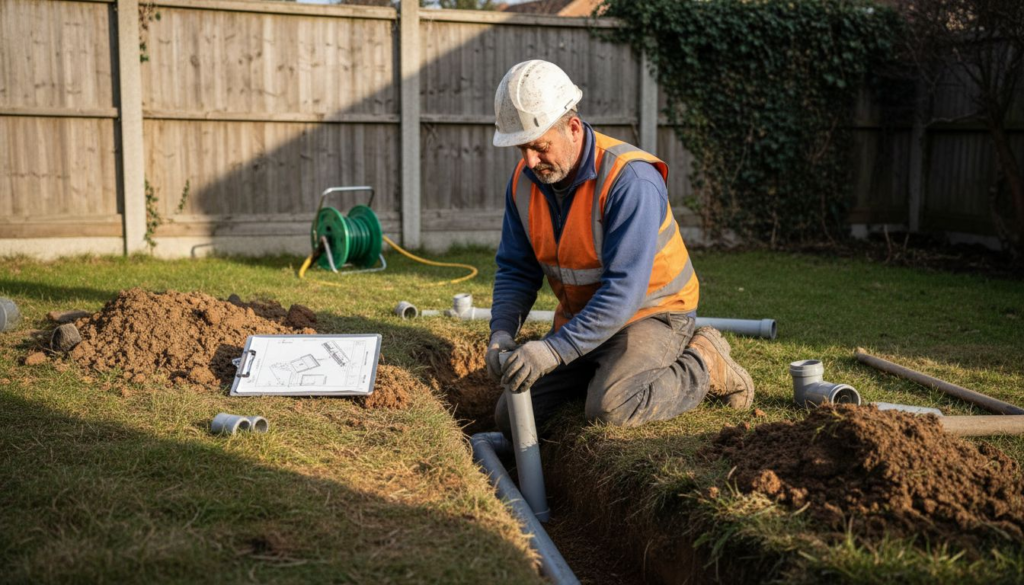
Heavy rain can turn your garden into a temporary pond, leaving property owners across Southern UK scrambling for fast solutions. When water accumulates and threatens foundations or interiors, the right drainage installation becomes far more than a simple upgrade. A well-planned system can offer long-term protection against damp, flooding, and costly structural damage, all while meeting stringent British standards for sustainable water management. Discover how expert drainage design safeguards your property and delivers lasting peace of mind.
Table of Contents
- What Is Drainage Installation And Why It Matters
- Types Of Drainage Systems For UK Properties
- Step-By-Step Drainage Installation Process
- UK Legal Requirements And Standards Explained
- Costs, Risks And Common Installation Mistakes
Key Takeaways
| Point | Details |
|---|---|
| Importance of Drainage | Proper drainage installation is vital to protect properties from water-related damage and maintain structural integrity. |
| Types of Drainage Systems | Choose an appropriate drainage system based on property characteristics, such as Surface Water, Subsurface, or Sustainable Drainage Solutions. |
| Installation Process | The drainage installation involves careful planning, including site investigation, excavation, and compliance with legal standards. |
| Cost and Risks | Be aware of installation costs and potential risks, such as structural damage, and avoid common mistakes that can lead to high long-term expenses. |
What Is Drainage Installation and Why It Matters
Drainage installation represents a critical infrastructure process designed to manage water flow and protect properties from potential water-related damage. At its core, drainage installation involves strategically designing and implementing systems that effectively redirect excess water away from buildings, landscapes, and critical structural foundations.
The importance of proper drainage cannot be overstated. Effective water management systems prevent numerous potential problems such as soil erosion, structural damage, and moisture-related deterioration. Without robust drainage solutions, properties face significant risks including:
- Foundation weakening and potential structural compromise
- Landscape degradation and soil instability
- Water accumulation leading to dampness and mould growth
- Increased risk of flooding during heavy rainfall
- Reduced property value and long-term maintenance challenges
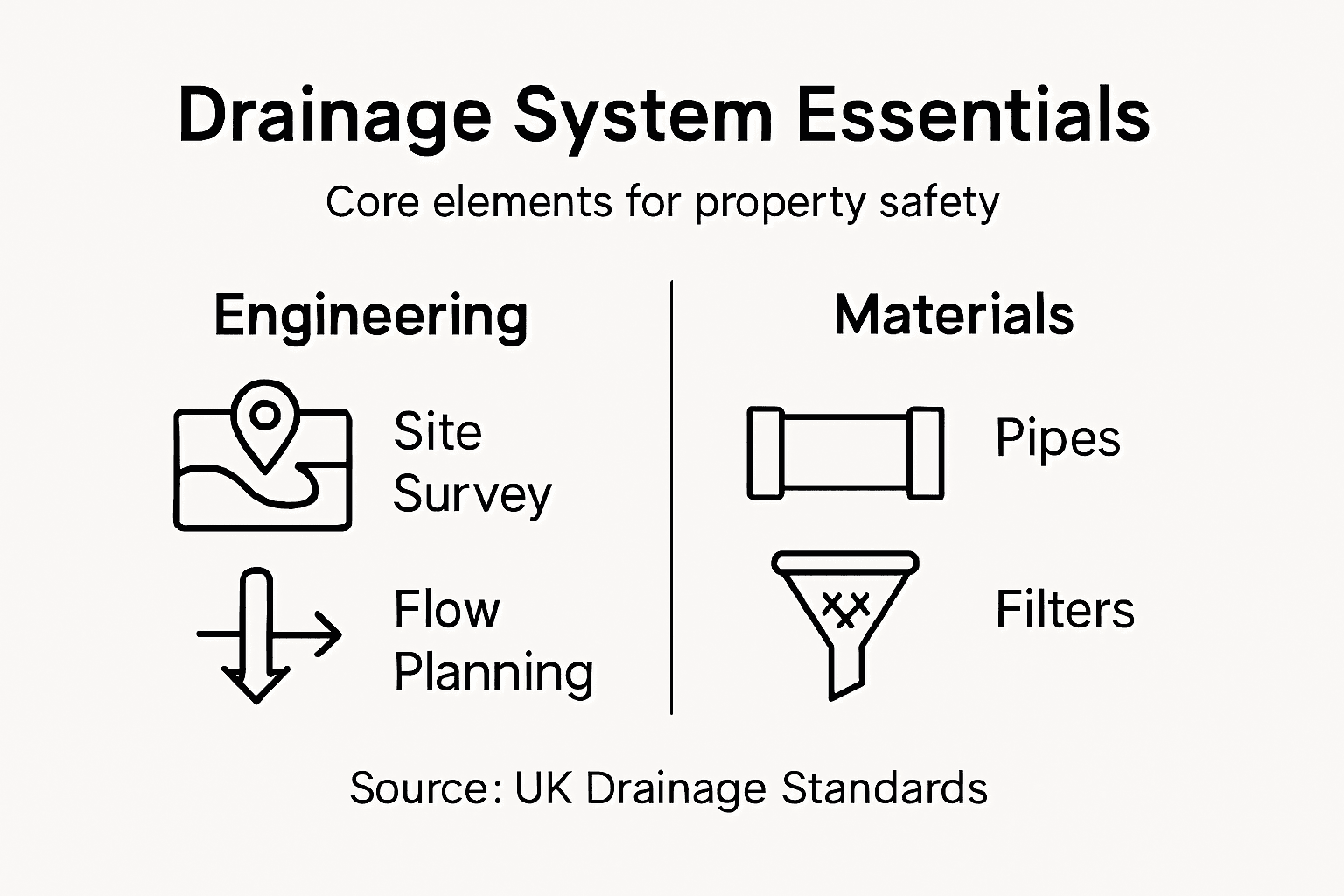
Professional drainage installation goes beyond simple water redirection. Comprehensive drainage systems integrate multiple components working in concert to manage surface and subsurface water effectively. These systems consider critical factors like soil composition, terrain gradient, water table levels, and local precipitation patterns.
Key aspects of professional drainage installation include precise engineering, strategic water flow planning, and utilising advanced materials and techniques. Modern drainage solutions incorporate sophisticated technologies that ensure optimal water management while minimising environmental impact.
Pro tip: Always consult drainage professionals who can conduct comprehensive site assessments before implementing any drainage installation project.
Types of Drainage Systems for UK Properties
Drainage systems in the United Kingdom have evolved significantly, with modern approaches focusing on sustainable and environmentally friendly solutions. Sustainable Drainage Systems (SuDS) represent a comprehensive approach to managing surface water across residential and commercial properties.
The primary types of drainage systems for UK properties include:
-
Surface Water Drainage Systems
- Designed to redirect rainfall and surface runoff
- Prevent water accumulation around building foundations
- Utilise gutters, downspouts, and ground-level channels
-
Subsurface Drainage Systems
- Underground networks that manage groundwater levels
- Prevent soil saturation and potential structural damage
- Typically involve perforated pipes and gravel trenches
-
Sustainable Drainage Solutions (SuDS)
- Mimic natural water management processes
- Include permeable pavements, infiltration trenches, and retention ponds
- Reduce flood risk and improve water quality
These systems are guided by stringent national drainage standards that prioritise environmental sustainability and effective water management. Modern drainage solutions integrate multiple techniques to address unique property requirements, considering factors like soil composition, terrain gradient, and local precipitation patterns.
Each drainage system type offers distinct advantages, with selection depending on specific property characteristics, local environmental conditions, and regulatory requirements. Professional drainage experts can assess individual property needs and recommend the most appropriate solution.
The following table summarises the main drainage system types for UK properties and outlines when each is most appropriate:
| System Type | Key Benefit | Best Suited For | Example Features |
|---|---|---|---|
| Surface Water | Prevents foundation dampness | Properties with heavy rainfall | Gutters, run-off channels |
| Subsurface | Protects against soil saturation | Areas with high groundwater | Perforated pipes, gravel beds |
| SuDS | Enhances sustainability | Urban developments or eco-projects | Permeable pavements, retention ponds |
Pro tip: Consult a professional drainage specialist to conduct a comprehensive site assessment and determine the most suitable drainage system for your specific property.
Step-By-Step Drainage Installation Process
Drainage installation is a precision process that requires careful planning and expert execution. Drainage preparation begins with comprehensive site assessment, which involves identifying problem areas, understanding soil conditions, and determining optimal water redirection strategies.
The drainage installation process typically involves several critical stages:
-
Site Investigation and Planning
- Conduct thorough ground survey
- Identify water flow patterns
- Map existing underground utilities
- Determine drainage system requirements
-
Excavation and Preparation
- Mark designated drainage routes
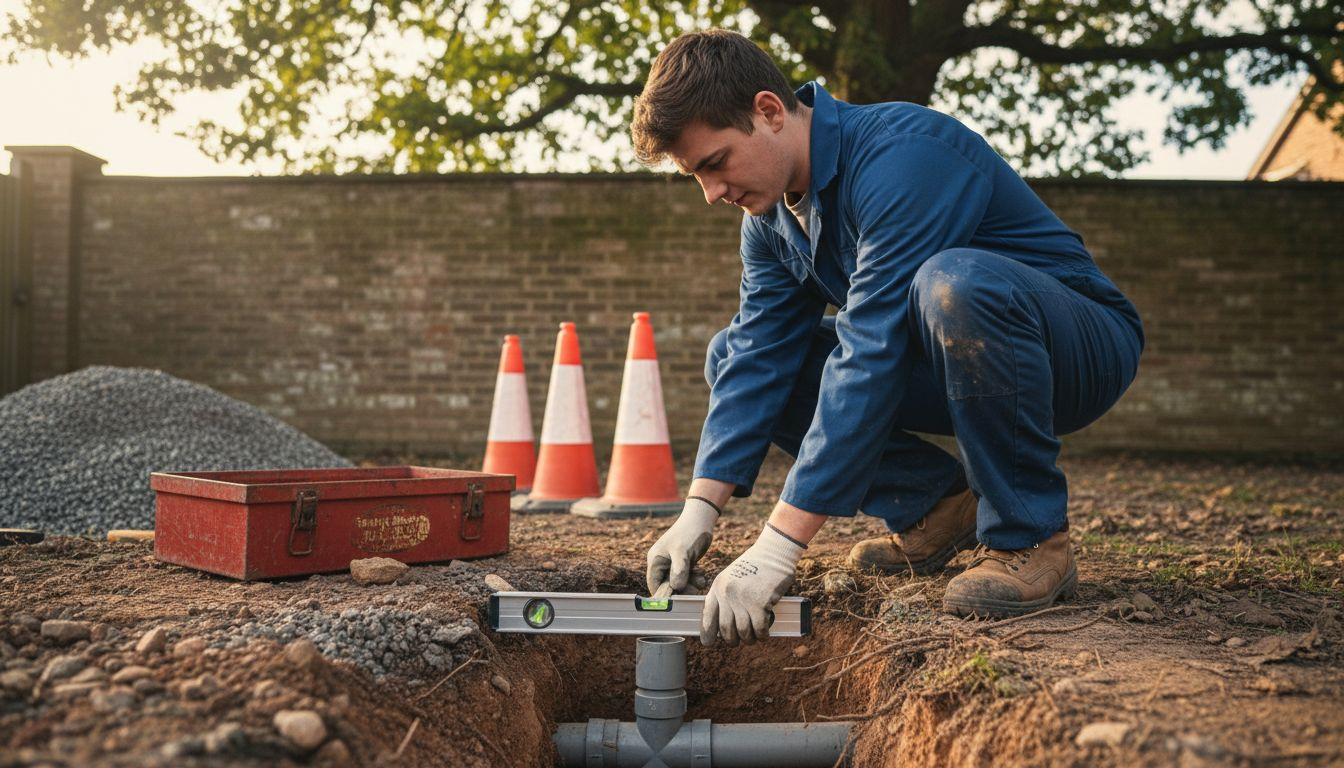
- Dig trenches approximately 45cm deep
- Ensure proper slope for water flow
- Remove any obstructions or unsuitable soil
-
Pipe and Materials Selection
- Choose appropriate drainage pipes (uPVC or vitrified clay)
- Select gravel and membrane materials
- Prepare pipe bedding and support structures
-
Installation and Alignment
- Lay perforated drainage pipes
- Ensure precise pipe grading
- Install supporting gravel layers
- Add permeable membranes
-
Testing and Verification
- Conduct flow tests
- Check pipe alignment
- Verify drainage system performance
- Obtain necessary building control inspections
Underground drainage techniques demand meticulous attention to detail, with each step critical to preventing future water management issues. Professional drainage installers understand that successful implementation goes beyond simple pipe placement.
Modern drainage solutions integrate advanced technologies and sustainable practices, ensuring properties remain protected from water-related damage while minimising environmental impact.
Pro tip: Always schedule drainage installations during dry periods to minimise site disruption and ensure optimal working conditions.
UK Legal Requirements and Standards Explained
Drainage systems in the United Kingdom are governed by comprehensive national standards and building regulations that ensure safe, sustainable, and environmentally responsible water management across residential and commercial properties.
The key legal requirements for drainage installations encompass several critical areas:
-
Design and Planning Standards
- Compliance with Sustainable Drainage Systems (SuDS) regulations
- Mandatory runoff hierarchy implementation
- Environmental impact considerations
- Flood risk mitigation strategies
-
Technical Compliance Requirements
- Specific pipe sizing regulations
- Mandatory testing and inspection protocols
- Protection standards for drainage infrastructure
- Connection guidelines for public sewage systems
-
Environmental and Safety Regulations
- Water quality preservation mandates
- Sustainable water management practices
- Pollution prevention requirements
- Ecosystem protection provisions
Approved Document H provides detailed guidance on building regulations specifically related to drainage systems. These regulations are not merely suggestions but legal requirements that must be meticulously followed during any drainage installation or renovation project.
Professional drainage installers must navigate a complex landscape of legal requirements, ensuring every aspect of the drainage system meets stringent national standards. This involves understanding intricate details of building codes, environmental regulations, and local authority specifications.
Pro tip: Always engage a certified drainage professional who understands current UK legal requirements to ensure full compliance and avoid potential legal complications.
Costs, Risks and Common Installation Mistakes
Drainage installation is a significant investment that requires careful financial planning and risk management. Drainage system installation costs vary considerably, typically ranging between £1,500 and £3,500 per hectare, depending on complexity and specific property requirements.
Key financial and technical risks to consider include:
-
Direct Cost Factors
- Material quality and quantity
- Labour and specialist equipment
- Site complexity and terrain
- Length and depth of drainage network
-
Installation Risks
- Potential structural damage
- Water management system failures
- Unexpected ground conditions
- Compliance and regulatory challenges
-
Common Installation Mistakes
- Incorrect drain depth
- Inadequate gradient design
- Poor pipe alignment
- Substandard material selection
- Insufficient outlet provisions
Professional drainage installers understand that cutting corners during installation can lead to exponentially higher repair and maintenance costs in the future. Each stage of drainage system implementation requires meticulous attention to detail, precise engineering, and adherence to industry best practices.
Understanding potential pitfalls and investing in high-quality installation can prevent costly long-term issues, protecting property infrastructure and ensuring efficient water management.
Here is a comparison of common installation mistakes and their long-term impact on property and cost:
| Mistake | Consequence | Long-Term Cost Impact |
|---|---|---|
| Incorrect drain depth | Frequent blockages | High, due to repeated repairs |
| Inadequate gradient | Poor water flow | Structural repairs required |
| Substandard materials | System failure risk | Full replacement may be needed |
| Insufficient outlets | Localised flooding | Possible landscape restoration |
Pro tip: Request detailed written quotes from multiple drainage specialists and carefully compare their proposed approaches and material specifications before making a final decision.
Secure Your Property with Expert Drainage Installation
Proper drainage installation is essential to prevent costly structural damage, dampness, and flooding risks as highlighted in this article. If you are facing challenges such as poor water flow, soil saturation, or concerns about meeting UK legal drainage standards, it is vital to trust professionals who understand these complexities. At Local Services Drainage, we specialise in comprehensive drainage solutions including new installations, repairs, and advanced diagnostics like CCTV surveys that ensure effective water management tailored to your property.
Don’t wait until drainage issues compromise your property’s safety and value. Act now to benefit from our quick response times, long-term repair guarantees, and innovative technologies designed for reliability and sustainability. Whether you need urgent drain unblocking or a detailed site assessment for new drainage installations, visit Local Services Drainage and explore how our expert team can protect your home or business today. Learn more about our professional approach at Local Services Drainage and take the first step towards hassle-free water management.
Frequently Asked Questions
What is drainage installation?
Drainage installation is the process of designing and implementing systems that manage water flow to protect properties from water-related damage, such as flooding, soil erosion, and structural deterioration.
What are the main types of drainage systems?
The primary types of drainage systems include surface water drainage systems, subsurface drainage systems, and sustainable drainage solutions (SuDS). Each type is tailored for specific property requirements and environmental conditions.
What should I consider when planning a drainage installation?
When planning drainage installation, consider factors such as site assessment, soil composition, terrain gradient, existing water flow patterns, and local precipitation levels to ensure effective water management.
What are common mistakes made during drainage installation?
Common mistakes include incorrect drain depth, inadequate gradient design, poor pipe alignment, and using substandard materials. These can lead to costly long-term issues and system failures.