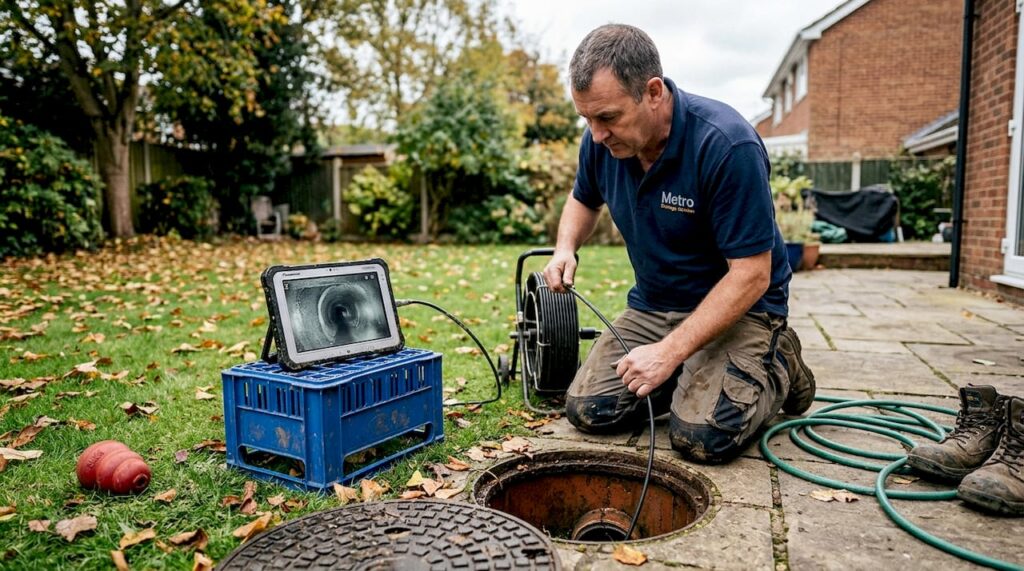
Hidden drainage faults cost UK homeowners thousands annually in emergency repairs, yet most properties never receive a proper survey until disaster strikes. A drainage survey uses advanced technology to inspect underground pipes, revealing blockages, cracks, and structural defects before they escalate into flooding or sewage backup. This guide explains what drainage surveys involve, how CCTV inspections work, and why regular assessments protect your property investment. You’ll learn to interpret survey findings, schedule maintenance intervals, and recognise warning signs that demand immediate attention.
Table of Contents
- Key takeaways
- What is a drainage survey and why is it essential?
- Methods and technology used in drainage surveys
- Interpreting drainage survey results: what homeowners need to know
- How often should you schedule drainage surveys and maintenance?
- Discover expert drainage survey and repair services
- Frequently asked questions
Key Takeaways
| Point | Details |
|---|---|
| Early fault detection | Drainage surveys identify hidden defects before they cause costly damage, reducing emergency repairs. |
| CCTV gold standard | CCTV drain surveys provide real time footage that reveals cracks, misalignment, and root intrusion with high clarity. |
| Proactive maintenance | Regular surveys help plan timely interventions before problems escalate. |
| Documentation for transactions | Surveys provide documented evidence of drainage condition for property transactions and to meet building regulation requirements. |
What is a drainage survey and why is it essential?
A drainage survey systematically inspects your underground drainage system to identify defects, blockages, and structural weaknesses that remain invisible during routine property checks. Professional surveyors insert specialist cameras into access points, recording footage that reveals the internal condition of pipes, joints, and connections throughout your drainage network. Drainage surveys find 80% of hidden defects early, preventing costly damage that develops when problems go unnoticed.
Homeowners typically discover drainage issues only when symptoms become severe, such as persistent flooding, foul odours permeating living spaces, or sewage backing up into toilets and sinks. By this stage, damage often extends beyond the drainage system itself, affecting foundations, landscaping, and interior finishes. Surveys catch problems at early stages when simple interventions suffice, avoiding the expense and disruption of emergency repairs.
The benefits extend beyond immediate problem detection. Surveys provide documented evidence of drainage condition for property transactions, satisfy building regulation requirements for extensions or conversions, and establish baseline records that track system deterioration over time. Understanding why drainage inspections vital helps homeowners recognise their role in comprehensive property maintenance.
Several warning signs indicate your property needs a drainage survey:
- Water draining slowly from sinks, baths, or toilets despite attempts to clear blockages
- Unpleasant smells emanating from drains, particularly during warm weather
- Damp patches appearing on walls or floors without obvious water source
- Unusual sounds such as gurgling from pipes when water drains elsewhere
- Localised subsidence or ground movement near drainage runs
- Vegetation growing more vigorously along suspected pipe routes
Pro Tip: Schedule a survey before purchasing any property, especially older homes built before 1970. Original clay pipes often deteriorate significantly, and survey findings provide negotiating leverage or inform renovation budgets.
Regular surveys also support insurance claims by documenting pre-existing conditions and demonstrating responsible property stewardship. When drainage failures occur, insurers examine maintenance records, and survey reports prove you took reasonable precautions to prevent damage.
Methods and technology used in drainage surveys
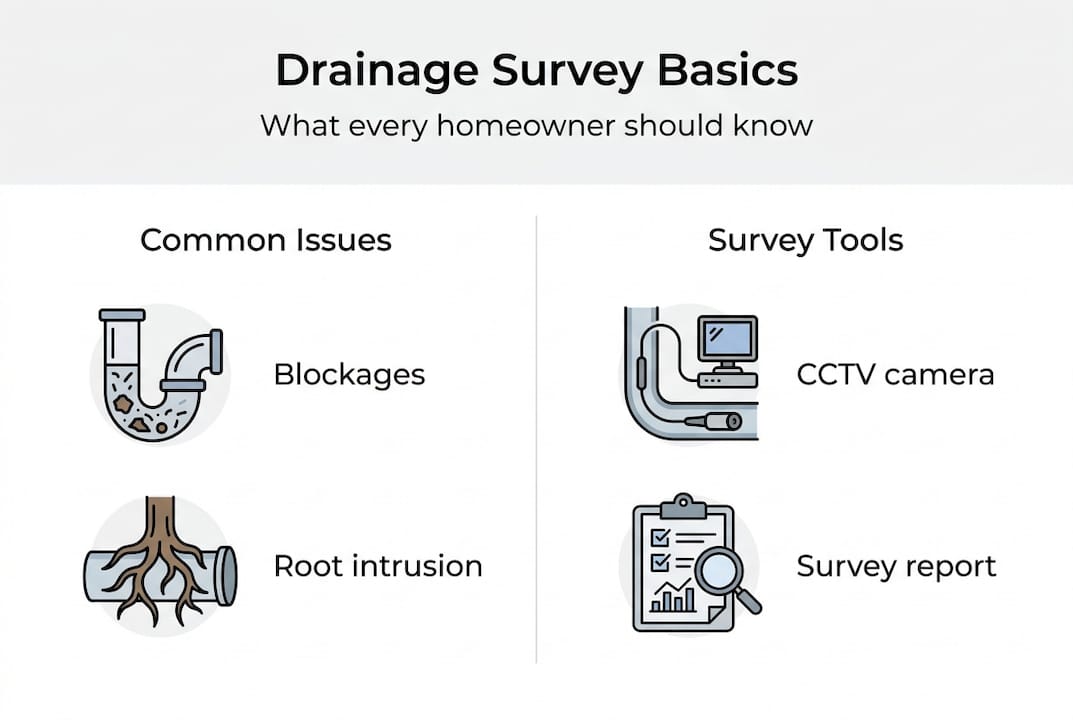
CCTV drain surveys represent the gold standard for drainage inspection, using waterproof cameras mounted on flexible cables or crawler units that navigate pipe networks whilst transmitting real-time footage. CCTV surveys for drains provide unprecedented clarity, revealing hairline cracks, joint misalignment, and early-stage root intrusion that other methods miss entirely. The technology allows surveyors to pinpoint defect locations with precision, recording GPS coordinates and measuring distances from access points.
Modern CCTV equipment includes pan-and-tilt camera heads that rotate 360 degrees, capturing comprehensive views of pipe interiors from multiple angles. High-definition recording preserves evidence for future reference, whilst sonar attachments measure pipe dimensions and detect deformation. Some systems incorporate laser profiling that creates three-dimensional maps of drainage networks, documenting every bend, junction, and gradient change.
Beyond CCTV, several complementary techniques support drainage assessment:
- Smoke testing pumps non-toxic smoke through drains to reveal cracks, illegal connections, and ventilation deficiencies
- Dye testing traces flow paths by introducing coloured liquid at specific points and monitoring where it emerges
- Manual inspection examines accessible chambers and gullies for obvious defects or blockages
- Acoustic testing listens for characteristic sounds that indicate leaks or structural weakness
Different home drainage inspection methods suit different situations, but CCTV consistently delivers superior results for comprehensive assessment.
| Survey method | Accuracy rating | Typical cost | Property disruption |
|---|---|---|---|
| CCTV inspection | Excellent | £200-£400 | Minimal |
| Smoke testing | Good | £150-£250 | Low |
| Dye testing | Moderate | £100-£180 | Very low |
| Manual inspection | Limited | £80-£150 | Minimal |
Pro Tip: Request digital copies of all survey footage and reports. These records prove invaluable when planning renovations, applying for permits, or selling your property. Store them with other important property documents for easy retrieval.
The non-invasive nature of CCTV surveys particularly appeals to homeowners concerned about garden damage or disruption to paved areas. Cameras access drains through existing manholes and inspection chambers, eliminating excavation except where repairs prove necessary. This approach saves money whilst providing comprehensive diagnostic information that guides targeted interventions.
Interpreting drainage survey results: what homeowners need to know
Survey reports translate technical observations into actionable recommendations, categorising defects by severity and explaining implications for property safety and drainage function. Professional drainage survey reports help homebuyers and owners make informed decisions, distinguishing between minor maintenance needs and critical repairs requiring immediate attention. Understanding report terminology empowers you to prioritise spending and avoid unnecessary work.
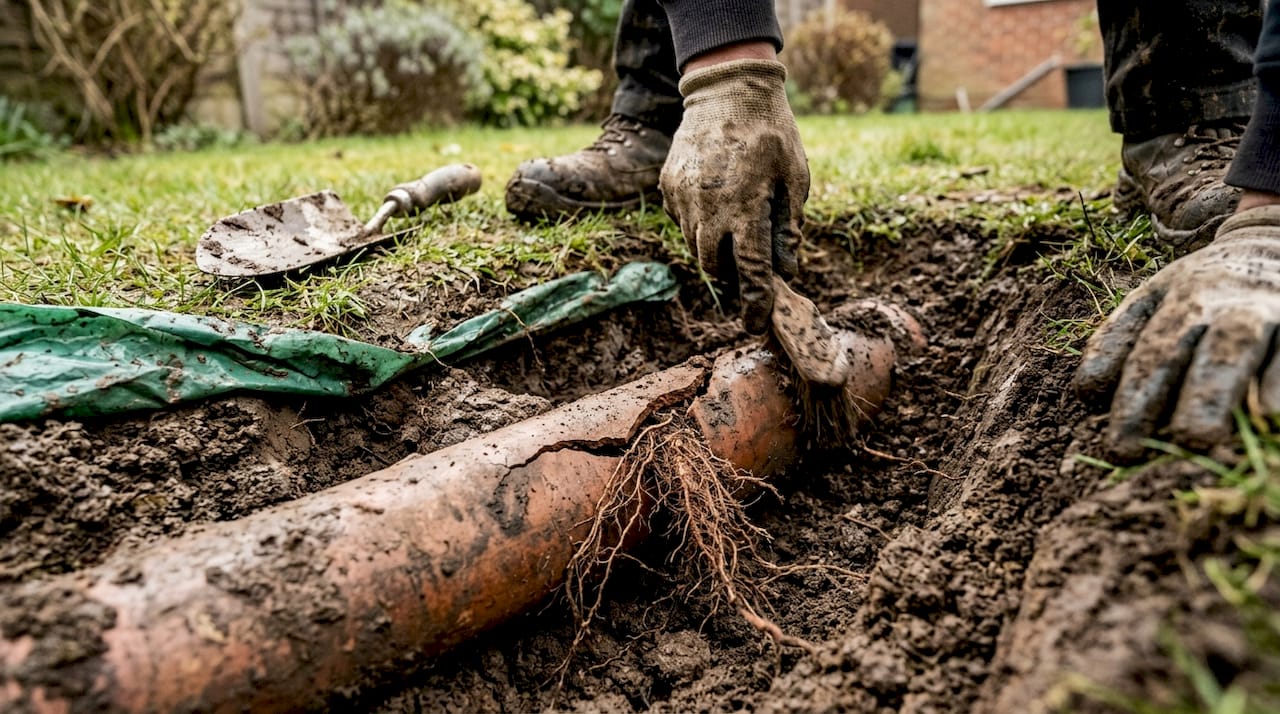
Common findings include root intrusion, where tree roots penetrate joints or cracks seeking moisture and nutrients. Early-stage intrusion appears as fine tendrils visible in pipe interiors, whilst advanced cases show dense root masses that completely block flow. Reports specify intrusion severity using standardised grading systems, with recommendations ranging from chemical root treatment to pipe replacement depending on extent.
Blockages receive similar classification based on composition and impact. Surveys distinguish between removable obstructions like accumulated debris or solidified fats and structural blockages caused by collapsed pipes or displaced joints. The distinction matters because simple blockages respond to jetting or rodding, whilst structural issues demand repair or replacement.
Cracked or fractured pipes appear frequently in older properties, particularly where ground movement or heavy surface loads stress drainage systems. Reports describe crack orientation, length, and whether fractures remain stable or show active separation. Hairline cracks may require monitoring rather than immediate repair, whilst significant fractures risk sudden collapse that causes flooding or subsidence.
Other typical defects homeowners encounter:
- Infiltration where groundwater enters through defective joints or cracks
- Displaced or open joints resulting from ground movement or installation faults
- Pipe deformation or collapse reducing flow capacity
- Surface water connections discharging inappropriately into foul drains
- Incorrect gradients causing standing water and sediment accumulation
Pro Tip: Focus first on defects affecting drainage function or threatening property damage. Cosmetic issues like minor surface wear rarely warrant immediate repair unless they show progressive deterioration between surveys.
Reports conclude with prioritised recommendations explaining urgency levels. Category 1 defects require immediate attention to prevent imminent failure or health hazards. Category 2 issues need addressing within specified timeframes to avoid deterioration. Category 3 observations merit monitoring but pose no immediate risk. This classification system helps budget repairs sensibly whilst maintaining drainage integrity.
Understanding common drainage issues revealed by surveys prepares you for realistic conversations with contractors. You’ll recognise when quoted repairs align with documented defects versus unnecessary upselling, ensuring you invest appropriately in drainage care.
How often should you schedule drainage surveys and maintenance?
Survey frequency depends on property age, drainage system condition, and environmental factors that accelerate deterioration. Routine surveys and maintenance significantly reduce risk of drainage failures and flooding, establishing preventive care rhythms that catch problems early. Newer properties with modern plastic pipes need less frequent inspection than older homes with clay or pitch fibre systems prone to degradation.
Healthy drainage systems in properties built after 1980 typically warrant surveys every three to five years, assuming no symptoms suggest hidden problems. This interval allows detection of developing issues before they cause damage whilst avoiding unnecessary inspection costs. Properties experiencing previous drainage problems benefit from more frequent assessment, with annual surveys recommended until stability is confirmed.
Older properties demand closer attention, particularly those with original Victorian or Edwardian drainage installations. Clay pipes deteriorate through chemical attack, ground movement, and root intrusion, making biennial surveys prudent for homes built before 1960. Properties with mature trees nearby face elevated root intrusion risk, justifying annual inspections regardless of system age.
| Property condition | Recommended survey interval | Risk factors |
|---|---|---|
| New build (post-2000) | Every 5 years | Low risk, modern materials |
| Modern system (1980-2000) | Every 3-4 years | Moderate risk, ageing plastics |
| Older property (1960-1980) | Every 2-3 years | Higher risk, mixed materials |
| Historic property (pre-1960) | Every 1-2 years | High risk, clay pipes, settlement |
| Properties with trees nearby | Annually | Root intrusion risk |
| Previous drainage issues | Annually until stable | Ongoing monitoring needed |
Scheduling and preparing for a survey involves straightforward steps:
- Contact drainage specialists to discuss property specifics and arrange convenient appointment times that minimise disruption
- Locate and clear access to all inspection chambers, manholes, and external gullies before surveyors arrive
- Provide any existing drainage plans, previous survey reports, or records of repairs that inform the inspection
- Ensure surveyors can access all relevant areas, including gardens, driveways, and outbuildings where drainage runs
- Request comprehensive reports including footage, defect descriptions, and prioritised recommendations with cost estimates
- Schedule follow-up discussions to clarify findings and plan any necessary repairs or maintenance
Consider drainage maintenance guide recommendations between formal surveys. Simple practices like avoiding pouring fats down sinks, using drain guards to catch debris, and periodically flushing drains with hot water extend system life and reduce blockage risk. These habits complement professional surveys, maintaining drainage health through consistent care.
Property transactions justify additional surveys regardless of regular inspection schedules. Buyers should commission independent surveys before exchanging contracts, whilst sellers benefit from pre-sale surveys that identify issues requiring disclosure or remediation. Survey evidence protects both parties, preventing disputes and establishing realistic property valuations.
Discover expert drainage survey and repair services
Protecting your property investment requires professional drainage expertise that combines advanced technology with practical experience. Understanding drainage surveys empowers informed decisions, but implementing solutions demands specialist knowledge and equipment that homeowners rarely possess.

We offer comprehensive CCTV drain survey services that reveal precise drainage conditions, documenting defects with high-definition footage and detailed reports. Our experienced team provides drain unblocking services that restore flow quickly whilst identifying underlying causes that prevent recurrence. When surveys reveal structural defects, our professional drain repairs protect your property using proven techniques from targeted patching to complete pipe replacement. Southern UK homeowners trust our reliable service, rapid response, and transparent pricing that respects your budget whilst delivering lasting solutions.
Frequently asked questions
What is included in a typical drainage survey?
A drainage survey includes CCTV inspection of all accessible pipes, detailed assessment of defects with severity grading, and a comprehensive report containing footage, defect descriptions, and prioritised recommendations. Surveys may also test connections to verify proper configuration and check surface water drainage routes. Most providers supply digital copies of footage and reports for your records. The inspection typically takes two to four hours depending on property size and drainage complexity.
How can I tell if my property’s drainage needs a survey?
Indicators include slow draining water despite clearing attempts, foul odours from drains particularly in warm weather, damp patches on walls or floors, and gurgling sounds when water drains. Also recommend surveys before property purchase, major renovations, or when mature trees grow near drainage runs. Regular preventive surveys every few years catch developing problems before symptoms appear. Trust your instincts when signs drainage inspections needed become apparent.
What are common defects found during drainage surveys?
Common issues include tree root intrusion through joints or cracks, blockages from debris or solidified fats, cracked or collapsed pipes from ground movement, and infiltration where groundwater enters defective sections. Displaced joints, incorrect gradients causing standing water, and surface water misconnections also appear frequently. Early detection through surveys prevents these common drainage defects from escalating into costly emergency repairs or property damage.
How much does a drainage survey typically cost in southern UK?
Costs vary depending on property size, survey complexity, and location within the region. Typical prices range from £150 to £400, with basic CCTV inspections at the lower end and comprehensive surveys including detailed mapping and multiple access points at the upper range. Detailed pricing depends on factors like drainage network length, number of inspection chambers, and whether additional testing like smoke or dye tests proves necessary. Request quotes from multiple providers to compare services and ensure value.