TL;DR:
- Most drainage issues develop gradually from everyday habits, making preventative care essential for homeowners. Regular use of drain screens, avoiding fats, and professional inspections can significantly reduce costly emergencies and property damage. Proactive maintenance saves money, protects property value, and ensures smooth plumbing operation over time.
Most homeowners only think about their drains when something goes wrong. A gurgling sink, a flooded bathroom, a smell you cannot place. The logic seems reasonable: if it works, leave it alone. But this is precisely where the hidden costs begin to stack up. Why preventative drainage care matters is not a question reserved for plumbers and property managers. It is one every homeowner in the UK should be asking, because the difference between a £50 maintenance habit and a £2,000 emergency callout often comes down to nothing more than a bit of regular attention.
Table of Contents
- Key takeaways
- How drainage systems fail and why it matters
- The real cost of waiting for things to go wrong
- Practical preventative drainage techniques for homeowners
- When to call in the professionals
- Regular drainage care benefits at a glance
- My take on the mindset shift most homeowners need
- How Localservicesdrainage supports homeowners
- FAQ
Key takeaways
| Point | Details |
|---|---|
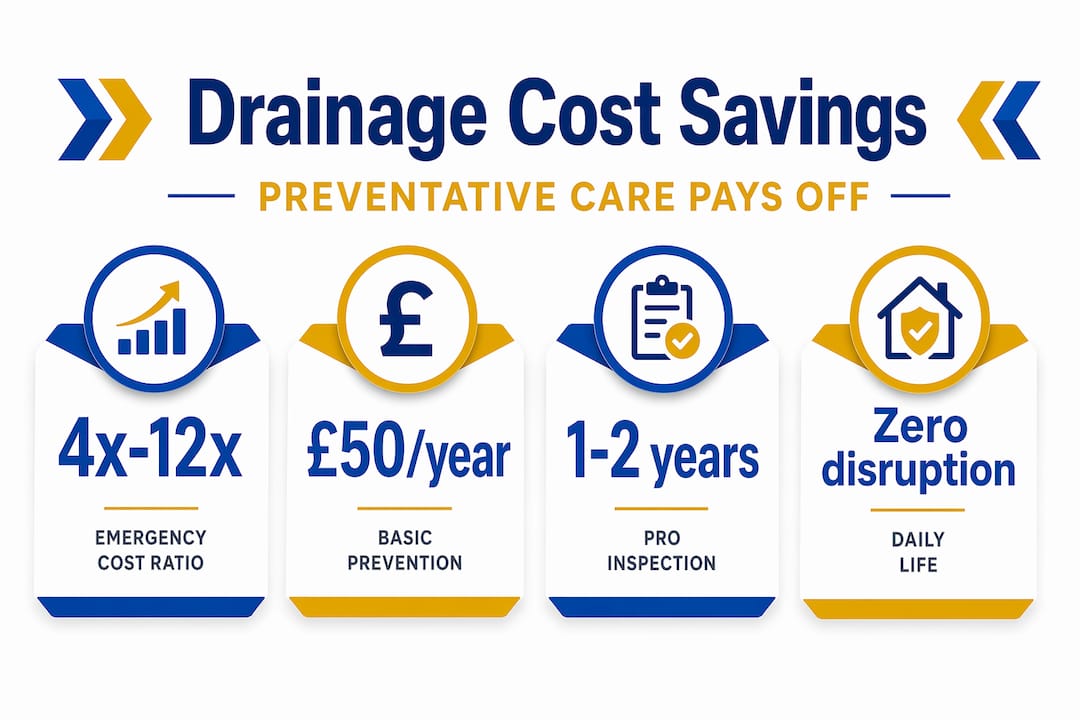
| Prevention beats reactive repairs | Reactive maintenance can cost 4 to 12 times more over five years than preventative measures. |
| Simple habits stop most clogs | Using drain screens and avoiding grease disposal prevents the majority of common blockages. |
| Insurance rarely covers lateral lines | Most home insurance policies exclude sewer lateral backups, leaving homeowners fully exposed. |
| Professional inspections find hidden faults | CCTV drain surveys detect root intrusion and pipe damage long before visible symptoms appear. |
| Early action protects property value | Consistent drainage care reduces disruption, maintains hygiene, and safeguards your home’s long-term value. |
How drainage systems fail and why it matters
Your home’s drainage system is more complex than most people realise. It includes the internal pipework from every sink, bath, toilet, and appliance, connecting to the sewer lateral line that runs from your property boundary to the main sewer. That lateral line is your responsibility as a homeowner, not the water authority’s.
Blockages rarely happen overnight. They build gradually through the accumulation of:
- Hair and soap scum in bathroom drains, which bind together and narrow the pipe over time
- Cooking grease and food particles poured down kitchen sinks, which solidify as they cool
- Mineral deposits from hard water, which coat pipe walls and restrict flow
- Tree root intrusion, where roots grow through hairline cracks in lateral pipes, causing severe blockages
- Non-flushable items such as wet wipes, cotton wool, and nappy liners
The difference between a reactive and a preventative approach is straightforward. Reactive care means you wait until something fails, then fix it. Preventative care means you address the conditions that cause failures before they develop. One requires emergency spending and disruption. The other requires a small, scheduled investment. Structurally, drains also need to be laid correctly: a proper drain slope of 1/4 inch per foot is necessary for water to carry debris away rather than leaving it to accumulate.
Pro Tip: If you notice water draining slowly from a sink or bath, treat it as an early warning sign rather than a minor annoyance. Slow drainage is almost always the precursor to a full blockage, and addressing it early takes minutes rather than hours.
Understanding the early signs of drainage problems in your home is genuinely one of the most useful skills you can develop as a homeowner. Gurgling sounds, slow water flow, and faint odours are your drains communicating before they fail completely.
The real cost of waiting for things to go wrong
There is a tendency to view preventative maintenance as an unnecessary expense. After all, nothing is broken yet. But reactive maintenance often feels cost-efficient upfront while delivering unpredictably higher expenses over time. The numbers are striking.
“Reactive maintenance costs 4 to 12 times more over 5 years compared to one-time preventive investments like trap seals.” — Green Drain
Consider what a single drainage emergency actually costs. An out-of-hours plumber callout in the UK commonly runs between £150 and £400 before any repair work begins. If raw sewage has backed up, you are also looking at professional sanitation, potential replacement of flooring or subfloor materials, and in some cases pest control. Rats are attracted to damaged sewer lines, and once they establish a route into your home’s infrastructure, removal is neither cheap nor quick.
There is also a less visible cost that homeowners rarely account for: the disruption to daily life. A bathroom out of action for two days, a kitchen sink that cannot be used during a repair, or tenants who need rehousing temporarily all carry real financial and personal consequences. Most home insurance policies do not cover sewer lateral backups, which means these costs land directly on you with no safety net.

Homeowners also frequently underestimate their responsibility for lateral lines. When these fail due to neglect, the repair bill is entirely theirs to absorb. The cost of drainage prevention, by comparison, is modest and predictable. A drain screen costs under £10. An annual professional inspection costs a fraction of what a single emergency repair does. The maths are not complicated.
Practical preventative drainage techniques for homeowners
The good news is that the majority of drainage problems can be prevented through a combination of simple habits and a basic maintenance schedule. You do not need specialist knowledge. You need consistency.
Here is a practical approach to preventative drainage care that any homeowner can adopt:
- Fit drain screens to every plughole. A single shower drain in a multi-person household can accumulate enough hair to cause a partial obstruction within 30 to 60 days without a screen in place. Screens cost almost nothing and require only a weekly rinse.
- Stop pouring cooking fat down the kitchen sink. Fat cools and solidifies inside your pipes, bonding with food particles to create dense blockages. Simple behavioural changes like disposing of grease in a sealed container have an outsized impact on preventing blockages over time.
- Use enzymatic drain treatments monthly. These products work by disrupting the binding of hair and soap scum before a partial restriction becomes a full blockage. Unlike chemical drain cleaners, they do not damage pipe walls.
- Check and clean P-traps twice a year. The U-shaped trap beneath your sink holds water to prevent sewer gases from entering your home. If a drain is rarely used and the trap dries out, those gases can enter freely. Pour a little water down infrequently used drains every few weeks to keep the seal intact.
- Keep a simple maintenance log. Note when drains were last cleaned, when you last used each bathroom, and any changes you notice in drainage speed or odour. Patterns become obvious quickly, and you can act before a pattern becomes a problem.
- Book a professional inspection every one to two years. This is particularly important if your property has mature trees nearby or older clay pipework.
Pro Tip: Never flush wet wipes, even those labelled “flushable.” They do not break down in the same way as toilet paper and are one of the leading causes of sewer blockages reported by UK water companies each year.
For a full list of habits and routines, a drainage maintenance checklist can help you stay on top of what needs doing and when.
When to call in the professionals
Homeowner efforts go a long way, but there are parts of preventative care that genuinely require professional equipment and expertise. Knowing when to bring in a specialist is part of the strategy, not a sign of failure.
| Service | What it does | When you need it |
|---|---|---|
| CCTV drain survey | Camera inspection to identify cracks, root intrusion, or collapsed sections | Every 1 to 2 years, or before buying a property |
| High-pressure jetting | Removes built-up grease, scale, and debris from pipe walls | Annually or when flow becomes sluggish |
| Backwater valve installation | Blocks sewage backflow during heavy rain or municipal overloads | Properties in flood-prone areas or with older drainage |
| Waterless trap seal installation | Permanently blocks sewer gas and pests without ongoing maintenance | Drains serving commercial kitchens or infrequently used facilities |
| Drain relining | Repairs cracks and root damage without excavation | Where CCTV reveals structural damage to lateral pipes |
A CCTV drain survey is one of the most valuable tools available to homeowners. It removes all guesswork by showing exactly what is happening inside your pipes. A survey might reveal tree root intrusion in the lateral line that has not yet caused a full blockage but will within months. Addressing it at that point costs a fraction of what it would cost after a collapse.
Installing waterless trap seals is another professional measure with significant payback. These devices permanently block sewer gas, odours, and pests without requiring water or regular maintenance, cutting emergency callouts to near zero in properties where dry traps were previously a recurring issue.
Regular drainage care benefits at a glance
Pulling everything together, the case for preventative drainage care is built on outcomes that are genuinely meaningful for everyday life at home. Regular drain cleaning prevents water flow reduction by up to 15%, keeping your plumbing running efficiently and reducing mechanical strain on the system over time.
The full picture of regular drainage care benefits includes:
- Fewer emergency callouts and the stress, cost, and disruption they bring
- Better water flow and hygiene throughout the home, with no lingering odours from backed-up waste
- Protection of property value, since drainage issues left unaddressed can cause structural damage that complicates sales or remortgaging
- Lower long-term spend on repairs, replacements, and professional interventions
- Peace of mind, particularly for homeowners with older properties or mature gardens where root intrusion is a realistic risk
The role of preventative drain care is not to add tasks to your schedule. It is to remove the far more disruptive and expensive tasks that arise when drainage is neglected.
My take on the mindset shift most homeowners need
I have spoken with dozens of homeowners over the years who felt genuinely blindsided by a drainage emergency. In almost every case, looking back, the signs had been there for months. A slight gurgling. A drain that was always a little slow. A smell that came and went. None of it felt urgent, so none of it got addressed.
What I have learnt is that the biggest barrier to preventative drainage care is not laziness or ignorance. It is the feeling that spending money on something that is not obviously broken is wasteful. That mindset makes sense in the short term. Over five or ten years of homeownership, it is extraordinarily expensive.
The homeowners who genuinely save money on drainage are not the ones who research every product or obsess over maintenance schedules. They are the ones who fit a drain screen, avoid pouring fat down the sink, and book a professional look at their pipes every couple of years. That is genuinely all it takes for most properties. The effort is minimal. The protection is substantial.
If I had one piece of practical advice, it would be this: start treating your drains the way you treat your boiler. You would not wait for your boiler to break down before servicing it. Your drainage system deserves the same basic respect.
— Ronnie
How Localservicesdrainage supports homeowners
If you are ready to move from reactive panic to calm, planned drainage care, Localservicesdrainage is set up to help with exactly that. Whether you need a professional CCTV survey to get a clear picture of what is happening inside your pipes, or you have a blockage that needs resolving before it worsens, the team covers a wide range of drainage services across southern England with fast response times and clear pricing.
For homeowners dealing with an active blockage, the step-by-step unblocking guide is a useful starting point. Where pipe damage has already developed, drain relining offers a no-dig repair solution that restores structural integrity without the disruption and cost of excavation. The goal is not just to fix problems but to help you build a maintenance approach that prevents them from recurring.
FAQ
What is preventative drainage care?
Preventative drainage care means taking regular, proactive steps to keep your drainage system functioning well before problems develop. It includes simple habits like using drain screens and enzymatic treatments, as well as scheduled professional inspections.
How much does drainage prevention actually cost?
Basic prevention costs very little, often under £50 per year for screens and enzymatic products. An annual professional inspection adds to this, but still represents a fraction of the cost of a single emergency repair or lateral line failure.
How often should drains be professionally inspected?
Most drainage specialists recommend a professional inspection every one to two years for standard residential properties. Properties with older pipework, mature trees nearby, or a history of blockages may benefit from annual checks.
Does home insurance cover drain blockages and failures?
Most standard UK home insurance policies do not cover sewer lateral line failures or backups. Homeowners bear the full cost of repairs in most cases, which makes preventative care a financially important habit rather than an optional extra.
What are the early signs that a drain needs attention?
Slow drainage, gurgling noises from plugs or toilets, unpleasant odours near drains, and water pooling around outdoor gullies are all signs that a drain needs attention before a full blockage or failure develops.