When a drainage emergency strikes, every minute counts. Did you know 65% of drainage blockages are caused by fat, oil, and grease buildup, turning minor issues into flooding disasters within hours? Homeowners and property managers in southern England face immediate risks when drains fail, but understanding emergency drainage services, recognizing warning signs early, and acting decisively can protect your property. This guide walks you through identifying true emergencies, choosing professional help over risky DIY attempts, and leveraging advanced technology to restore drainage fast.
Table of Contents
- Introduction To Emergency Drainage
- Common Causes And Signs Of Drainage Emergencies
- Technologies And Methods Used In Emergency Drainage
- Common Misconceptions About Emergency Drainage
- Critical Response Times And Risks
- Decision Framework: DIY Vs. Professional Emergency Drainage
- Prevention And Maintenance Strategies To Avoid Emergencies
- Summary And Practical Next Steps For Homeowners And Property Managers
- Get Professional Emergency Drainage Help In Southern England Today
- Frequently Asked Questions
Key Takeaways
| Point | Details |
|---|---|
| Emergency drainage tackles urgent blockages and failures | Prevents flooding and property damage through rapid professional intervention. |
| Early warning signs reduce major emergency risk | Slow drains, foul odors, and backups signal escalating problems requiring immediate action. |
| Advanced diagnostics accelerate repair accuracy | CCTV surveys and no-dig relining improve speed and cut costs significantly. |
| DIY fixes often worsen emergencies | Untrained attempts increase repair costs by 30-50% and delay proper solutions. |
| Rapid professional response lowers flooding risk | Delays beyond 6 hours raise damage risk by 35%, making quick calls essential. |
Introduction to Emergency Drainage
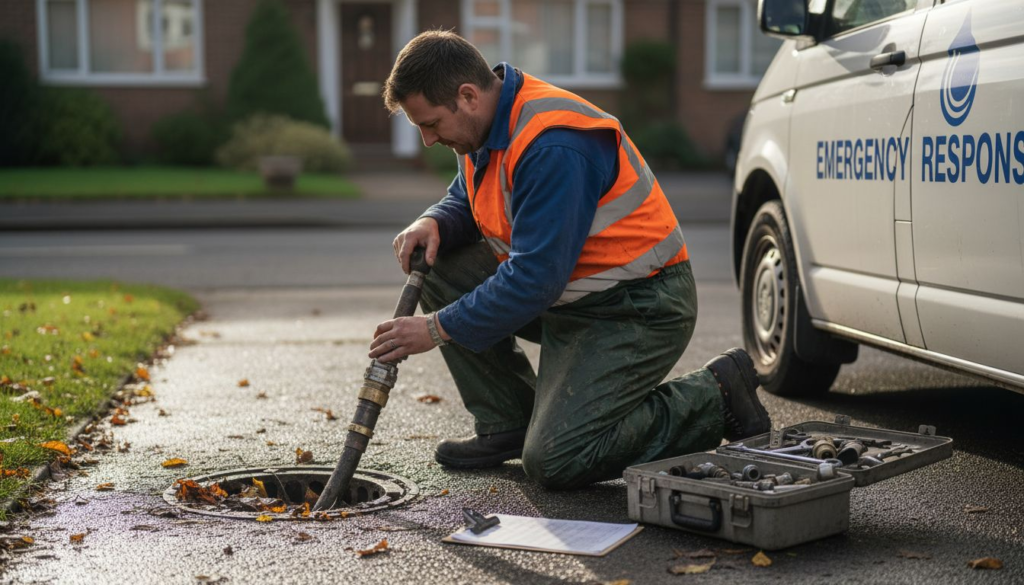
Emergency drainage refers to urgent professional interventions deployed when blockages, system failures, or flooding threaten your property. Unlike routine maintenance, these services respond to immediate crises where delays can cause extensive water damage, structural harm, and health hazards. You need to understand that typical emergency drainage response times are around 2 hours in urban southern England, giving you a clear benchmark for evaluating service providers.
Homeowners and property managers should recognize when standard solutions fail and emergency action becomes necessary. A blocked toilet may seem manageable, but if water backs up into your home or multiple drains fail simultaneously, you face an emergency. Prompt response minimizes property damage and restores normal drainage function quickly, protecting both your investment and occupants’ safety.
The cost of inaction in drainage emergencies escalates rapidly. Water damage spreads through floors, walls, and foundations within hours, turning a fixable blockage into a renovation project. Professional emergency drain services prevent this cascade by deploying experienced technicians with specialized equipment to resolve issues before they worsen. Understanding when and how to act in emergencies separates minor inconveniences from major disasters.
Knowing your local response times and service coverage helps you prepare mentally and financially for potential emergencies. Keep contact details for licensed drainage professionals readily accessible, especially if you manage multiple properties or live in areas prone to drainage issues. This preparation ensures you can act decisively when seconds count.
Common Causes and Signs of Drainage Emergencies
Drainage emergencies rarely appear without warning. Most develop from ignored minor issues that escalate into full system failures. Understanding the primary causes helps you prevent emergencies before they start and recognize when professional help becomes urgent.
Fat, oil, and grease represent the leading culprits behind emergency blockages. When you pour cooking oil down the sink, it cools and solidifies in your pipes, gradually narrowing the passage until water cannot flow. Combined with food particles, soap scum, and other debris, these substances create rock-hard obstructions that standard plungers cannot clear. This buildup explains why kitchen drains frequently cause emergencies in residential properties.

Tree root infiltration presents another common emergency trigger, particularly in older properties with clay pipes. Roots seek moisture and nutrients, penetrating pipe joints and creating blockages that worsen over time. By the time you notice slow drainage, roots may have completely invaded the pipe, requiring immediate professional extraction and repair to prevent sewage backup.
Early warning signs give you a critical window to prevent full emergencies:
- Slow draining sinks, showers, or toilets that worsen daily
- Gurgling sounds when water drains, indicating air trapped by partial blockages
- Foul odors emanating from drains, suggesting decomposing organic matter or sewage backup
- Water backing up into other fixtures when you use one drain
- Visible water pooling around external drain covers or manholes
Recognizing these signs early can reduce damage and emergency repair costs significantly. Ignoring slow drains often leads to full blockages and flooding within 24 to 48 hours, transforming a manageable maintenance issue into an expensive crisis. If you notice multiple warning signs simultaneously, contact professionals immediately rather than waiting for complete failure.
Technologies and Methods Used in Emergency Drainage
Modern emergency drainage relies on advanced technology that dramatically improves repair speed, accuracy, and cost effectiveness. Understanding these methods helps you appreciate why professional services deliver superior results compared to DIY attempts.
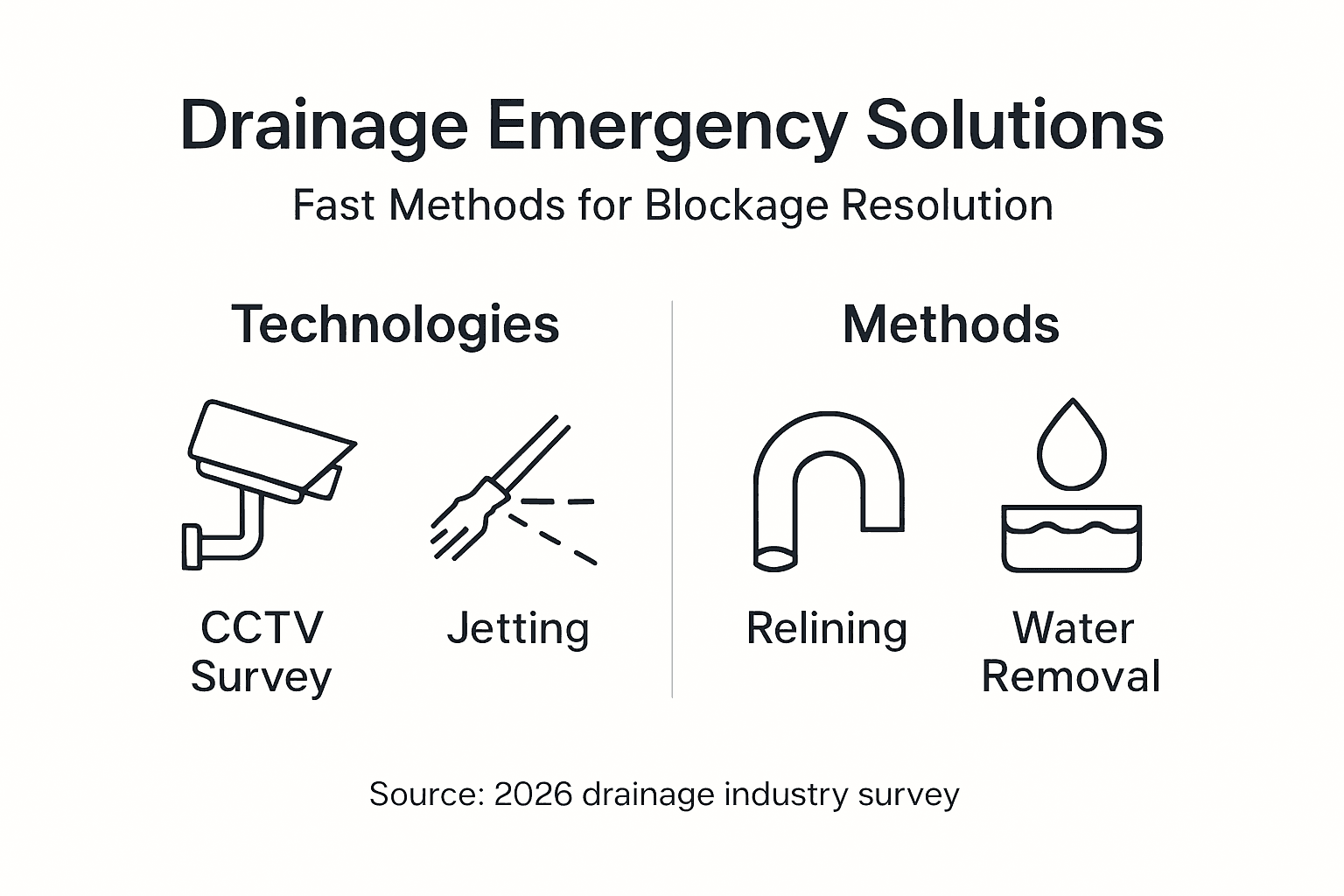
CCTV cameras provide precise drain diagnostics by traveling through pipes and transmitting real-time video to technicians above ground. This technology eliminates guesswork, allowing professionals to identify blockages, cracks, and root infiltration without excavation. Research shows CCTV surveys reduce repair time by 40% by pinpointing problems immediately. You avoid unnecessary excavation costs and property disruption when technicians know exactly where and what to fix.
No-dig relining repairs pipes internally without excavation, reducing costs dramatically. Technicians insert a resin-coated liner into damaged pipes, inflate it, and cure it in place to create a new pipe within the old one. This method can cut restoration costs by up to 50% compared to traditional excavation and replacement. Your garden, driveway, and landscaping remain intact while professionals restore full drainage function. No-dig drain relining has revolutionized emergency repairs by eliminating the destructive excavation that once made drainage work so invasive.
Emergency drainage typically requires coordinated methods rather than single solutions:
- Initial assessment with CCTV surveys to diagnose the problem accurately
- High-pressure water jetting to clear blockages and clean pipe walls
- Root cutting equipment to remove tree infiltration mechanically
- Structural repairs using relining or targeted excavation for severe damage
- Final verification with post-repair CCTV to confirm complete resolution
Pro Tip: Request video footage from CCTV drain surveys to understand what caused your emergency and verify repairs were completed properly. This documentation proves invaluable for insurance claims and future maintenance planning.
| Technology | Primary Use | Average Time Savings | Cost Reduction |
|---|---|---|---|
| CCTV Surveys | Diagnostics | 40% faster diagnosis | Eliminates unnecessary excavation |
| Water Jetting | Blockage removal | Clears most blockages in under 2 hours | Lower labor costs than manual methods |
| No-Dig Relining | Pipe repair | 60% faster than excavation | Up to 50% cheaper than replacement |
| Root Cutting | Tree infiltration | Immediate access restoration | Prevents recurring blockages |
About 70% of emergency cases require multiple coordinated methods like unblocking, relining, and water removal to fully resolve the problem. Single-solution approaches often leave underlying issues unaddressed, leading to repeat emergencies within weeks. Comprehensive professional service tackles all aspects of your drainage problem in one visit whenever possible.
Common Misconceptions About Emergency Drainage
Misunderstandings about drainage emergencies lead many homeowners to delay professional help or attempt dangerous DIY fixes. Clearing up these myths helps you respond appropriately when emergencies strike.
Many people wrongly view slow drains as minor inconveniences rather than emergency precursors. They assume occasional slow drainage will resolve itself or can wait until regular business hours for attention. In reality, slow drains indicate partial blockages that can escalate to complete failures and flooding in 1 to 2 days. What seems manageable Monday morning can flood your home by Tuesday evening.
The DIY myth persists despite overwhelming evidence that untrained attempts worsen emergencies. Homeowners believe drain cleaners, plungers, or improvised tools will save money compared to professional services. However, DIY drainage fixes during emergencies increase repair costs up to 50% by damaging pipes, pushing blockages deeper, or causing chemical burns to drainage systems. Chemical drain cleaners particularly corrode pipes, creating weak points that fail under pressure and require expensive replacement.
Pro Tip: If you must attempt any drain clearing before professionals arrive, use only a standard plunger with gentle pressure. Never use drain snakes, chemicals, or high-pressure methods without training, as these tools cause more damage than blockages in untrained hands.
Some homeowners believe emergency drainage means quick unblocking without comprehensive repair. They expect technicians to clear the immediate blockage and leave, then feel surprised when professionals recommend additional work. True emergency drainage addresses root causes, not just symptoms:
- Clearing blockages without repairing damaged pipes invites repeat failures
- Removing tree roots without sealing entry points allows rapid regrowth
- Ignoring structural issues identified during CCTV surveys sets up future emergencies
- Skipping post-repair verification leaves problems unresolved
Delaying professional help based on these misconceptions increases both flooding risk and repair expenses substantially. Every hour you wait allows water damage to spread, blockages to solidify, and problems to worsen. Veteran drainage professionals consistently advise against untrained DIY attempts during emergencies, emphasizing that proper equipment and expertise protect both your property and your wallet.
Critical Response Times and Risks
Timing determines whether you contain a drainage emergency or face catastrophic flooding. Understanding response time impacts helps you prioritize rapid professional contact over other considerations.
Rapid professional response reduces flood damage and repair costs significantly by stopping water infiltration before it spreads. When technicians arrive within 2 hours, they typically prevent water from reaching vulnerable areas like electrical systems, structural supports, and finished living spaces. This speed advantage translates directly into lower repair bills and faster property restoration.
Research demonstrates that waiting more than 6 hours for help increases flooding damage risk by 35%. This statistic reflects how quickly water damage accelerates once drainage systems fail completely. The first 6 hours represent a critical window where professional intervention makes maximum difference. Beyond this threshold, water penetrates deeper into structures, mold begins developing, and secondary damage multiplies repair costs exponentially.
Many emergency drainage response times include service guarantees that protect homeowners post-repair. These warranties typically cover workmanship for extended periods, giving you confidence that repairs will last. When evaluating emergency drainage providers, prioritize those offering:
- 24/7 availability with genuine emergency response capabilities
- Guaranteed response times documented in service agreements
- Transparent pricing with no hidden charges for after-hours service
- Post-repair guarantees covering both labor and materials
- Licensed, insured technicians with verifiable credentials
“The difference between minor water damage and major structural repairs often comes down to response time. Homeowners who call immediately when they notice drainage problems save thousands compared to those who wait hoping the issue resolves itself. Emergency drainage is exactly that: an emergency requiring immediate professional attention.”
You should prioritize fast calls to licensed emergency drainage professionals over cost shopping during active emergencies. While comparing quotes makes sense for planned maintenance, emergencies demand immediate action. The money you might save finding cheaper service pales compared to escalating water damage costs when you delay response by hours.
Keep emergency drainage contacts readily accessible on your phone and posted near main drainage access points. This preparation eliminates precious minutes spent searching for help when flooding begins. Property managers should ensure all staff and tenants know exactly whom to contact for drainage emergencies, streamlining response across multiple properties.
Decision Framework: DIY vs. Professional Emergency Drainage
Deciding whether to attempt DIY fixes or call professionals immediately determines your emergency outcome. This framework helps you make informed choices when drainage crises strike.
DIY approaches may appear to save money upfront, but they risk costly delays and worsened damage that multiply expenses. Homeowners with basic plungers and drain snakes can clear simple clogs in normal circumstances, but emergencies involve complications beyond basic tools. Without CCTV diagnostics, you cannot know whether roots, structural damage, or deep blockages cause your problem. Attacking unknown issues with inappropriate methods often pushes blockages deeper, damages pipes, or creates new leaks requiring extensive repair.
Professional emergency drainage services offer rapid response, advanced technology, and comprehensive guarantees that DIY cannot match. Licensed technicians arrive with specialized equipment, diagnostic tools, and years of experience handling similar emergencies. They identify root causes, implement appropriate solutions, and verify repairs work properly before leaving your property. This thoroughness prevents repeat emergencies and protects your investment long-term.
Urgency, complexity, and safety should guide your decision. Ask yourself:
- Is water actively flooding into living spaces or near electrical systems?
- Do multiple drains fail simultaneously, suggesting main line blockages?
- Have previous DIY attempts failed to resolve the problem?
- Does the situation involve sewage backup creating health hazards?
- Do you lack proper safety equipment and training for drainage work?
Answering yes to any question means calling professionals immediately rather than attempting DIY fixes. Research confirms DIY attempts during emergencies often delay repairs and increase costs between 30% and 50%, making professional service the economically rational choice despite higher immediate costs.
| Factor | DIY Approach | Professional Service |
|---|---|---|
| Response Speed | Delayed by equipment shopping and learning | Immediate with 2-hour average arrival |
| Diagnostic Accuracy | Guesswork without camera inspection | CCTV surveys pinpoint exact problems |
| Repair Quality | Limited by basic tools and experience | Advanced equipment handles all scenarios |
| Safety | Risk of injury, chemical exposure, contamination | Licensed technicians with proper safety gear |
| Cost Long-Term | Often 30-50% higher due to failed attempts | Lower through efficient, correct repairs |
| Guarantee | None – you own all outcomes | Warranties protect your investment |
The decision framework becomes clear: emergencies demand professional intervention while routine maintenance allows appropriate DIY participation. You can maintain drains preventatively with proper disposal habits and basic cleaning, but once emergencies develop, professional expertise becomes essential. Attempting diy drainage repair risks that far outweigh any perceived savings.
Prevention and Maintenance Strategies to Avoid Emergencies
Preventing emergencies proves far more cost-effective than responding to them. These practical maintenance steps reduce the frequency and severity of drainage incidents for homeowners and property managers.
Routine maintenance checks can reduce emergency drainage calls by 25% through early problem identification and correction. Schedule professional inspections annually, particularly before winter when frozen ground complicates emergency excavation. These inspections identify developing issues like partial blockages, pipe deterioration, and root infiltration before they escalate into emergencies requiring urgent response.
Proper disposal of fats, oils, and greases prevents the leading cause of drainage blockages. Never pour cooking oil or grease down sinks, regardless of how much water you run afterward. Instead:
- Collect cooled fats in containers and dispose with regular rubbish
- Wipe greasy pans with paper towels before washing
- Install sink strainers to catch food particles before they enter drains
- Run hot water after each use to help clear residual grease
- Use enzyme-based drain maintainers monthly to break down organic buildup naturally
Knowing early warning signs and acting on them prevents costly emergencies from developing. Schedule professional assessment immediately when you notice persistent slow drainage, unusual odors, or gurgling sounds. Addressing these symptoms while they remain minor costs a fraction of emergency service rates and prevents the water damage that multiplies total expenses.
Proactive drainage management protects property value and occupant safety by ensuring systems function reliably. Property managers should implement scheduled maintenance across their portfolios, treating drainage like other critical infrastructure requiring regular attention. This systematic approach identifies patterns, prevents simultaneous failures across multiple properties, and builds relationships with reliable service providers before emergencies strike.
Consider preventative strategies as insurance against drainage emergencies. The modest cost of annual inspections and proper maintenance habits delivers enormous returns through avoided emergency calls, prevented water damage, and extended drainage system lifespan. Your drainage system serves your property every day – giving it appropriate attention prevents it from failing when you need it most.
Summary and Practical Next Steps for Homeowners and Property Managers
You now understand emergency drainage from recognition through resolution. Successful emergency management combines knowledge, preparation, and decisive action when problems arise.
Understand emergency drainage urgency and recognize early warning signs including slow drains, foul odors, and water backups. These symptoms signal developing problems that escalate into flooding within 24 to 48 hours without intervention. Your ability to identify emergencies quickly determines whether you contain damage or face extensive repairs.
Use professional emergency services offering advanced diagnostics and rapid response rather than attempting risky DIY fixes. CCTV surveys, high-pressure jetting, and no-dig relining resolve emergencies efficiently while protecting your property from further damage. Response times averaging 2 hours in urban southern England mean help arrives quickly when you need it most.
Practical next steps:
- Save emergency drainage contacts in your phone immediately
- Schedule annual professional inspections to catch problems early
- Implement proper disposal habits for fats, oils, and greases
- Document your drainage system layout and access points
- Review service guarantees and coverage areas before emergencies strike
Avoid DIY fixes during emergencies, as untrained attempts increase costs 30 to 50% while delaying proper repairs. Professional expertise, specialized equipment, and comprehensive warranties protect both your property and your budget far better than improvised solutions.
Maintain drainage systems routinely to reduce emergency risk by 25% through early problem identification. Prevention costs less than emergency response while protecting your property value and ensuring reliable drainage function year-round.
Get Professional Emergency Drainage Help in Southern England Today
When drainage emergencies strike your property, you need experienced professionals who respond immediately with proven solutions. Local Services Drainage combines rapid response, advanced technology, and guaranteed repairs to protect southern England homeowners and property managers from flooding damage.
Our expert technicians arrive within 2 hours equipped with CCTV cameras, high-pressure jetting systems, and no-dig relining capabilities that resolve emergencies efficiently. We provide professional unblocking services for blockages of any severity, CCTV drain surveys that diagnose problems accurately without excavation, and expert drain relining that repairs pipes internally while protecting your landscaping. Every repair comes with comprehensive guarantees ensuring your drainage system functions reliably long after we complete the work. Contact us now for immediate emergency assistance or to schedule preventative maintenance that protects your property from future drainage crises.
Frequently Asked Questions
What is emergency drainage and why is it important?
Emergency drainage provides immediate professional solutions to urgent blockages, system failures, and flooding risks that threaten property damage. It’s crucial because rapid intervention prevents water from spreading through structures, causing expensive damage to foundations, electrical systems, and living spaces that escalate repair costs exponentially.
How can I tell if my drainage problem is an emergency?
Key signs include rapidly worsening slow drains, foul sewage odors, water backing up into multiple fixtures simultaneously, and visible flooding around external drains. Early symptoms like gurgling sounds and persistent slow drainage often precede complete blockages and flooding within 24 to 48 hours, requiring immediate professional assessment.
Is it safe to try DIY fixes during a drainage emergency?
DIY attempts during emergencies are usually unsafe and counterproductive. DIY emergency fixes increase costs by 30-50% and may delay proper repairs by damaging pipes or pushing blockages deeper without proper diagnostic equipment. Professional services ensure safe, effective repairs with guarantees protecting your property investment.
What technologies help fix emergency drainage issues quickly?
CCTV drain surveys pinpoint blockages and damage without excavation, speeding repairs by 40% through accurate diagnostics. No-dig relining repairs pipes internally by creating new pipe liners without digging, reducing restoration costs by up to 50% while protecting landscaping and structures from excavation damage.
How quickly should I get professional help for drainage emergencies?
Contact licensed professionals immediately when you recognize emergency signs, as delaying professional emergency drainage help beyond 6 hours raises flood damage risk by 35%. Rapid response within the critical first few hours prevents water infiltration into vulnerable areas, protecting property and minimizing total repair expenses significantly.