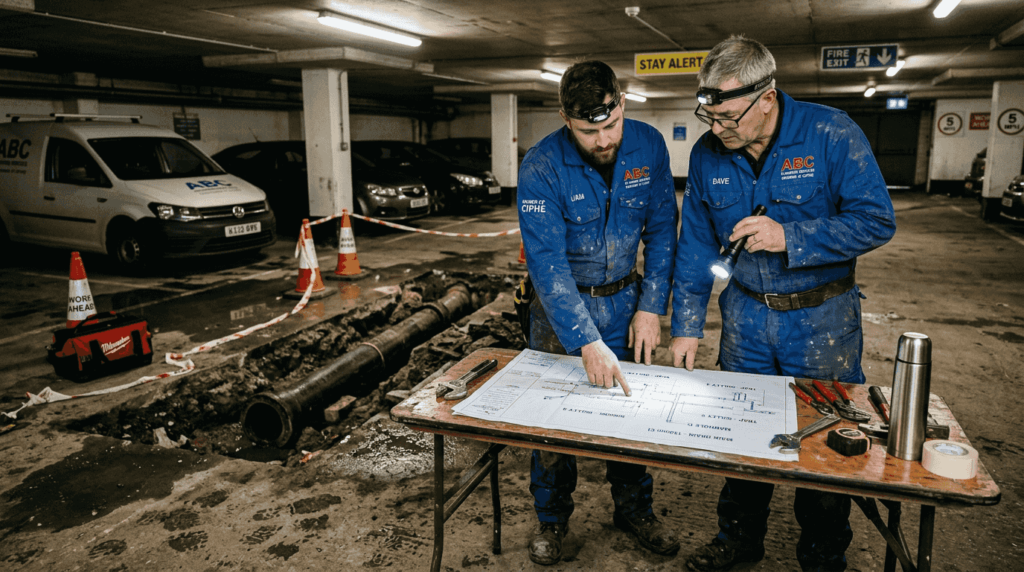
Commercial drainage failures cost UK businesses thousands in lost revenue and emergency repairs each year. Understanding the repair process transforms reactive panic into proactive maintenance, reducing downtime and protecting your property investment. This comprehensive guide walks you through every stage of commercial drain repair, from initial diagnosis through to long-term maintenance planning. You will learn how professional techniques, modern technology, and systematic approaches combine to deliver reliable drainage solutions that keep your facilities operating smoothly and efficiently throughout the year.
Table of Contents
- Understanding The Commercial Drain Repair Process
- Preparing For A Commercial Drain Repair: Inspection And Diagnosis
- Executing The Commercial Drain Repair: Techniques And Methods
- Verifying Repair Success And Planning Ongoing Maintenance
- Explore Professional Commercial Drainage Services For Your Property
- Frequently Asked Questions
Key takeaways
| Point | Details |
|---|---|
| Stepwise approach | Following a structured repair process reduces disruption and improves efficiency for commercial properties |
| Professional diagnosis | CCTV surveys and expert inspections identify root causes accurately before repairs begin |
| Method selection | Choosing between traditional excavation and trenchless relining depends on damage type and site constraints |
| Verification matters | Post-repair inspections confirm repair integrity and prevent recurring issues |
| Preventive maintenance | Regular scheduled maintenance extends drain lifespan and reduces emergency repair costs by up to 60% |
Understanding the commercial drain repair process
Commercial drainage systems face unique challenges compared to residential properties. Higher usage volumes, complex pipe networks, and diverse waste types create conditions where problems escalate quickly. A clear stepwise drain repair approach reduces downtime and saves costs by addressing issues systematically rather than applying quick fixes that fail within months.
The repair process typically unfolds across four distinct phases. Initial problem identification triggers professional assessment, where specialists determine the nature and extent of damage. Planning follows diagnosis, with experts selecting appropriate repair methods based on pipe condition, location, and operational requirements. Execution involves implementing the chosen repair technique, whether traditional excavation or modern trenchless solutions. Final verification ensures repairs meet quality standards and will perform reliably under normal operating conditions.
Efficient repairs minimise business disruption. A blocked drain in a restaurant kitchen or retail facility can halt operations entirely, costing hundreds or thousands in lost revenue per hour. Professional repair teams understand this urgency and structure their work to restore functionality quickly whilst ensuring lasting results. The difference between amateur attempts and professional commercial drainage UK explained approaches often determines whether you face one repair or recurring emergencies.
Common causes prompting commercial drain repairs include:
- Accumulation of fats, oils, and grease in food service facilities
- Tree root intrusion into ageing pipe networks
- Structural damage from ground movement or heavy vehicle traffic
- Corrosion and deterioration in older cast iron or clay pipes
- Foreign objects lodged in drainage systems
Professional assessment identifies not just symptoms but underlying causes. Surface-level fixes might clear a blockage temporarily, but without addressing root intrusion or structural damage, you will face the same problem within weeks. This comprehensive approach distinguishes effective commercial drain repair from temporary patches that waste money and time.
Preparing for a commercial drain repair: inspection and diagnosis
Thorough preparation separates successful repairs from costly failures. Before any repair work begins, professionals conduct detailed inspections to map your drainage system and identify problem areas precisely. This diagnostic phase prevents guesswork and ensures repair efforts target actual issues rather than assumed problems.
CCTV drain surveys are essential for precise diagnosis and targeted repairs. Modern camera technology allows specialists to navigate your entire drainage network, capturing high-definition footage of pipe interiors without excavation. These surveys reveal cracks, blockages, root intrusion, and structural defects that external inspections cannot detect. The footage provides concrete evidence for insurance claims and helps property managers make informed decisions about repair versus replacement.
The inspection process typically follows these steps:
- Initial site assessment to understand drainage layout and access points
- CCTV drain survey insertion through existing access chambers or rodding points
- Systematic camera navigation through the entire drainage network
- Recording and analysis of footage to identify all defects and problem areas
- Detailed reporting with location mapping and repair recommendations
Accurate diagnosis guides method selection. A hairline crack requires different treatment than a collapsed section or severe root intrusion. Preparation reduces repair time and prevents repeated issues by ensuring teams arrive with correct equipment and materials for the specific problem identified.
Typical problems spotted during pre-repair inspections include displaced joints where pipe sections have separated, scale buildup reducing flow capacity, and localised damage from ground settlement. Each discovery influences the repair strategy. Multiple minor defects might justify full pipe replacement, whilst isolated damage suits targeted repair techniques.
Pro Tip: Request a copy of your CCTV survey footage and written report. This documentation proves invaluable for maintenance planning, insurance purposes, and future property transactions. Detailed records help you track drainage system condition over time and schedule preventive maintenance before problems become emergencies.
Inspection timing matters significantly. Conducting surveys during dry weather provides clearer footage and easier access than during wet periods when drains run at capacity. However, emergency situations require immediate assessment regardless of conditions. Professional teams adapt their approach based on urgency and site-specific factors.
Executing the commercial drain repair: techniques and methods
Once diagnosis confirms the problem, repair execution begins. Modern commercial drain repair employs diverse techniques, each suited to specific damage types and site conditions. Understanding these methods helps property managers make informed decisions and set realistic expectations for timelines and disruption levels.
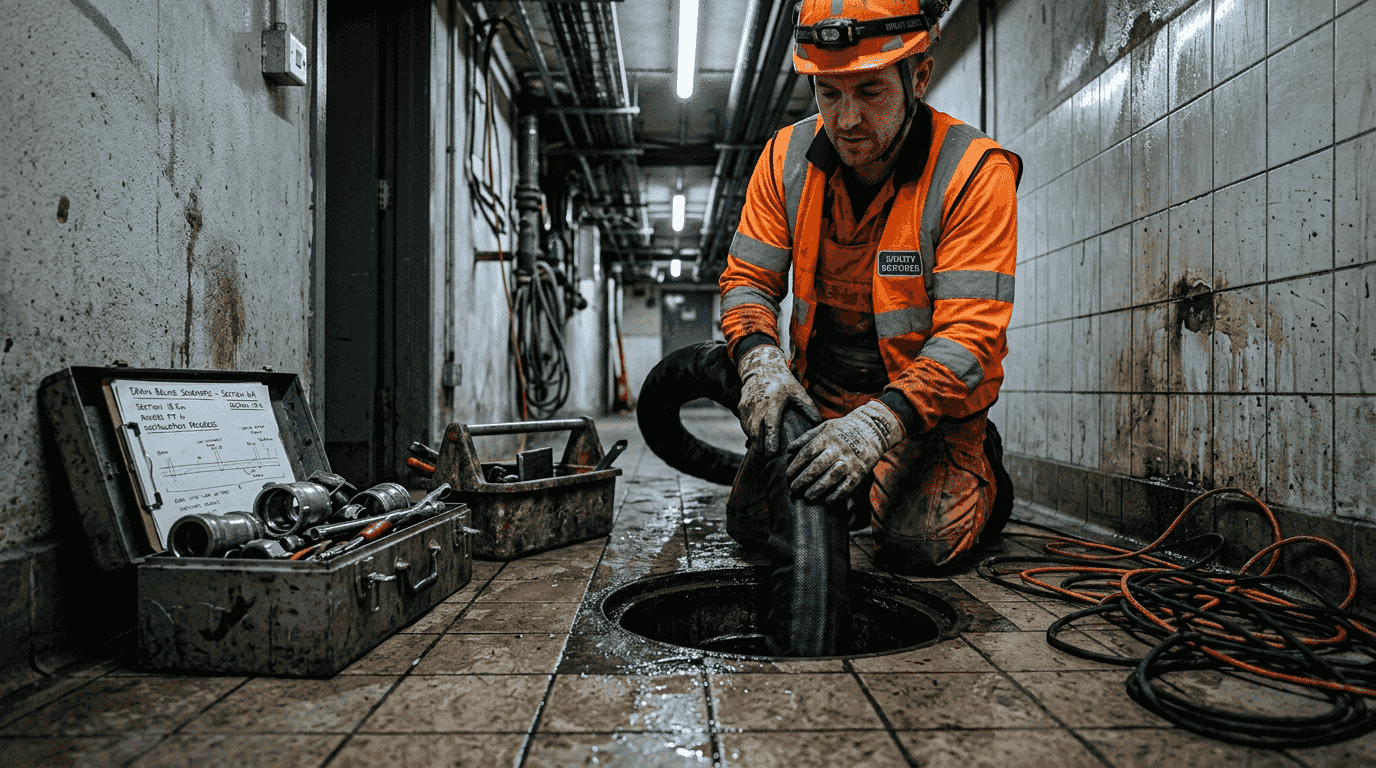
Traditional excavation remains necessary for certain repairs. Collapsed pipes, severely damaged sections, and some junction repairs require physical access to the drainage system. Excavation involves digging down to the affected pipe, removing damaged sections, and installing replacement materials. This approach guarantees complete access and allows for comprehensive repairs, but creates significant surface disruption and typically requires longer completion times.
Drain relining is an effective, less disruptive alternative to traditional excavation. This trenchless technology inserts a resin-impregnated liner into existing pipes, creating a new pipe within the old structure. The liner cures in place, forming a seamless, durable replacement that can last decades. Relining suits cracks, leaks, and moderate root intrusion without requiring extensive digging.
| Method | Typical Cost | Disruption Level | Durability | Best For |
|---|---|---|---|---|
| Traditional excavation | Higher | Significant | Excellent | Collapsed pipes, major structural damage |
| Drain relining | Moderate | Minimal | Excellent | Cracks, leaks, root intrusion |
| Patch repairs | Lower | Low | Good | Localised damage, small cracks |
| Pipe bursting | Moderate-High | Low-Moderate | Excellent | Full pipe replacement without excavation |
Choosing repair methods depends on drain condition, urgency, and property constraints. A restaurant operating in a busy high street cannot afford weeks of excavation disrupting customer access. Trenchless drain relining completes repairs in hours or days with minimal surface impact, making it ideal for commercial settings where business continuity matters.
Factors determining method selection include:
- Extent and type of damage identified during inspection
- Pipe material, diameter, and accessibility
- Site constraints such as building foundations or underground utilities
- Budget considerations and available timeframes
- Future maintenance and expected service life requirements
Pro Tip: Discuss warranty terms before approving repair methods. Quality drain repair best practices include guarantees covering workmanship and materials for years, not months. Longer warranties indicate confidence in repair durability and protect your investment against premature failures.
Some repairs combine techniques. Initial excavation might provide access for relining equipment, or patch repairs might address urgent leaks whilst planning comprehensive relining for scheduled maintenance periods. Professional teams design repair strategies balancing immediate needs with long-term performance.
Execution quality depends heavily on contractor expertise. Proper surface preparation, correct resin mixing, adequate curing time, and quality control checks separate lasting repairs from failures. Experienced commercial drainage specialists follow manufacturer specifications precisely and verify work at each stage.
Verifying repair success and planning ongoing maintenance
Repairs mean nothing without verification. Post-repair inspection confirms work meets specifications and drainage systems function correctly before contractors leave site. This verification phase protects your investment and provides documentation proving repair quality.
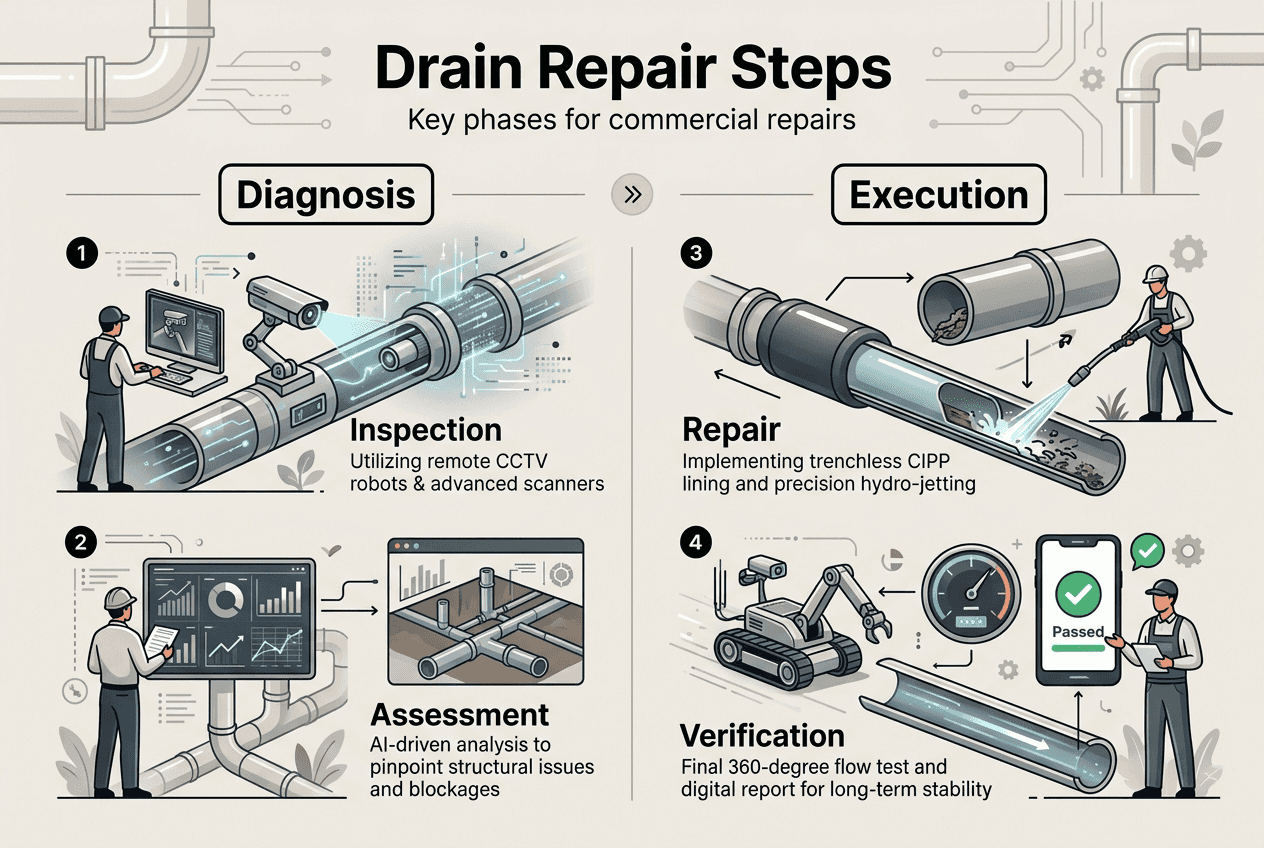
Post-repair CCTV surveys confirm repair integrity and prevent future issues. Camera inspections after relining show complete liner coverage, proper curing, and smooth internal surfaces. For excavation repairs, surveys verify correct pipe alignment, secure joints, and absence of debris. This documented proof becomes part of your property maintenance records.
Verification procedures typically include:
- Visual inspection of all work areas and surface reinstatement
- CCTV survey of repaired sections to confirm internal condition
- Flow testing to ensure adequate drainage capacity
- Pressure testing for sealed systems to verify leak-free operation
- Documentation with before and after footage, test results, and warranties
Ongoing maintenance extends repair lifespan significantly. Regular maintenance reduces blockages and extends drain life by up to 60% compared to reactive-only approaches. Scheduled inspections catch minor issues before they escalate into expensive emergencies, protecting both drainage infrastructure and business operations.
Recommended maintenance activities include quarterly high-pressure water jetting to remove accumulating debris, annual CCTV surveys to monitor pipe condition and identify developing problems, and immediate investigation of any drainage performance changes. Commercial kitchens benefit from monthly grease trap servicing and enzyme treatments that break down fats before they solidify in pipes.
Maintenance frequency depends on several factors. High-usage facilities like restaurants, hotels, and hospitals require more frequent attention than office buildings or retail spaces. Older drainage systems need closer monitoring than recently installed networks. Properties with known risk factors such as nearby trees or aggressive soil conditions justify increased inspection schedules.
Pro Tip: Create a drainage maintenance log recording all inspections, cleanings, and repairs. This historical data helps identify patterns, predict future issues, and demonstrate due diligence for insurance and regulatory purposes. Digital records with dated photographs and survey footage provide compelling evidence of proper property management.
Preventive maintenance delivers substantial cost savings. Emergency repairs during business hours cost significantly more than scheduled maintenance during off-peak periods. Preventing major failures avoids business interruption costs that often exceed repair expenses. A comprehensive drain maintenance steps programme pays for itself through reduced emergency callouts and extended infrastructure lifespan.
Maintenance contracts with professional drainage companies provide predictable costs and priority service. Fixed monthly fees cover regular inspections and routine cleaning, with emergency response included at preferential rates. These arrangements ensure consistent care and build relationships with contractors who understand your specific drainage system.
Explore professional commercial drainage services for your property
Navigating commercial drain repairs requires expertise, technology, and experience that only specialist contractors provide. Local Services Drainage offers comprehensive solutions tailored to commercial property needs across southern UK regions. Our team combines advanced diagnostic equipment with proven repair techniques to deliver reliable, efficient outcomes that minimise disruption and maximise drainage system lifespan.
Our CCTV drain survey services provide the detailed diagnostics essential for informed repair decisions. We offer rapid-response commercial drain unblocking services available 24/7 for emergencies, alongside scheduled maintenance programmes that prevent problems before they disrupt operations. Our drain relining solutions deliver lasting repairs with minimal excavation, perfect for busy commercial environments where time and access matter. Contact our specialists today to discuss your drainage challenges and discover how professional support protects your property investment.
Frequently asked questions
What is the typical timeline for commercial drain repair?
Typical commercial drain repairs take from a few hours to two days depending on complexity and repair method. Simple blockage clearing or patch repairs often complete within hours, whilst comprehensive relining projects might require one to two days including preparation and curing time. Traditional excavation repairs generally take longer, potentially spanning several days for extensive damage or difficult access situations. Emergency repairs prioritise speed, with teams mobilising rapidly to restore functionality and minimise business disruption.
How often should commercial drains be inspected and maintained?
Inspections are recommended at least annually, with maintenance performed one to two times per year for most commercial properties. High-usage facilities such as restaurants, hotels, and food processing plants benefit from quarterly inspections and monthly maintenance to manage heavy waste loads. Frequency depends on property use patterns, drainage system age, and specific risk factors like nearby vegetation or known structural issues. Regular schedules prevent emergency failures and extend infrastructure lifespan significantly.
Can drain relining be used for all commercial drain repairs?
Relining suits many blockages, cracks, and moderate structural issues but cannot address all drainage problems. Completely collapsed pipes, severe breaks with significant misalignment, or situations requiring diameter increases typically need traditional excavation and replacement. Professional CCTV assessment determines relining suitability by evaluating damage extent, pipe condition, and structural integrity. Specialists recommend the most appropriate technique based on specific circumstances, balancing effectiveness, cost, and disruption considerations.
What signs indicate an urgent commercial drain repair is needed?
Repeated blockages despite regular clearing, persistently slow drainage across multiple fixtures, foul odours emanating from drains or external areas, and visible flooding or pooling water signal urgent problems requiring immediate professional attention. Unusual sounds like gurgling or bubbling from drains, damp patches on walls or floors near drainage runs, and sewage backups into buildings represent emergency situations demanding rapid response. Prompt intervention prevents escalating damage, protects health and safety, and minimises business disruption from complete drainage system failure.