Many homeowners dismiss slow drainage or unusual gurgling sounds as minor inconveniences, yet these warning signs often precede serious structural damage costing thousands in repairs. Blocked drains lead to flooding, structural damage, unpleasant odours, and health hazards when ignored. This guide reveals how effective drain unblocking protects your property investment, explains professional clearing methods, and provides actionable prevention strategies. You’ll discover when DIY approaches work, when professionals become essential, and how regular maintenance prevents costly emergencies throughout 2026 and beyond.
Table of Contents
- Understanding The Impact Of Blocked Drains On Your Property
- How Drain Unblocking Works: Methods And Tools Used By Professionals
- Preventing Blockages: Maintenance Tips And Early Warning Signs
- Comparing DIY Drain Unblocking And Professional Services
- Explore Our Professional Drain Unblocking Services
- Frequently Asked Questions
Key takeaways
| Point | Details |
|---|---|
| Prevention saves money | Regular drain unblocking prevents expensive structural repairs and property damage |
| Professional advantage | Specialised tools clear blockages more thoroughly than household methods |
| Early detection matters | Recognising warning signs allows intervention before major issues develop |
| Maintenance reduces risk | Scheduled inspections minimise emergency blockage situations significantly |
Understanding the impact of blocked drains on your property
Blocked drains create cascading problems that extend far beyond simple inconvenience. Water backing up inside your home damages flooring, walls, and furniture whilst external flooding undermines foundations and creates hazardous conditions around your property. The financial impact escalates quickly, particularly when structural elements require repair or replacement.
Property managers face additional challenges when causes of blocked drains affect multiple units simultaneously. Tenant complaints increase, maintenance costs spike, and property values potentially decline when drainage issues become chronic. Understanding these risks helps prioritise effective unblocking strategies.
Common blockage sources include:
- Grease and fat solidifying inside pipes after washing dishes
- Hair accumulation combining with soap residue in bathroom drains
- Tree roots penetrating older pipe joints seeking moisture
- Foreign objects accidentally flushed or washed down drains
- Mineral deposits building up gradually in hard water areas
Foul odours emanating from blocked drains signal bacterial growth and decomposing organic matter trapped within your drainage system. These conditions create health risks, particularly for vulnerable household members. Stagnant water attracts pests whilst releasing unpleasant gases into living spaces.
Early intervention through professional drain unblocking prevents minor blockages from escalating into major structural problems requiring extensive remediation work.
The relationship between drainage health and property value deserves serious consideration. Prospective buyers increasingly request drainage surveys during property transactions, and documented blockage history can complicate sales negotiations. Maintaining clear drains protects your investment whilst avoiding depreciation linked to recurring drainage problems.
How drain unblocking works: methods and tools used by professionals
Professional drain unblocking relies on high-pressure water jets, electric rods, and CCTV drain surveys for precise diagnosis and clearing. These specialised approaches deliver results that household tools simply cannot match, particularly for stubborn or deep blockages.
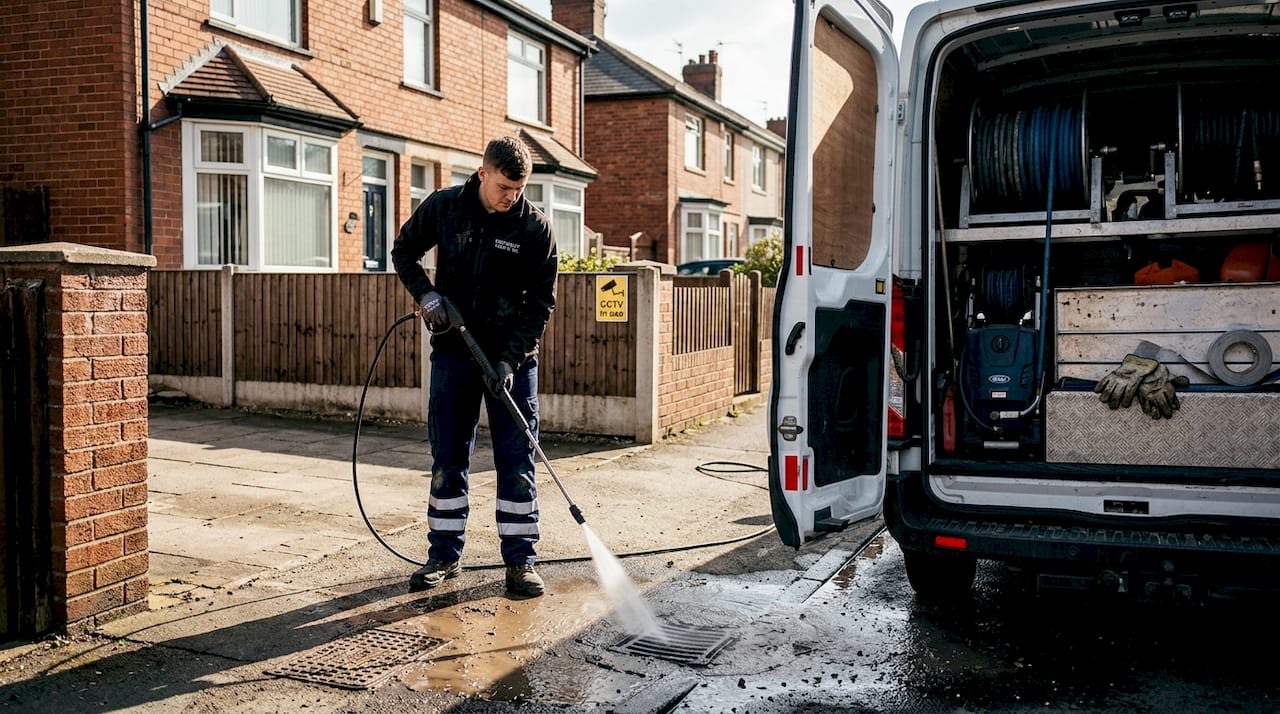
High-pressure water jetting represents the gold standard for thorough drain clearing. Professionals direct powerful water streams at blockages, breaking apart debris whilst simultaneously flushing material through the system. This method clears grease, scale, roots, and accumulated sediment without damaging pipe interiors. The pressure adjusts according to pipe material and blockage severity, ensuring safe yet effective clearing.
Electric drain rods provide mechanical clearing power for blockages resistant to water jetting alone. Flexible rods fitted with various cutting heads navigate bends whilst breaking through solid obstructions. Professionals select appropriate attachments based on blockage type, ensuring efficient removal without risking pipe damage.
CCTV drain surveys revolutionise blockage diagnosis by providing visual confirmation of problems before clearing begins. Waterproof cameras traverse your drainage system, transmitting real-time footage that reveals:
- Exact blockage location and composition
- Pipe condition including cracks or collapses
- Root intrusion points requiring targeted treatment
- Scale buildup patterns indicating maintenance needs
- Structural defects potentially causing recurring blockages
This diagnostic precision allows professionals to select optimal drain unblocking methods and tools for your specific situation. Rather than applying generic solutions, technicians target problems with appropriate equipment and techniques.
Manual clearing techniques supplement mechanical methods when blockages occur near access points. Professionals assess situations holistically, combining approaches for comprehensive results. This flexibility ensures effective clearing regardless of blockage complexity or location.
Pro Tip: Request CCTV footage from your drainage professional to understand your system’s condition and identify potential problem areas before they cause blockages.
Safety considerations distinguish professional services from DIY attempts. Technicians wear protective equipment, understand drainage system hazards, and follow protocols preventing contamination or injury. Their expertise minimises risks whilst maximising clearing effectiveness, particularly when dealing with commercial-grade blockages or compromised pipe integrity.
The efficiency gains from drain unblocking explained professionally become apparent when comparing clearance times and longevity. Professional clearing typically resolves issues permanently rather than providing temporary relief, reducing the frustration and expense of recurring blockages.
Preventing blockages: maintenance tips and early warning signs
Proactive maintenance dramatically reduces blockage frequency whilst extending your drainage system’s functional life. Simple habits implemented consistently prevent the majority of common blockages homeowners encounter throughout 2026.
Avoid introducing problematic materials into your drainage system by following these essential practices:
- Scrape plates thoroughly before washing to remove food waste
- Never pour cooking oils or fats down kitchen sinks
- Install drain guards catching hair and debris before entry
- Dispose of coffee grounds, eggshells, and fibrous materials in compost bins
- Flush only toilet paper and human waste, never wipes or sanitary products
Regular maintenance and awareness of early warning signs significantly reduce emergency drain issues. Recognising subtle indicators allows intervention before complete blockages develop, saving considerable expense and inconvenience.
Watch for these early warning signs suggesting developing blockages:
- Water draining noticeably slower than normal from sinks or baths
- Gurgling sounds emanating from drains when fixtures discharge
- Unpleasant odours persisting despite regular cleaning efforts
- Water levels fluctuating in toilet bowls without obvious cause
- Multiple fixtures draining slowly simultaneously across your property
Scheduling professional inspections annually or biannually provides peace of mind whilst catching problems early. Technicians identify developing issues during routine maintenance, addressing them before emergency intervention becomes necessary. This preventive approach proves far more economical than reactive emergency callouts.
Tree placement near drainage lines requires careful consideration during landscaping projects. Root systems naturally seek moisture, and even small cracks in pipes provide entry points for invasive growth. Maintain adequate separation between trees and drainage infrastructure, particularly when planting species known for aggressive root systems.
Pro Tip: Mark drain access points clearly in your garden so professionals can locate them quickly during inspections or emergencies, reducing service time and costs.
Regular hot water flushing helps prevent grease accumulation in kitchen drains. Pour boiling water down sinks weekly to melt and flush minor grease deposits before they solidify into problematic blockages. This simple practice extends intervals between professional cleanings whilst maintaining optimal drainage performance.
Understanding the importance of emergency drain unblocking motivates consistent maintenance habits. Emergency situations create stress, inconvenience, and elevated costs compared to scheduled maintenance. Prevention through awareness and regular care protects both your property and budget.
Seasonal considerations influence blockage risks, particularly during autumn when falling leaves can overwhelm external drainage systems. Clear gutters and external drains regularly during high-risk periods, preventing debris accumulation that leads to blockages. Following drain maintenance tips consistently throughout the year maintains system health regardless of seasonal challenges.
Comparing DIY drain unblocking and professional services
Homeowners frequently debate whether to attempt drain clearing themselves or engage professional services. Understanding the genuine capabilities and limitations of each approach enables informed decisions protecting your property and budget.
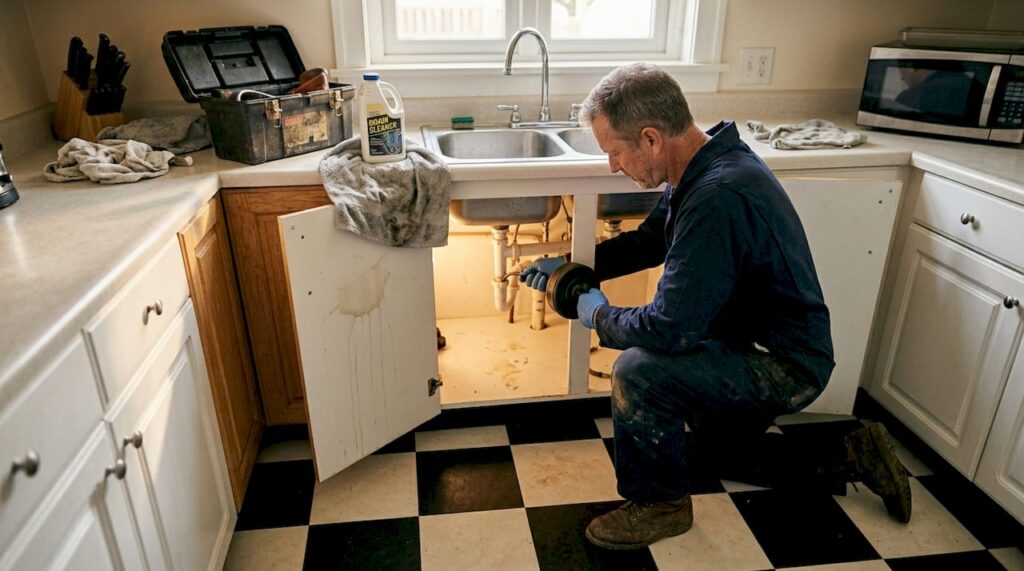
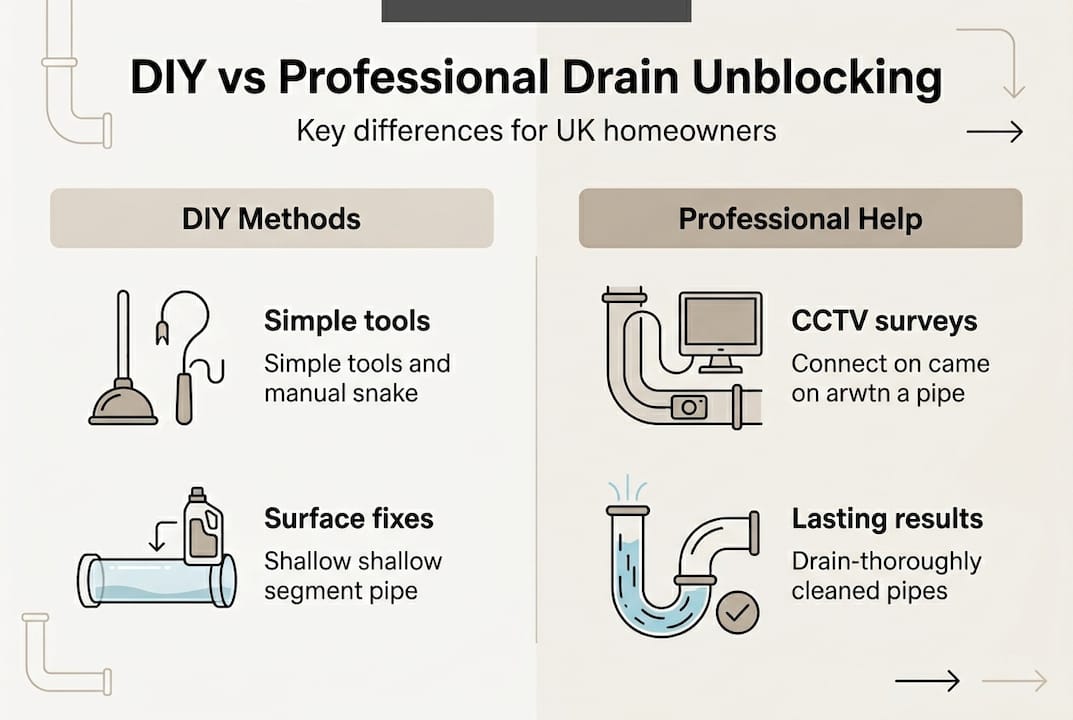
DIY methods suit minor blockages near drain openings where simple tools provide adequate clearing power. Plungers create pressure differentials dislodging shallow obstructions, whilst manual removal addresses visible debris in accessible locations. Chemical drain cleaners dissolve organic matter but introduce risks including pipe damage and harmful fume exposure.
Professional services offer permanent solutions with proper equipment compared to temporary DIY fixes. The distinction becomes critical when blockages recur despite repeated DIY attempts, indicating deeper issues requiring professional diagnosis and intervention.
| Aspect | DIY Approach | Professional Service |
|---|---|---|
| Cost | £5 to £30 for tools and chemicals | £80 to £300 depending on complexity |
| Effectiveness | Limited to shallow, simple blockages | Clears deep, complex, and recurring issues |
| Equipment | Basic plungers, rods, chemical cleaners | High-pressure jets, CCTV, specialist tools |
| Diagnosis | Guesswork without visual confirmation | Precise identification via camera inspection |
| Risk Level | Potential pipe damage, incomplete clearing | Minimal risk with trained technicians |
| Time Required | Variable, often requires multiple attempts | Typically resolved in single visit |
| Guarantee | No assurance of lasting results | Work often guaranteed for extended periods |
Chemical drain cleaners deserve particular scrutiny regarding safety and effectiveness. Harsh formulations can corrode older pipes, particularly those made from materials common in pre-1970s properties. Fumes pose respiratory risks whilst skin contact causes burns. Environmental impact from chemical discharge into water systems raises additional concerns.
Incomplete clearing represents the most common DIY limitation. Surface symptoms may temporarily improve whilst underlying blockages remain partially intact. This incomplete resolution leads to rapid recurrence, ultimately costing more through repeated attempts than initial professional intervention would have required.
Professional services provide comprehensive solutions addressing root causes rather than superficial symptoms. Technicians identify contributing factors like pipe damage, improper installation, or structural issues requiring correction. This thorough approach prevents recurring problems whilst extending your drainage system’s operational life.
The drain unblocking services comparison reveals long-term value favouring professional intervention for anything beyond the simplest blockages. Initial cost differences diminish when considering reduced recurrence rates, prevented property damage, and time savings from effective first-time resolution.
Health hazards associated with DIY drain clearing include exposure to sewage bacteria, harmful gases, and contaminated water. Professionals wear protective equipment and follow safety protocols minimising these risks. Attempting clearance without proper precautions exposes household members to preventable health threats.
Knowing when to transition from DIY to professional help prevents minor issues escalating into major problems. If plunging fails after several attempts, water backs up into multiple fixtures, or foul odours persist despite clearing efforts, professional assessment becomes essential. Delaying expert intervention often compounds damage whilst increasing ultimate repair costs.
Explore our professional drain unblocking services
After understanding the complexities of effective drain maintenance, you might recognise situations where professional expertise delivers superior outcomes. Our comprehensive services address everything from routine maintenance to emergency interventions, ensuring your drainage system performs reliably year-round.
We combine advanced diagnostic technology with proven clearing techniques, providing lasting solutions rather than temporary fixes. Our essential drain unblocking guide reflects the same commitment to thorough, effective service we bring to every callout. Flexible scheduling accommodates your availability whilst emergency support ensures help arrives quickly when urgent situations develop.
Local specialists throughout the UK’s southern regions understand regional drainage challenges, from hard water impacts to soil conditions affecting pipe integrity. This geographical expertise informs our approach, delivering solutions tailored to your specific circumstances. Our professional unblocking services include comprehensive inspections, preventive maintenance programmes, and emergency response capabilities protecting your property investment. Explore our drain unblocking services guide to discover how we maintain drainage systems efficiently and reliably.
Frequently asked questions
What causes drains to become blocked?
Debris like grease, hair, food waste, and invasive tree roots commonly block drains by accumulating gradually until water flow becomes restricted. Grease solidifies when cooled, trapping other materials and forming stubborn obstructions. Proper disposal habits and regular maintenance significantly reduce blockage risk by preventing material accumulation. Understanding common causes of blocked drains helps implement effective prevention strategies tailored to your household’s specific risk factors.
Can I unblock drains myself safely?
Basic DIY tools like plungers can clear minor blockages near drain openings, but deeper obstructions risk incomplete clearing or pipe damage from improper technique. Chemical cleaners introduce hazards including pipe corrosion and harmful fume exposure without guaranteeing effective results. Professionals offer safer, more effective solutions using specialised equipment that clears blockages thoroughly whilst protecting pipe integrity. Consulting professional drain unblocking guidance helps determine when DIY approaches prove adequate versus situations requiring expert intervention.
How often should drains be professionally inspected and cleaned?
Annual or biannual inspections prove advisable for most properties, with older homes or those with mature trees nearby benefiting from more frequent attention. Regular professional cleaning extends drain life by removing gradual buildup before it creates blockages requiring emergency intervention. Inspection frequency adjusts based on household size, property age, and historical drainage performance. Following drain inspection frequency recommendations establishes maintenance schedules preventing costly emergencies whilst maintaining optimal drainage performance throughout the year.
What happens if blocked drains remain untreated?
Untreated blockages progressively worsen, eventually causing complete drainage failure with water backing up into your property. Pressure buildup can crack pipes, whilst standing water damages foundations and creates health hazards from bacterial growth. Repair costs escalate dramatically once structural damage occurs compared to addressing blockages promptly. Property value potentially declines when drainage issues become chronic or cause visible damage requiring disclosure during sales transactions.
Do drain unblocking services provide guarantees?
Reputable professional services typically guarantee their work for specified periods, offering free return visits if blockages recur within the guarantee window. Guarantees demonstrate confidence in clearing effectiveness whilst protecting customers from paying repeatedly for the same issue. Guarantee terms vary between providers, so clarify coverage details before engaging services. Written guarantees provide recourse if problems persist, ensuring you receive value from professional intervention rather than experiencing the recurring costs common with inadequate DIY attempts.
Recommended
- What is drain unblocking: essential guide for UK homeowners 2026
- Effective Drain Unblocking: Tips, Tools, and Techniques in 2024
- Best Guide About Drainage Unblocking Services in 2024
- 7 Essential Common Drainage Repairs for UK Homes
- Why Clear Appliance Drainage Matters for Homeowners – MDTECH APPLIANCE REPAIR