TL;DR:
- Root intrusion occurs when tree roots grow into underground pipes through cracks or loose joints, causing blockages and damage. Early warning signs include slowly draining fixtures, gurgling sounds, sewage smells, and lush patches of grass over drains; prompt professional inspection can prevent costly repairs. Regular CCTV surveys and careful landscaping help mitigate the risk of root intrusion and maintain healthy drainage systems.
If your drains keep running slowly or you hear strange gurgling from the toilet, you might assume it’s just age or a minor blockage. Often, it’s neither. Root intrusion drainage is one of the most misunderstood and underestimated causes of drain failure in UK properties, and if you leave it unchecked, what starts as a slow drain can end as a collapsed pipe and a very expensive repair bill. This article explains exactly what root intrusion drainage means, how roots get inside your pipes, the warning signs to watch for, and what you can do to protect your home.
Table of Contents
- Key takeaways
- Defining root intrusion drainage
- Signs of root intrusion in your drains
- Why root intrusion is serious if ignored
- Preventing root intrusion in drainage
- How to fix drainage root intrusion
- My view on root intrusion: act before it acts on you
- Protect your drainage before root intrusion takes hold
- FAQ
Key takeaways
| Point | Details |
|---|---|
| Root intrusion defined | Tree and shrub roots grow into underground pipes through cracks or loose joints, causing blockages and damage. |
| Early signs matter | Slow drains, gurgling noises, and sewage smells appearing together usually indicate a root problem, not an isolated blockage. |
| Older pipes are most at risk | Clay, cast iron, and concrete pipes are far more vulnerable to root penetration than modern PVC alternatives. |
| Prevention saves money | Routine CCTV inspections and thoughtful landscaping choices can prevent root intrusion before it becomes costly. |
| Professional treatment works | Mechanical root cutting, hydro jetting, and trenchless relining can restore pipes without major excavation. |
Defining root intrusion drainage
To define root intrusion drainage clearly: it is the process by which tree or shrub roots grow into underground drainage pipes, disrupting the flow of water and causing physical damage to the pipe structure itself. It’s not just roots sitting near your drains. It’s roots actively growing inside them, spreading through the interior, and eventually blocking or breaking them.
Here’s how it actually happens. Roots invade through tiny cracks or loose joints in your drainage system. Underground pipes naturally release warm, moist air through any small gap in their structure. Tree roots, which constantly seek moisture and nutrients, detect this vapour and grow towards it. Once even the finest root thread finds a crack or poorly sealed joint, it enters the pipe and begins feeding on the nutrient-rich wastewater inside.
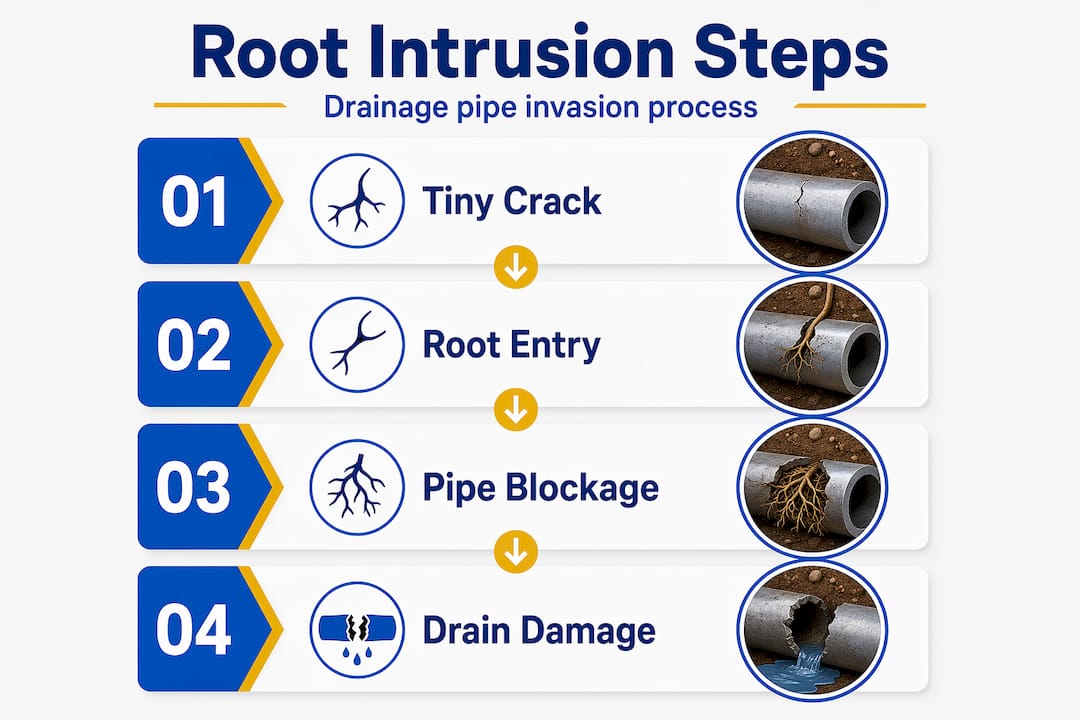
Once inside, the root doesn’t stop. It grows rapidly, branching out in all directions, trapping debris like tissue, grease, and food matter, and forming dense blockages. Over time, the root mass expands and exerts physical pressure on the pipe wall, widening existing cracks and creating new ones.
The pipe materials most vulnerable to this process include:
- Clay pipes, common in older UK properties, which crack easily over time and offer roots easy entry points
- Cast iron pipes, which corrode and develop joint gaps that roots exploit
- Concrete pipes, particularly where sections have shifted or settled
- Vitrified clay, still found in many pre-1980s UK drainage systems
Modern PVC and ductile iron pipes resist root penetration significantly better because they maintain tighter joints and do not corrode or crack as readily. If your property is more than 40 years old and has mature trees nearby, the risk of root intrusion in your drainage is considerably higher than you might expect.
Signs of root intrusion in your drains
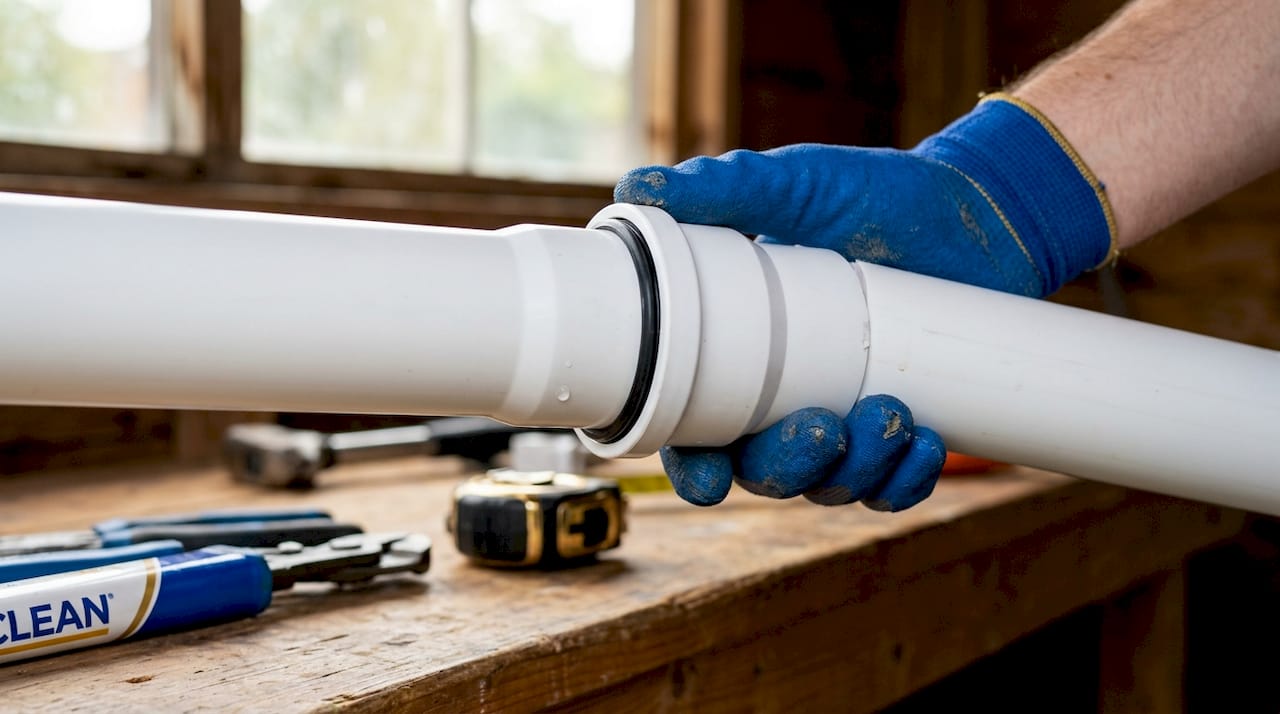
The tricky thing about root intrusion is that it develops slowly. There is rarely a sudden, obvious failure. Instead, warning signs appear long before catastrophic sewer failures, and recognising them early is what separates a manageable repair from a full pipe replacement. Knowing what to look for in your home is genuinely useful knowledge.
Here are the most common symptoms to watch for, in order of how they typically appear:
- Recurring slow drains across more than one fixture in the home. A single slow drain is usually a localised problem. Multiple slow drains at once suggests a main line issue.
- Gurgling or bubbling sounds from your toilet or sink when another fixture drains. This is trapped air being displaced by a partial blockage.
- Water backing up in the bath or lower floor drains when you flush the toilet or run the washing machine.
- Persistent blockages that return within weeks of being cleared by plunging or shop-bought unblockers.
- Foul sewage smells near external drains, in the basement, or rising through low-level drains inside.
- Unusually lush or soggy patches of grass above drain lines in the garden. Roots feed on escaping wastewater, and the grass benefits from it.
The sixth sign is one that many homeowners completely overlook. If you notice a suspiciously green strip of lawn running in a straight line across your garden, particularly over where drainage runs, that pattern is worth investigating. Multiple fixtures affected simultaneously is a strong indicator of main line root problems rather than individual fixture blockages.
Pro Tip: If gurgling sounds appear in your toilet when you drain the bath, book a CCTV survey before attempting to clear the blockage yourself. Rodding a root-intruded pipe without knowing the extent of damage can worsen cracks.
Why root intrusion is serious if ignored
The temptation when drains run slowly is to tip a bottle of drain cleaner down and hope for the best. With root intrusion, that approach doesn’t work and it doesn’t address what’s actually happening inside the pipe.
A main sewer line blockage from root intrusion is typically the result of a slow-growing problem spanning months or even years. By the time you notice a full backup, the root system inside the pipe may already be extensive. The consequences of ignoring early signs include:
- Pipe narrowing and reduced flow, leading to recurring blockages across the property
- Joint separation, where roots physically push apart pipe sections
- Pipe collapse, particularly in older clay or concrete systems under pressure from root growth
- Ground subsidence and yard erosion above failed drain lines
- Sewage backup into the home, which is both a health hazard and a costly remediation project
- Foundation risk in rare but serious cases where soil erosion near a drain line destabilises ground beneath a building
The repair cost comparison is stark. A routine CCTV inspection and root cutting job costs a fraction of what you’ll pay for emergency sewage backup remediation, pipe replacement, or the kind of groundwork required when a drain collapses under a driveway or garden patio.
| Problem stage | Likely treatment | Approximate complexity |
|---|---|---|
| Early root ingress | Root cutting or hydro jetting | Low |
| Moderate root mass with partial blockage | Hydro jetting plus CCTV survey | Moderate |
| Cracked or damaged pipe sections | Trenchless relining | Moderate to high |
| Pipe collapse or joint separation | Full excavation and replacement | High |
The earlier you catch it, the less disruptive and expensive the fix. That’s not a generalisation. It’s the consistent reality of how drainage problems progress.
Preventing root intrusion in drainage
Prevention is where you can genuinely save yourself significant trouble and money. Routine CCTV inspections every one to two years are the single most effective step for any property with mature trees nearby. A camera survey takes less than an hour, causes no disruption, and gives you a precise picture of what’s happening inside your drain lines.
Beyond inspections, landscaping choices make a real difference. When planting new trees or large shrubs, maintain a clear distance of at least 10 to 15 feet from drainage trenches and soil pipes. Species with aggressive, wide-reaching root systems, including willows, poplars, and certain species of oak, pose the greatest risk to nearby drainage.
Pro Tip: Before planting anything near your boundary or garden drainage lines, check with your local council or a drainage specialist to understand where your sewer laterals run. Most councils can provide this information, and some drainage companies offer pipe tracing as a standalone service.
Other preventive measures worth taking seriously:
- Install root barriers between existing mature trees and drain lines. Physical barriers made from dense polyethylene sheeting can redirect root growth away from pipes.
- Upgrade vulnerable pipe sections where possible. If a CCTV survey reveals ageing clay or concrete pipes in good condition, a trenchless relining solution can reinforce them from the inside without digging.
- Address leaking joints promptly. Any moisture escaping from a joint becomes a beacon for roots. Regular maintenance prevents the minor deterioration that creates entry points.
- Avoid planting directly above known drain runs, even with smaller plants. Ornamental grasses and ground-cover plants with fibrous roots can still find their way into aged pipework over time.
Proactive CCTV inspections cost considerably less than emergency repairs, making them one of the more rational investments a property owner can make in ongoing maintenance.
How to fix drainage root intrusion
If you suspect root intrusion or a survey confirms it, there are several well-established methods for resolving the problem. The right approach depends on how advanced the intrusion is and the condition of the pipe itself.
- CCTV drain survey: The starting point for any diagnosis. A camera is fed through the pipe to locate roots, assess pipe condition, and identify any cracks or joint failures. This is not optional. Accurate diagnosis through camera inspection is what determines the correct treatment.
- Mechanical root cutting: A rotating cutter is fed through the drain to physically cut through root masses. Effective for clearing blockages, though it does not seal the entry point the roots used.
- Hydro jetting: High-pressure water is blasted through the pipe to clear root debris, grease, and any remaining material. Often used after mechanical cutting to fully clear the pipe.
- Trenchless drain relining: A resin-coated liner is inserted into the damaged pipe and inflated, curing into a smooth, rigid new surface that seals cracks and eliminates root entry points. This is particularly effective for pipes with multiple small cracks.
- Pipe replacement: In cases of collapse, severe joint separation, or extensive damage, full excavation and replacement may be the only viable option. This is always a last resort when less invasive methods won’t hold.
| Method | Best for | Excavation required? |
|---|---|---|
| Mechanical root cutting | Active blockages with intact pipes | No |
| Hydro jetting | Debris clearance and root flushing | No |
| Trenchless relining | Cracked or porous pipes with root entry points | No |
| Pipe replacement | Collapsed or severely damaged sections | Yes |
For most homeowners, attempting to remove roots from drains without professional equipment risks making the situation worse. Professional treatments including relining and hydro jetting not only clear the problem but protect the pipe from future intrusion. After any treatment, a follow-up CCTV inspection confirms the pipe is clear and structurally sound.
For guidance on drain repair options across different types of drainage problems, it’s worth comparing what’s available before committing to a single approach.
My view on root intrusion: act before it acts on you
I’ve seen homeowners spend thousands of pounds on emergency drain repairs that could have been avoided for the cost of a single annual inspection. What genuinely surprises me is not that root intrusion happens. It’s how long people wait after the signs appear before doing anything about it.
The gurgling toilet is not a quirk of the plumbing. The slow bath drain that clears eventually is not just limescale. When those two things happen together, repeatedly, in a home with mature trees in the garden or a large tree on the pavement outside, that pattern tells you something specific about your drainage. Most people don’t connect those dots until they’re standing in two inches of sewage.
What I’ve learned from years of observing drainage cases is that the homeowners who fare best are the ones who treat their drainage system the same way they treat their boiler: scheduled inspections, no waiting for something to go obviously wrong. Homeowners routinely delay addressing root intrusion until it becomes an emergency, and by that point the repair options narrow and the costs rise sharply.
A CCTV survey every couple of years is not excessive for a property with any significant tree cover. It’s just practical property management. You would not wait for your roof to collapse before checking the tiles. Your drainage deserves the same logic.
— Ronnie
Protect your drainage before root intrusion takes hold

If you’ve read through this and recognised some of those warning signs in your own home, the right move is to get a proper look at what’s happening inside your pipes before things progress further. At Localservicesdrainage, we carry out professional CCTV drain surveys across the UK that pinpoint root intrusion, cracks, and blockages with precision, giving you a clear picture and a clear plan.
Whether you need a diagnostic survey, a blocked drain cleared, or a damaged pipe relined without digging up your garden, our team provides reliable solutions backed by long-term guarantees. If you’re already dealing with a blockage, our step-by-step unblocking guide covers what you can safely attempt at home and when to call in professionals. Don’t wait for the emergency. Book a survey now and know exactly what’s in your pipes.
FAQ
What does root intrusion in drainage mean?
Root intrusion in drainage refers to tree or shrub roots growing into underground pipes through cracks or loose joints. Once inside, roots trap debris, restrict flow, and can cause pipe damage ranging from partial blockages to full collapse.
Which pipes are most at risk from root intrusion?
Clay, cast iron, and concrete pipes are most vulnerable to root intrusion, particularly in properties built before the 1980s. Modern PVC pipes offer significantly better resistance due to tighter joints and greater durability.
How can I tell if roots are in my drains?
The most telling signs are slow drains in multiple fixtures, gurgling toilet sounds when other fixtures drain, sewage smells near outdoor drains, and patches of unusually lush grass above drain lines. Warning signs typically appear well before a complete blockage occurs.
Can root intrusion be fixed without digging up the garden?
Yes. Trenchless methods such as drain relining and hydro jetting resolve most root intrusion problems without excavation. Full pipe replacement requiring digging is generally only necessary when a pipe has collapsed or suffered severe structural damage.
How often should I have my drains inspected for root intrusion?
Properties with mature trees nearby should schedule a professional camera inspection every one to two years. Early detection through CCTV surveys is far less costly than emergency repairs or full pipe replacement.