TL;DR:
- Recognize early signs of drain blockage like slow draining, gurgling sounds, and odors.
- Use appropriate tools safely and consider professional help for persistent or deep clogs.
- Regular maintenance and proper waste disposal habits prevent recurring drain problems.
A blocked drain rarely announces itself politely. One moment everything is fine; the next, water is backing up in the sink, a foul smell is drifting through the kitchen, and your morning routine is derailed. For homeowners and landlords alike, a blocked drain is not just an inconvenience — it can threaten property integrity if left unaddressed. This guide walks you through every stage of the unblocking process, from spotting the early warning signs to preventing the problem from returning. Follow these steps and you will have the knowledge to act quickly, safely, and with confidence.
Table of Contents
- Assessing the blockage: signs, causes, and initial checks
- What you need: tools and safety equipment for unblocking
- Step-by-step: the professional drain unblocking process
- Aftercare: testing, verification, and preventing future blockages
- What most guides miss about effective drain unblocking
- Choose local, professional help for fast and lasting results
- Frequently asked questions
Key Takeaways
| Point | Details |
|---|---|
| Spot drain issues early | Recognising symptoms early allows for faster and less disruptive solutions. |
| Use the right tools | Proper equipment and safety gear make the unblocking process safer and more effective. |
| Follow step-by-step processes | Structured actions improve success rates and reduce potential damage. |
| Maintain your drains | Regular maintenance and good habits prevent future blockages and emergencies. |
| Know when to call experts | Professional help ensures thorough, lasting solutions when DIY attempts do not work. |
Assessing the blockage: signs, causes, and initial checks
Before reaching for a plunger, take a moment to understand what you are dealing with. Recognising the signs early can save you significant time and money.
Common warning signs include:
- Water draining slowly from sinks, baths, or showers
- Gurgling or bubbling sounds from plughole or toilet
- Unpleasant odours rising from drains
- Water pooling around outdoor drain covers
- Toilets filling higher than usual before draining
If you are noticing more than one of these at the same time, the blockage is likely further down the pipe rather than right at the surface. The causes of blocked drains in UK households most often come down to a handful of repeat offenders. Common drain problems reported by water companies include grease and fat solidifying inside pipes, non-flushable wipes being disposed of incorrectly, hair accumulating near the plughole, and tree roots gradually infiltrating older clay pipes.
Worth knowing: Fat build-up and foreign objects are among the most common causes of blocked drains in UK households, yet both are almost entirely preventable with simple habit changes.
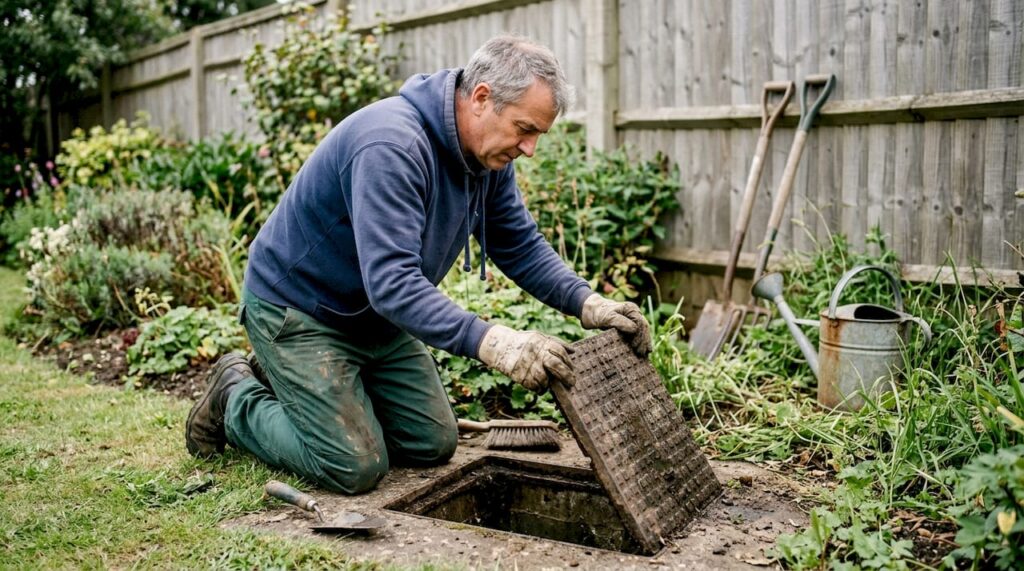
For your initial checks, start outside. Lift the nearest inspection cover (using gloves) and look for standing water or visible debris. If the chamber is clear, the blockage is likely inside the property. If it is full or overflowing, the issue is in the external run or shared sewer. Use our guide to identifying blockages to narrow down exactly where the problem sits before you begin any work. Never probe a drain without protective gloves, and avoid leaning directly over an open chamber where gases can build up.
What you need: tools and safety equipment for unblocking
Once you have a clearer picture of the blockage, gather the right equipment before you start. Going in unprepared is how small problems become bigger ones.
Essential tools and equipment:
- Cup plunger — for sink and bath blockages
- Flange plunger — specifically shaped for toilet blockages
- Drain rods — for external or deeper pipe blockages
- Rubber gloves — heavy-duty, elbow-length where possible
- Safety goggles — to protect eyes from splashback
- Old towels or absorbent sheets — to manage overflow
- Torch — for inspecting drain chambers
| Method | Best for | Risk level |
|---|---|---|
| Plunger | Surface and shallow blockages | Low |
| Drain rods | External pipes and deeper runs | Medium |
| Chemical cleaner | Minor organic build-up only | Medium to high |
| High-pressure jetting | Stubborn or widespread blockages | Professional only |
A word on chemical cleaners: they have their place, but use them sparingly. They work on soft organic matter like grease and hair, but they can corrode older pipework and are harmful to waterways if overused. Always follow the manufacturer’s instructions and never mix different products. Wearing gloves and eye protection is recommended for every drain unblocking task, not just when chemicals are involved.
For guidance on safety guidelines for working near pipes, it is worth reviewing official advice before attempting any work that involves digging or accessing underground infrastructure.
Pro Tip: Always work with the water supply turned off at the isolation valve before rodding internal pipes. This prevents accidental flooding if you dislodge a blockage suddenly.
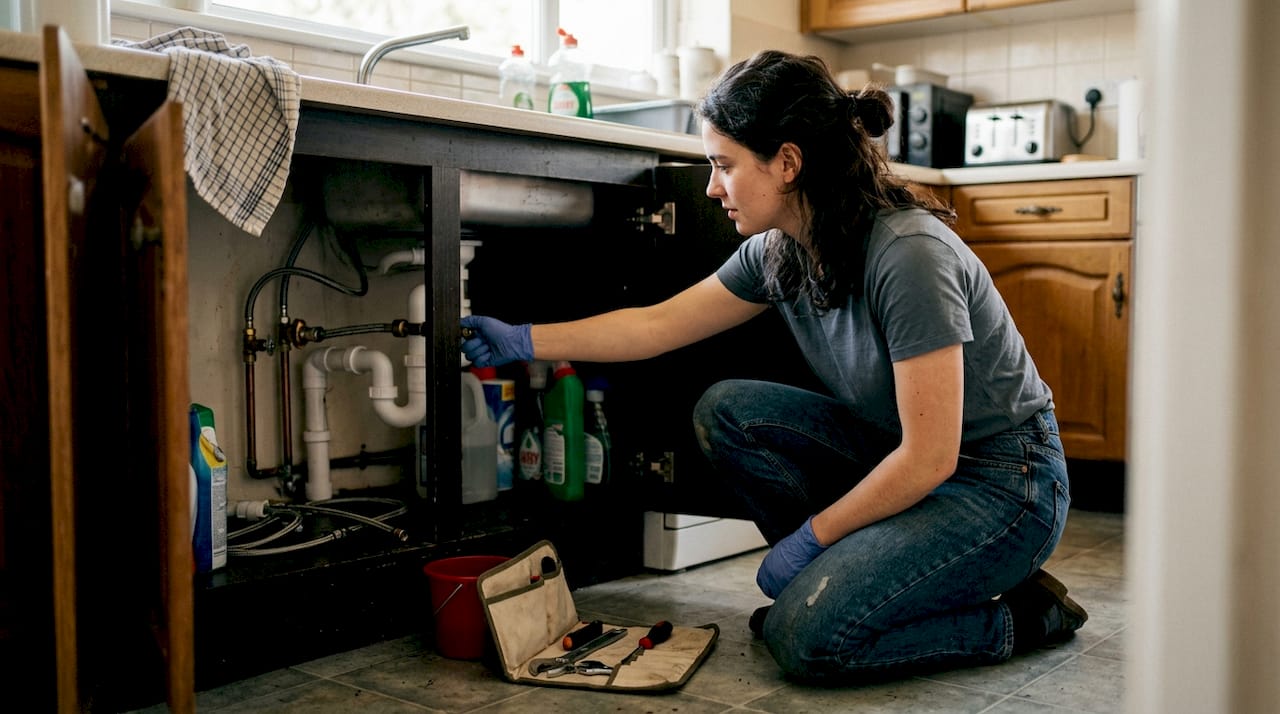
Knowing which tools for unblocking drains suit your specific situation will save you from wasting time on the wrong approach entirely.
Step-by-step: the professional drain unblocking process
With your tools ready and safety measures in place, here is how to work through the unblocking process methodically.
Step 1: Plunging
Create a firm seal over the plughole or toilet outlet with the appropriate plunger. Push down slowly and pull up sharply, repeating 10 to 15 times. The suction and pressure shift can dislodge surface-level blockages quickly.
Step 2: Rodding
For external drains, feed drain rods into the inspection chamber and work them towards the blockage. Rotate clockwise only — anticlockwise can unscrew the rod fittings and leave them stuck in the pipe. Apply steady pressure rather than forcing the rods aggressively.
Step 3: Flushing with hot water
After clearing visible debris, flush the drain with hot (not boiling) water to help dissolve remaining grease. Boiling water can soften or crack plastic pipework.
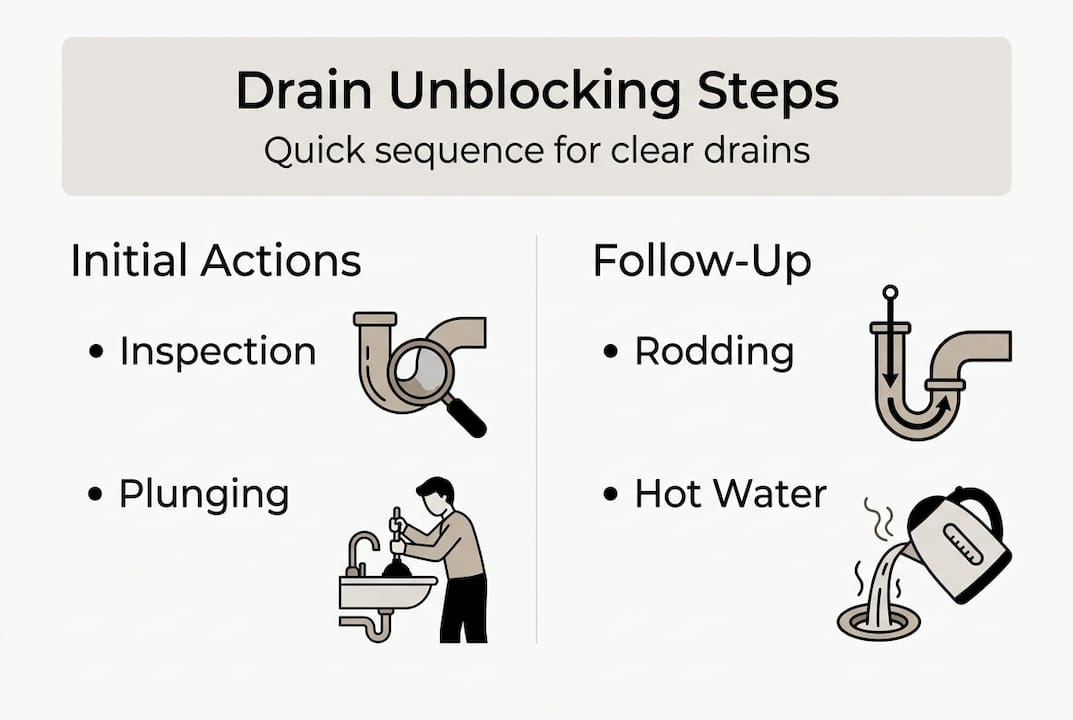
Step 4: High-pressure water jetting
This is where professional tools make a significant difference. Professional drain unblocking often uses mechanical tools including high-pressure water jets that can clear compacted blockages and clean pipe walls in one pass — something no plunger can achieve.
| Approach | Typical success rate | Suitable for homeowners |
|---|---|---|
| Plunging | Moderate | Yes |
| Rodding | Good for external | With care |
| Chemical treatment | Low to moderate | Yes, with caution |
| Professional jetting | Very high | No — specialist only |
Pro Tip: If you have tried plunging and rodding without success, stop. Forcing the obstruction further into the pipe can turn a straightforward job into an expensive repair. At this point, calling in a specialist is the smarter move.
You can review official guidance on drainage to understand your responsibilities as a homeowner or landlord. For urgent situations, emergency drain unblocking services are available with rapid response across southern UK. Learning about professional unblocking techniques can also help you understand what to expect when a specialist arrives.
Aftercare: testing, verification, and preventing future blockages
Clearing the blockage is only half the job. Verifying the fix and putting preventive habits in place is what separates a lasting solution from a temporary one.
Post-unblocking checks:
- Run the cold tap for two minutes and watch the drain rate
- Flush the toilet twice and check for normal water levels
- Inspect the inspection chamber outside for standing water
- Smell-check near plugholes for any lingering odour
- Look under sinks for any signs of seepage or joint leaks
Remember: A drain that clears quickly but smells strongly may still have residue coating the pipe walls. A second flush with hot water and a small amount of bicarbonate of soda can help neutralise this.
If the drain clears but the problem returns within a few weeks, this is a strong signal of a structural issue such as a cracked pipe, root intrusion, or a partial collapse. In these cases, a CCTV survey is the most reliable way to identify exactly what is happening underground without unnecessary excavation.
Regular maintenance reduces emergency callouts by up to 60%, which is a compelling reason to build simple habits into your routine. Follow advice to avoid blockages from water industry bodies, which consistently highlights proper waste disposal as the single most effective preventive measure.
Simple preventive habits that work:
- Fit sink and shower strainers to catch hair and debris
- Never pour cooking fat or oil down the sink
- Only flush toilet paper — nothing else
- Clean drain covers monthly
- Pour hot water down kitchen drains weekly
Pro Tip: Schedule a professional drain inspection once a year if you own an older property or have trees close to your drainage runs. Catching root intrusion early is far cheaper than dealing with a collapsed pipe.
What most guides miss about effective drain unblocking
Most articles on drain unblocking focus entirely on the immediate fix. Shift the blockage, restore the flow, job done. But in our experience, this approach misses the bigger picture entirely.
The drains that cause the most trouble are rarely the ones that block once. They are the ones that block repeatedly, every few months, until a homeowner finally investigates properly and discovers a structural defect that has been there for years. A plunger cannot fix a cracked pipe. Drain rods cannot remove an ingrown tree root. Focusing only on clearing the symptom while ignoring the underlying cause is expensive in the long run.
True reliability comes from pairing prompt unblocking with planned, regular maintenance. It also comes from knowing when a pattern of blockages warrants a professional assessment rather than another round of DIY effort. A CCTV survey, for instance, takes less than an hour and can reveal exactly what is happening inside your pipework. That knowledge is far more valuable than guessing.
If your drains are blocking more than once a year, invest in long-term drain maintenance and get a professional to look at the root cause. The peace of mind alone is worth it.
Choose local, professional help for fast and lasting results
When a blockage goes beyond what a plunger or drain rods can handle, the difference between a quick fix and a lasting result often comes down to who you call. Attempting repeated DIY on a stubborn or recurring blockage risks pushing debris further into the system or masking a more serious structural problem.
At Local Services Drainage, we cover a wide area across southern UK with rapid response times and fully equipped engineers. Whether you need guidance from our detailed drain unblocking guide, want to understand the role of professional unblocking, or are ready to book, our local unblocking services are here to help. Get in touch today for a fast, no-obligation quote.
Frequently asked questions
How do I know if my drain is blocked or slow?
Slow draining water and odours are classic signs of a blockage, along with gurgling sounds and water backing up around plugholes or in the toilet bowl.
Is it safe to use chemical drain cleaners?
Care with chemical cleaners is essential as they can damage older pipes and harm the environment, so use them only for minor organic clogs and always wear full protective gear.
When should I call a professional drain unblocking service?
Professional drain unblocking is the right call if DIY methods fail, the blockage keeps returning, or you suspect a structural problem such as root intrusion or a pipe collapse.
What can I do to prevent drains blocking?
Regular maintenance and waste disposal habits such as using strainers, never pouring fat down the sink, and flushing only toilet paper are the most effective ways to keep drains clear long term.