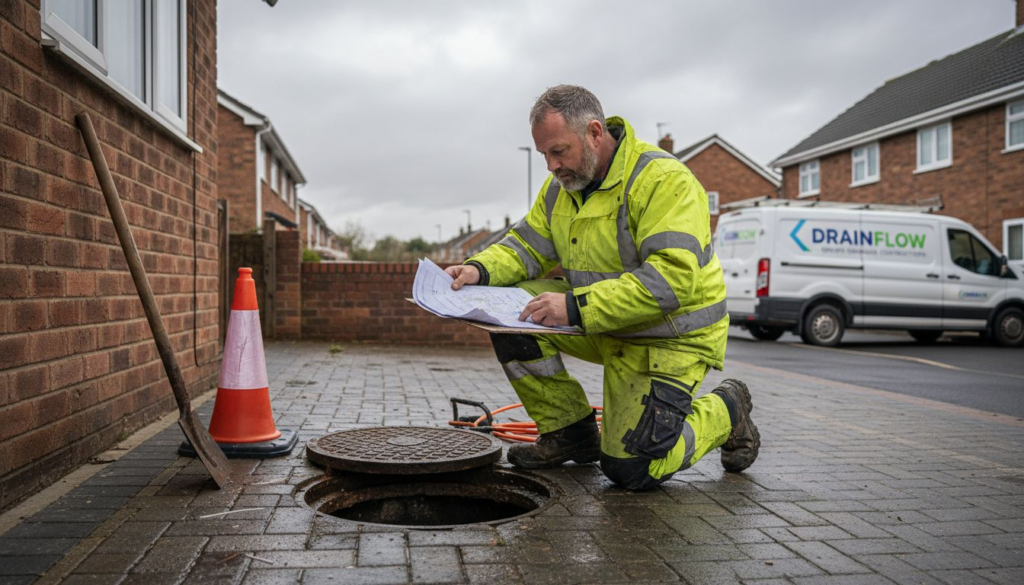
Blocked drains or sudden flooding can leave homeowners and landlords across Southern England feeling stressed and vulnerable. Drainage problems rarely fix themselves, especially in older properties where ageing clay pipes and shifting weather patterns put extra strain on the system. Choosing the right specialist makes all the difference, as professional drainage contractors provide more than quick fixes—they offer comprehensive system management, emergency repairs, and advanced diagnostics using tools like CCTV drain surveys to protect your property’s value and safety. For peace of mind and regulatory confidence, understanding the true scope of drainage contracting is key.
Table of Contents
- Definition And Scope Of Drainage Contracting
- Types Of Drainage Services Offered
- Modern Technology And Diagnostic Methods
- Legal Requirements And Compliance Standards
- Responsibilities, Risks And Cost Implications
Key Takeaways
| Point | Details |
|---|---|
| Comprehensive Services | Drainage contractors provide a variety of services, from emergency repairs to preventative maintenance, ensuring the functionality of drainage systems. |
| Importance of Diagnostics | Advanced diagnostic technologies like CCTV surveys minimise disruptions by accurately identifying issues before they escalate. |
| Legal Compliance | Adherence to legal and regulatory standards is critical for safe drainage operations, protecting public health and the environment. |
| Long-Term Cost Management | Regular maintenance and strategic planning can significantly reduce future emergency repair costs, saving property owners money in the long run. |
Definition and Scope of Drainage Contracting
Drainage contracting covers the design, installation, maintenance, and management of drainage systems that protect properties and public health. This work extends far beyond simple pipe clearing—it encompasses the entire lifecycle of drainage infrastructure, from initial planning through ongoing asset management.
At its core, drainage contracting involves managing drainage and wastewater assets owned by sewage undertakers and private property owners. Contractors work across residential, commercial, and industrial settings to ensure systems function correctly and comply with regulations.
What Drainage Contractors Actually Do
Drainage contractors deliver a range of specialised services tailored to different property needs.
Key services include:
- Drain unblocking and clearance using mechanical or high-pressure methods
- CCTV surveys to diagnose problems before they escalate into costly repairs
- No-dig relining technology to repair existing pipes without excavation
- Installation of new drainage systems for properties and developments
- Emergency repairs for urgent situations like sewage backups or collapsed pipes
- Preventative maintenance to identify issues early
The Expanding Scope of Modern Drainage Work
Historically, drainage was straightforward: water in, water out. Today’s reality is considerably more complex.
Drainage systems now address urbanisation pressures and climate change through sustainable design and advanced technology. Contractors must understand environmental regulations, sustainable water management, and how systems integrate with broader property infrastructure.
Southern England properties face particular challenges. Older Victorian and Edwardian terraces often have outdated clay pipes. Modern developments need systems that handle increased water volumes from climate variability. Properties near flood zones require resilience planning.
Modern drainage contracting combines technical expertise with environmental responsibility and regulatory compliance—it’s not just about moving water away anymore.
Why Scope Matters for Your Property
Understanding what drainage contractors cover helps you recognise when you need specialist help. A blocked gully is one thing; a structural pipe failure is another entirely.
Contractors who truly understand scope can:
- Diagnose root causes, not just symptoms
- Recommend appropriate solutions rather than unnecessary work
- Plan preventative maintenance tailored to your system
- Navigate local regulations and building codes
- Coordinate with water authorities when required
When homeowners contact drainage professionals, many assume the contractor will simply unblock drains and leave. Professional contractors view their role more broadly—assessing overall system health, identifying risks, and protecting your property’s structural integrity and value.
Pro tip: When requesting quotes from drainage contractors, ask specifically what diagnostic assessment they’ll perform beyond the immediate problem—this reveals whether they understand true scope or simply treat symptoms.
Types of Drainage Services Offered
Drainage contractors offer a diverse portfolio of services to address different property challenges and system requirements. The scope extends far beyond emergency unblocking—it includes diagnostic work, preventative maintenance, system design, and comprehensive installations tailored to residential, commercial, and industrial needs.
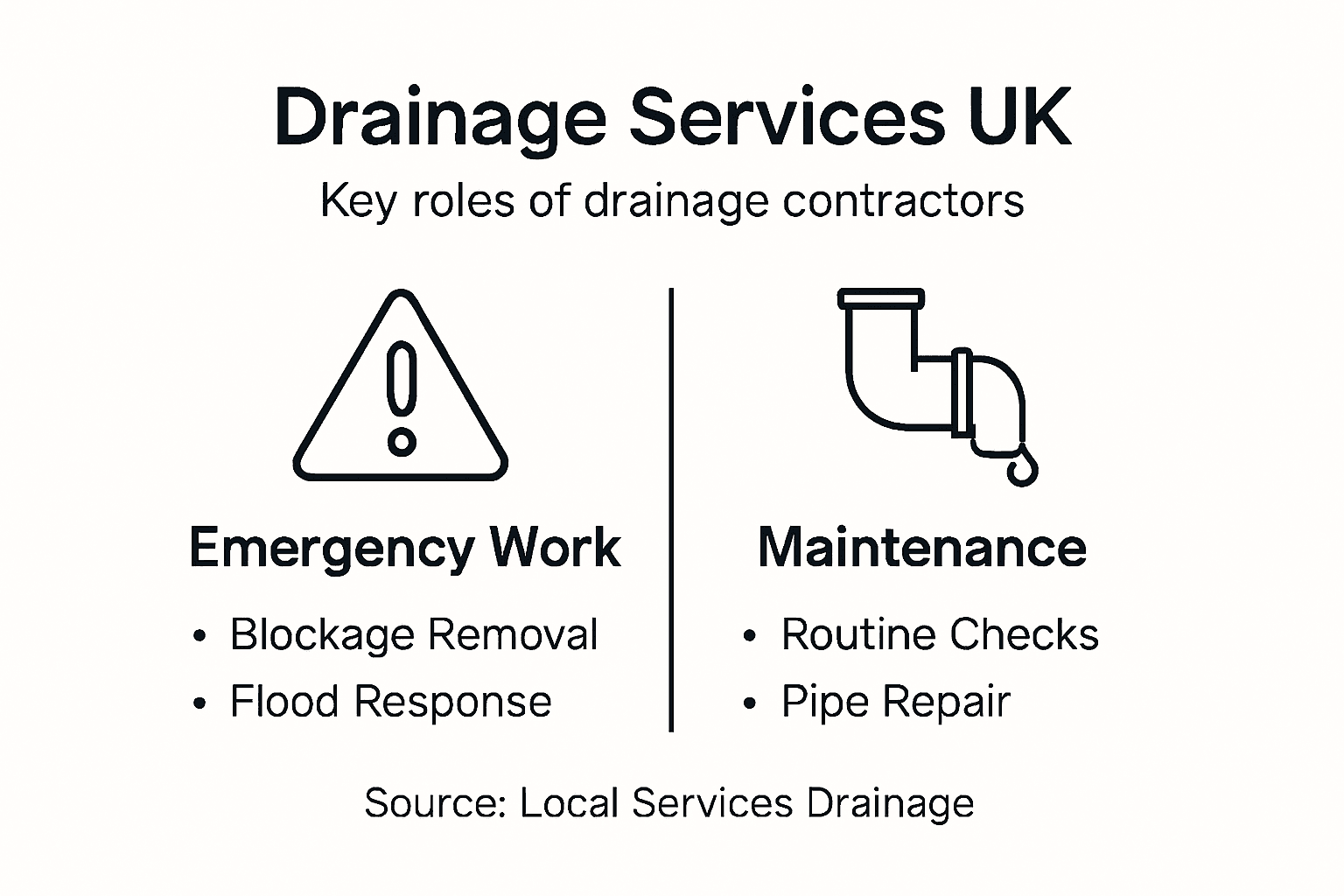
Understanding which services match your situation helps you make informed decisions and avoid unnecessary costs. Different properties require different approaches depending on their age, location, and existing infrastructure.
Emergency and Reactive Services
When drainage problems strike, quick action prevents damage to your property and surrounding areas.
Emergency services include:
- Blocked drain clearance using high-pressure water jetting or mechanical removal
- Sewage backup response to restore function and prevent contamination
- Collapsed pipe repairs requiring urgent stabilisation or replacement
- Flooding mitigation during extreme weather events
- Odour and pest control addressing symptoms of serious drainage issues
Diagnostic and Assessment Services
Problems rarely announce themselves clearly. Professional contractors use advanced technology to identify exactly what’s wrong before recommending solutions.
CCTV drain surveys provide visual inspection of pipe interiors, revealing cracks, blockages, tree root intrusion, and structural failures. This diagnostic approach prevents guesswork and unnecessary excavation. Surface water drainage and foul water drainage systems each require different assessment approaches depending on whether you’re managing stormwater or sewage.
Other diagnostic services include:
- Dye testing to trace water flow paths
- Ground penetrating radar for underground asset location
- Pressure testing to identify leaks
- Smoke testing to detect illegal cross-connections
Repair and Rehabilitation Services
Once diagnosis is complete, contractors can recommend the most appropriate repair method for your situation.
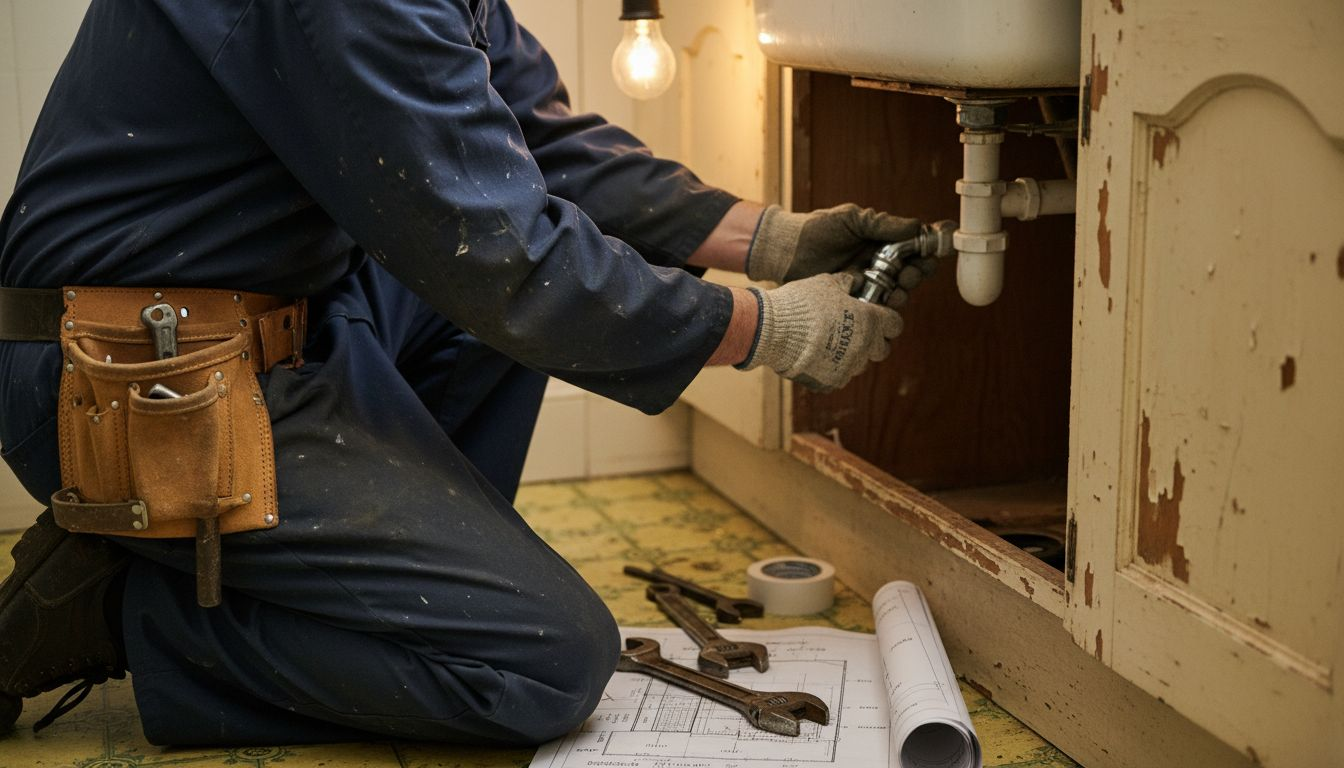
No-dig relining technology rehabilitates existing pipes without excavation, minimising disruption to your property and landscaping. This approach works for pipes with structural damage but intact access points.
Traditional excavation and replacement remains necessary for severely damaged sections or when installing new connections.
Modern drainage contractors match repair methods to specific problems—no-dig solutions work brilliantly for some situations, but traditional methods remain essential for others.
Installation and New System Services
New build properties, major renovations, and system upgrades require professional drainage installation ensuring safe, reliable properties. This involves designing systems that meet current building regulations, handle projected water volumes, and integrate with existing infrastructure.
Preventative Maintenance Services
Regular maintenance identifies problems before they become emergencies. Scheduled inspections, cleaning, and minor repairs extend system lifespan significantly.
Maintenance programmes typically include:
- Annual CCTV surveys for properties with older systems
- Regular jetting to prevent material buildup
- Root cutting for properties with trees nearby
- Quick response for minor issues before they escalate
Pro tip: Request a preventative maintenance plan when discussing your drainage system with contractors—properties on scheduled maintenance programmes experience significantly fewer emergency callouts and lower long-term costs.
Modern Technology and Diagnostic Methods
Drainage contractors today have access to sophisticated tools that would have seemed like science fiction a decade ago. These technologies transform how professionals diagnose problems, plan repairs, and prevent future issues. For Southern England homeowners, this means faster problem identification and more targeted solutions that minimise disruption to your property.
Modern diagnostics move beyond guesswork. Contractors can now see exactly what’s happening inside your pipes and predict maintenance needs before catastrophic failures occur.
Here’s how modern drainage technologies enhance system management:
| Technology | Key Benefit | Typical Application |
|---|---|---|
| CCTV drain surveys | Pinpoint fault localisation | Diagnosing hidden pipe issues |
| Pressure testing | Detects leaks accurately | Verifying pipework integrity |
| GIS asset mapping | Shows system layout visually | Planning upgrades and repairs |
| Real-time monitoring sensors | Identifies developing faults | Scheduling proactive maintenance |
CCTV Drain Surveys and Visual Inspection
Closed-circuit television surveys represent the gold standard for understanding pipe condition. A camera travels through your drainage system, recording high-definition footage of the interior surfaces.
What CCTV reveals:
- Cracks and structural damage
- Blockages and debris accumulation
- Tree root intrusion
- Pipe misalignment or sagging
- Corrosion and material degradation
- Infiltration points where groundwater enters
This visual evidence eliminates uncertainty. Instead of recommending expensive excavation based on symptoms, contractors can recommend precisely targeted solutions.
Advanced Monitoring and Assessment Tools
Remote sensing and hydrological modelling help assess system conditions and predict maintenance needs. Geographic Information Systems (GIS) map your property’s drainage assets, showing connections, flow directions, and relationships to neighbouring systems.
Other diagnostic technologies include:
- Smoke testing to locate cracks and illegal connections
- Pressure testing to identify leaks quantitatively
- Dye testing to trace water movement through soil
- Ground penetrating radar for locating buried pipes without digging
Sustainable Drainage Systems and Real-Time Monitoring
Sustainable Drainage Systems (SuDS) incorporate green infrastructure and real-time monitoring for flood risk mitigation. These systems combine traditional drainage with permeable surfaces, swales, and detention ponds that capture water naturally whilst improving aesthetics and ecology.
Real-time monitoring sensors track water flows, pressure levels, and system performance continuously. This data helps contractors identify problems developing slowly and schedule maintenance proactively rather than reactively.
Technology-enabled drainage isn’t about replacing professional expertise—it amplifies it, giving contractors better information to make smarter decisions about your property.
High-Pressure Water Jetting and Modern Clearance
High-pressure water jetting uses controlled jets to dislodge blockages and clean pipe walls. Unlike mechanical methods that can damage older pipes, pressure jetting adjusts to different pipe materials and conditions.
This technology proves particularly valuable for:
- Removing accumulated grease and soap deposits
- Clearing debris without pipe damage
- Cleaning pipe interiors for inspection
- Breaking down mineral deposits in older systems
Digital Collaboration and Asset Management
Professional contractors now use integrated digital systems to manage drainage assets comprehensively. These platforms track maintenance history, record survey findings, and generate reports showing your system’s condition over time.
Benefits include:
- Complete maintenance records accessible when needed
- Trend analysis showing whether problems are developing
- Planned maintenance scheduling based on actual conditions
- Documentation supporting property valuations and insurance claims
Pro tip: When contractors complete diagnostic work on your property, request the CCTV footage and any digital records—these become invaluable documentation if you later sell your home or need insurance claims support.
Legal Requirements and Compliance Standards
Drainage contractors in the UK operate within a complex legal framework designed to protect public health, water quality, and environmental integrity. Understanding these requirements matters because they affect what contractors can do, how they must do it, and what documentation you should expect.
For Southern England homeowners and landlords, compliance standards ensure contractors meet professional expectations and that your property’s drainage work adheres to current regulations.
Statutory Framework and Water Industry Legislation
The Water Industry Act 1991 forms the foundation of UK drainage law. This legislation establishes duties for sewage undertakers and defines rights and responsibilities across the drainage sector.
Sewerage undertakers must prepare and maintain Drainage and Wastewater Management Plans under this Act. These plans require public consultation, adherence to environmental regulations, and collaboration with risk management authorities to protect public health and water quality.
Key legislative requirements include:
- Maintenance of public sewers and drainage assets
- Emergency response obligations for blockages and failures
- Connection standards for properties to public sewers
- Environmental protection through water quality management
- Public consultation on major drainage changes
Building Regulations and Installation Standards
When installing new drainage systems, contractors must comply with Building Regulations Part H which specifies technical standards for drains, sewers, and private water supplies. These regulations ensure systems are designed and installed correctly to function safely throughout their lifespan.
Regulations cover:
- Pipe materials and dimensions
- Gradients and flow rates
- Access points and maintenance provisions
- Connection standards to public sewers
- Testing requirements before completion
Environmental and Health Compliance
Drainage operations must align with national policies, environmental regulators, and statutory frameworks such as the Environment Act. This legislation requires environmental sustainability, resilience to climate impacts, and health and safety standards.
Compliance obligations include:
- Protection of watercourses and groundwater
- Flood risk management and resilience planning
- Pollution prevention during construction work
- Hazard management for contractors and the public
- Climate change adaptation measures
Professional drainage contractors understand that compliance isn’t a bureaucratic burden—it’s how they protect your property and the wider community from environmental harm.
Certificates and Documentation Requirements
When contractors complete installation or major repair work, they must provide completion certificates confirming the work meets regulations. These documents prove compliance to local authorities and become important if you sell your property.
Important certifications include:
- Building Control completion certificates for new installations
- CCTV survey reports confirming system condition
- Water tightness test certificates
- Work completion warranties
- Environmental compliance declarations
Professional Standards and Insurance
Reputable drainage contractors carry professional indemnity insurance and membership in recognised industry bodies. These standards protect you if problems arise after completion.
Standards to verify:
- Membership in professional institutions
- Public liability insurance coverage
- Health and safety compliance certifications
- Environmental accreditations
- Ongoing professional development records
Pro tip: Before engaging a drainage contractor, ask to see their insurance certificates, professional memberships, and previous client references—these confirm they take legal compliance and professional standards seriously, protecting both your property and your interests.
Responsibilities, Risks and Cost Implications
Drainage contractors accept substantial responsibilities when they engage with your property. Understanding what they’re accountable for, what risks exist, and how costs accumulate helps you make informed decisions about maintenance, repairs, and emergency response.
For Southern England property owners, knowing these implications protects both your investment and your peace of mind when drainage problems occur.
Contractor Responsibilities and Accountability
Drainage contractors hold significant responsibilities including ensuring safe and effective water removal, preventing property damage, and adhering to environmental regulations. This extends beyond simply clearing blockages—it encompasses system diagnosis, appropriate solution selection, and proper documentation.
Key responsibilities include:
- Diagnosing problems accurately before recommending solutions
- Using appropriate methods that won’t damage existing systems
- Complying with all environmental and safety regulations
- Providing transparent communication about findings and options
- Delivering work that meets Building Regulations standards
- Maintaining professional indemnity insurance
Financial Risks and Cost Drivers
Cost implications of drainage contracting include expenses related to installation, routine maintenance, emergency repairs, and advanced technologies. Delaying maintenance or ignoring warning signs dramatically increases your financial exposure.
To clarify common cost drivers for drainage works:
| Cost Driver | Impact on Price | Typical Examples |
|---|---|---|
| Emergency callout | Higher overall cost | Weekend or out-of-hours repair |
| Advanced diagnostics | Increased upfront cost, lower risk | CCTV survey, radar, dye test |
| Repair method | Labour and disruption considerations | No-dig relining vs. excavation |
| Regular maintenance | Predictable, lower long-term cost | Scheduled jetting, inspections |
Typical cost factors include:
- Emergency callout premiums for urgent response
- Diagnostic fees for CCTV surveys and assessments
- Labour intensity for excavation versus no-dig solutions
- Materials costs for pipes, fittings, and specialist products
- Compliance and testing requirements
- Preventative maintenance versus reactive emergency repairs
System Failure Risks and Property Damage
Neglected drainage systems pose serious financial and health risks. A single sewage backup can damage interior finishes, contaminate groundwater, and create public health hazards.
Risks include:
- Structural damage from water infiltration and soil subsidence
- Contamination of gardens, water sources, and neighbouring properties
- Legal liability if your drainage problem affects others
- Property devaluation and difficulty selling
- Insurance complications if negligence contributed to damage
Investing in preventative maintenance now costs far less than managing catastrophic failure later—the maths is unambiguous.
Environmental and Legal Liability
Contractors operating outside compliance standards face legal penalties. As a property owner, you can inherit liability if your system causes environmental damage or public nuisance.
Liability considerations:
- Pollution incidents triggering Environment Agency enforcement
- Fines for illegal connections or non-compliant work
- Neighbour disputes over drainage disputes affecting their property
- Insurance claim denials if work lacked proper certification
- Local authority enforcement action requiring remedial work
Long-Term Cost Management Strategies
Effective planning minimises costs whilst safeguarding your property. Regular inspection identifies developing problems before they escalate into expensive emergencies.
Cost-effective approaches:
- Annual or bi-annual CCTV surveys for older properties
- Preventative jetting and root cutting schedules
- Maintaining digital records of all drainage work completed
- Addressing minor issues immediately rather than deferring
- Planning major work during quieter seasons when pricing may be competitive
Pro tip: Request a written cost estimate comparing preventative maintenance over five years versus likely emergency repair costs if problems develop—most property owners are shocked to discover that scheduled maintenance typically saves 60-70% on total drainage expenditure.
Protect Your Property with Expert Drainage Solutions Today
Drainage challenges such as blocked drains, ageing pipes, and compliance complexities can quickly escalate into costly property damage and environmental risks if left unaddressed. Understanding that effective drainage contracting goes beyond simple repairs to include advanced diagnostics like CCTV surveys and no-dig relining is crucial to safeguarding your home or business in Southern England. At Local Services Drainage, we specialise in offering comprehensive drainage services that combine technical expertise with strict adherence to UK legal standards, helping you prevent emergencies before they occur.
Why choose us?
- Rapid emergency response to minimise damage
- Use of cutting-edge technology for precise diagnostics and repairs
- Long-term repair guarantees that protect your investment
- Services tailored to residential and commercial properties alike
Don’t wait for a minor issue to become a major expense. Visit Local Services Drainage now to book your thorough drainage inspection or to get an immediate quote. Trust us to keep your drainage systems reliable, compliant, and efficient with professional service dedicated to your peace of mind.
Frequently Asked Questions
What services do drainage contractors provide?
Drainage contractors offer a range of services including drain unblocking, CCTV surveys for diagnostics, no-dig relining, installation of new drainage systems, emergency repairs, and preventative maintenance to ensure the longevity of drainage systems.
How can I tell if I need to call a drainage contractor?
If you experience persistent blockages, foul odours, flooding, sewage backups, or slow drainage, it may indicate a problem requiring professional assessment by a drainage contractor for diagnosis and repair.
What are the benefits of preventative maintenance for drainage systems?
Preventative maintenance helps identify issues early before they escalate into costly emergencies. Regular inspections and cleanings can significantly extend the lifespan of your drainage system and reduce the likelihood of unexpected breakdowns.
How do drainage contractors ensure compliance with legal requirements?
Drainage contractors comply with various legal standards, including the Water Industry Act and Building Regulations. They must provide completion certificates and ensure their work meets environmental and safety regulations to protect public health and property.