Most homeowners in the southern UK only think about their drains when something goes wrong. By then, the damage is often already done. Clay soils across much of Surrey, Hampshire, and Kent make drainage systems particularly vulnerable, as ground movement can crack pipes and restrict flow over time. Heavy seasonal rainfall compounds the problem, pushing blocked or poorly maintained drains to their limits. The good news is that annual CCTV drain surveys can detect hidden issues like root intrusion and pipe collapses before they become expensive emergencies. This checklist gives you a clear, practical routine to follow every month and every year.
Table of Contents
- Why a drainage maintenance checklist matters
- Monthly surface drainage checks for homeowners
- Identifying warning signs and early intervention
- Annual professional drainage maintenance: what to expect
- Drainage maintenance checklist: monthly vs annual tasks
- Common mistakes to avoid with drainage maintenance
- Expert drainage help for southern UK homeowners
- Frequently asked questions
Key Takeaways
| Point | Details |
|---|---|
| Monthly checks are crucial | Simple monthly drainage checks prevent costly repairs and water damage. |
| Annual surveys catch hidden risks | CCTV drain surveys help spot problems like root intrusion or cracks before they escalate. |
| Document everything | Good records of inspections and repairs protect you for insurance or sale of your home. |
| Avoid harsh chemicals | Using mechanical or professional cleaning keeps your pipes healthy and preserves their life. |
| Combine DIY and pro help | A mix of routine DIY checks and expert maintenance offers the best long-term drainage health. |
Why a drainage maintenance checklist matters
Ignoring your drains is a bit like ignoring a slow puncture. It feels manageable until it suddenly is not. For homeowners in the southern UK, the stakes are higher than most people realise. Flooding, subsidence, foul odours, and a drop in property value are all real consequences of neglected drainage systems.
Prevention is better than reaction, especially in southern UK’s heavy rainfall zones where clay soil puts drains under constant pressure.
The clay-heavy ground across much of the south shifts with moisture levels, which stresses pipe joints and can cause gradual misalignment. When water cannot drain efficiently, it backs up, saturates the ground, and can undermine your home’s foundations. That is subsidence territory, and it is expensive.
Following a structured checklist helps you stay ahead of these risks. The key benefits include:
- Catching small blockages before they become full pipe collapses
- Protecting your home from preventing property floods caused by overwhelmed drainage
- Maintaining property value and avoiding costly emergency call-outs
- Building a maintenance record that supports insurance claims and property sales
- Reducing unpleasant odours caused by slow-moving or stagnant water in pipes
A checklist turns a vague intention into a reliable habit. That habit is what separates homes that stay dry from those that do not.
Monthly surface drainage checks for homeowners
Monthly checks do not need to take long. Twenty minutes once a month is enough to catch the majority of surface-level problems before they escalate. For southern UK homes, prioritise external gullies and proper gradients as your first line of defence against heavy rain and clay soil drainage issues.
Here is a simple numbered routine to follow each month:
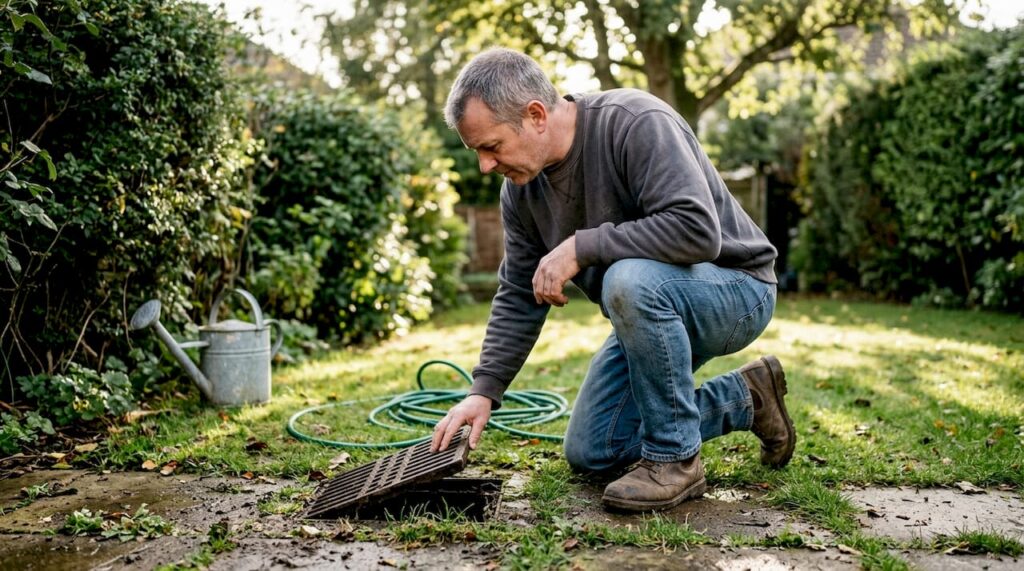
- Walk the perimeter of your property and look for pooling water, sunken ground, or damp patches near drain covers.
- Clear debris from gully grates including leaves, mud, and moss that accumulate quickly in autumn and winter.
- Lift drain covers carefully and check for visible blockages, unusual smells, or standing water that should not be there.
- Run water from an outdoor tap or hose into each gully and watch how quickly it drains. Slow drainage is a red flag.
- Check downpipes and gutters for blockages or leaks that could be directing water toward your foundations.
- Note anything unusual in a simple log, whether that is a gurgling sound, a slow drain, or a new damp patch.
Pro Tip: Keep a basic notebook or use your phone’s notes app to log each monthly check with the date and any observations. This record becomes invaluable if you ever need to make an insurance claim or sell your property.
Documentation is something most homeowners skip entirely, yet it takes less than two minutes per check. Use your drainage inspection guide as a reference point for what to look for during each visit.
Identifying warning signs and early intervention
Knowing what to look for is half the battle. Drainage problems rarely appear without warning. They give you signals first, and acting on those signals early can save you hundreds, sometimes thousands, of pounds.
The most common warning signs include:
- Slow draining in sinks, baths, or showers, which suggests a partial blockage forming
- Gurgling sounds from plug holes or toilets, often caused by trapped air in a partially blocked pipe
- Bad smells rising from drains, indicating decomposing organic matter or a sewer issue
- Pooling water in the garden or on hard surfaces after rain, pointing to a blocked or collapsed drain
- Backups where water returns up through a drain or toilet when another fixture is used
Test water flow by pouring a bucket of water into an external gully and timing how long it takes to clear. It should drain within seconds, not minutes.
If you spot any of these signs, do not wait. A partial blockage cleared early is a simple job. Left alone, it becomes a full blockage, then a pipe under pressure, then a potential collapse. Our drain cleaning services are designed to address exactly these early-stage problems before they escalate. Understanding the link between maintenance and flooding makes it clear why prompt action matters so much.
Annual professional drainage maintenance: what to expect
Monthly checks cover what you can see. Annual professional maintenance covers everything you cannot. Subsurface pipes, pipe joints, root intrusion, and gradual structural deterioration are invisible to the naked eye but detectable with the right equipment.
Here is what a professional annual maintenance visit typically involves:
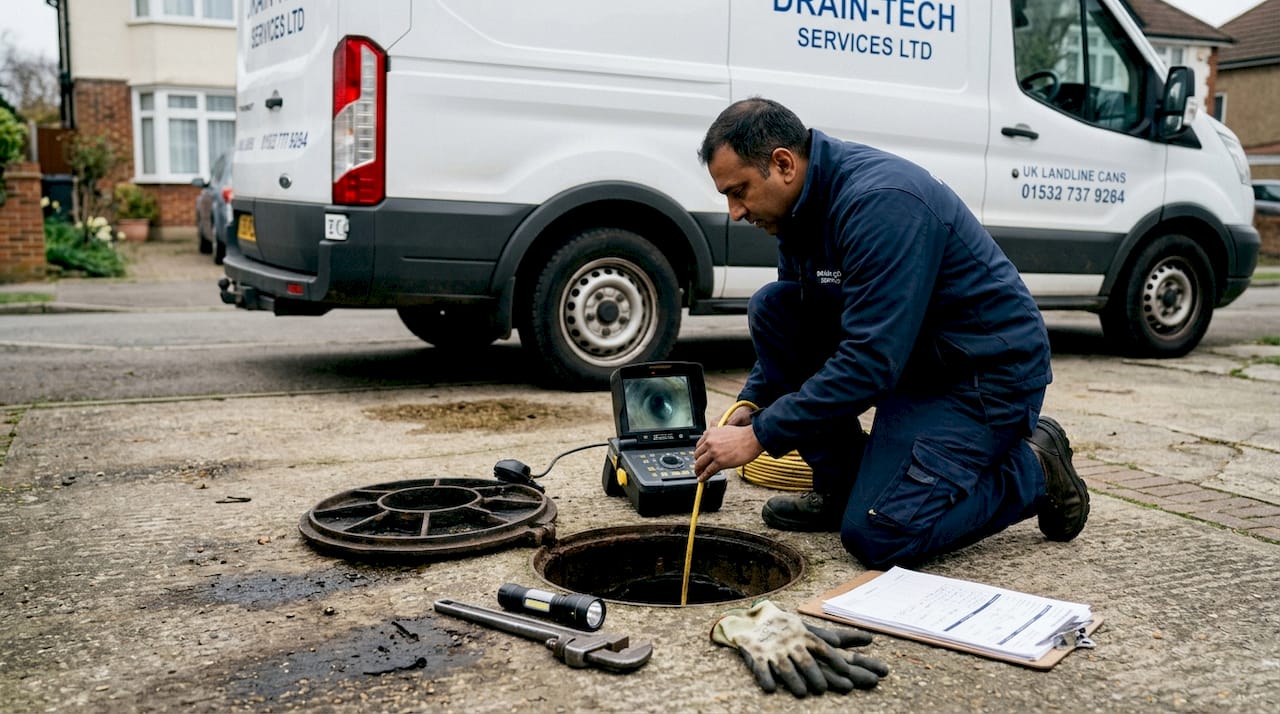
- CCTV drain survey: A camera is fed through your pipes to inspect their condition from the inside, revealing cracks, root ingress, and blockages.
- High-pressure water jetting: Clears accumulated grease, scale, and debris from pipe walls that manual clearing cannot reach.
- Gradient and flow assessment: Checks that water is moving at the correct rate and angle through your system.
- Written report and documentation: A formal record of findings, which is essential for insurance and property transactions.
Annual CCTV drain surveys detect hidden issues like root intrusion, cracks, and collapses that no surface check will ever reveal. The importance of CCTV drain surveys cannot be overstated for older properties or homes surrounded by mature trees.
Pro Tip: Book your annual professional check in late summer or early autumn, before the heavy rain season hits. That way, any issues are resolved before your drainage system faces its biggest annual test.
DIY surface maintenance handles what you can see, but subsurface concerns need professionals. Keeping documentation from each CCTV survey process protects you legally and financially.
| Task | Frequency | Who does it | Key benefit |
|---|---|---|---|
| Gully and grate clearing | Monthly | Homeowner | Prevents surface flooding |
| Visual perimeter check | Monthly | Homeowner | Early problem detection |
| Flow testing with water | Monthly | Homeowner | Identifies partial blockages |
| CCTV drain survey | Annually | Professional | Detects hidden pipe damage |
| High-pressure jetting | Annually | Professional | Clears deep pipe buildup |
| Written inspection report | Annually | Professional | Insurance and sale records |
Drainage maintenance checklist: monthly vs annual tasks
Having a clear reference point makes it far easier to stay consistent. Monthly DIY and annual professional checks are both essential for southern UK homes, and neither replaces the other.
Monthly tasks (homeowner):
- Clear gully grates and drain covers of leaves and debris
- Run water through external drains and time the flow
- Check downpipes and gutters for blockages or damage
- Look for damp patches, pooling water, or sunken ground
- Log observations with the date in a maintenance record
Annual tasks (professional):
- Full CCTV drain surveys of all underground pipework
- High-pressure jetting to clear pipe walls
- Structural assessment of pipe joints and gradients
- Formal written report for insurance and property records
The tasks that save the most money are the ones that catch problems earliest. Clearing a gully grate costs nothing. Repairing a collapsed pipe can cost several thousand pounds. The annual professional survey sits in the middle, typically a few hundred pounds, but it prevents the kind of hidden deterioration that leads to the most expensive repairs.
Common mistakes to avoid with drainage maintenance
Even well-intentioned homeowners make errors that cause more harm than good. Knowing what not to do is just as important as knowing what to do.
The most common mistakes include:
- Pouring harsh chemical cleaners down drains: These can corrode older pipes and kill the beneficial bacteria in septic systems. Consensus on prevention over reaction is clear: mechanical cleaning and professional jetting are far safer and more effective.
- Ignoring early warning signs: Gurgling and slow drainage are not minor inconveniences. They are your drainage system asking for help.
- Skipping record-keeping: Without a maintenance log, you have no evidence of due diligence for insurance claims or property sales.
- Neglecting SuDS features: Sustainable urban drainage systems (SuDS), such as soakaways and permeable paving, need vegetation control and periodic clearing to function correctly.
- Flushing inappropriate items: Wet wipes, cotton wool, and cooking fat are among the most common causes of blockages in residential drains.
Pro Tip: For SuDS features like soakaways, check them after every heavy rainfall event. If water is pooling above the surface for more than 24 hours, the system needs attention.
For safe and effective cleaning methods, our professional cleaning advice covers the approaches that protect your pipes rather than damage them.
Expert drainage help for southern UK homeowners
Following this checklist will keep your drains in good shape for the vast majority of the year. But some problems sit beyond what any homeowner can see or fix alone.
When you notice persistent slow drainage, recurring smells, or pooling water that does not respond to basic clearing, that is the moment to call in a specialist. Our drain unblocking advice is a useful starting point if you are unsure whether your situation needs professional attention. For underground concerns, our CCTV drain survey services give you a clear picture of exactly what is happening inside your pipes. And if you need fast, effective clearing, our unblocking services cover the full range of residential drainage problems across the southern UK. Combining your monthly routine with annual expert support is the most cost-effective approach any homeowner can take.
Frequently asked questions
How often should I check my drains at home?
Monthly DIY checks combined with an annual professional assessment give your drainage system the best protection, particularly in the southern UK where rainfall and clay soils create added pressure.
What are early warning signs that my drainage system needs attention?
Watch for slow draining, gurgling, bad smells, or water pooling around your home’s drains. These signals rarely appear without cause and should never be ignored.
Is it necessary to hire a professional for drainage inspections?
Annual CCTV drain surveys are recommended to detect hidden problems like root intrusion and pipe cracks, and to produce the official documentation needed for insurance and property sales.
Can harsh cleaning chemicals be used to clear drains?
Harsh chemicals are best avoided as they risk damaging pipes. Prioritise mechanical cleaning or professional jetting for safe, effective results that do not compromise your pipework.
What records should I keep for drainage maintenance?
Document all checks, professional surveys, and any repairs carried out. These records protect you during insurance claims and make property sales significantly smoother.
Recommended
- 7 Essential Steps for a Drain Maintenance Checklist
- Drain maintenance steps: reduce blockages by 60% in 2026
- Home Drainage Inspection Guide for Effective Maintenance
- Essential Drain Maintenance Guide for Preventing Blockages
- Engineering Drainage Solutions – Protecting Texas Properties – Texas Licensed Engineers