TL;DR:
- Landlords are legally obligated to maintain external drainage systems, including gutters, downpipes, and underground pipes, once notified of a problem. Regular inspections and timely repairs help prevent costly damages, tenant dissatisfaction, and legal penalties under UK law. Delegating maintenance does not exempt landlords from responsibility, making proactive drainage management essential for property preservation and compliance.
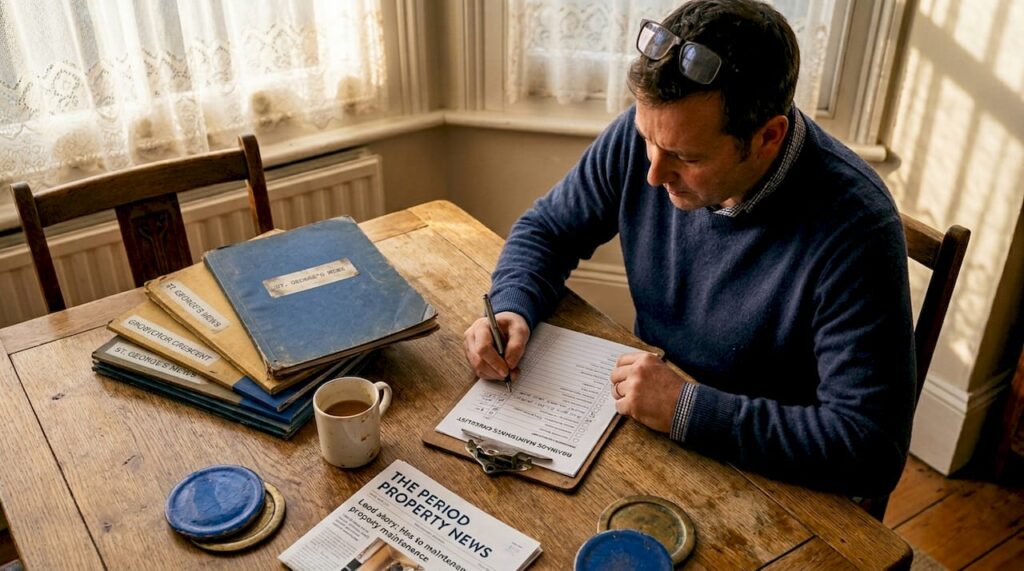
Most landlords assume drainage problems are the tenant’s problem until something goes badly wrong. A blocked gutter, a cracked downpipe, water seeping into brickwork. Suddenly it is a legal issue, a repair bill, and a difficult conversation all at once. Understanding the role of landlords in drainage maintenance before problems escalate is not just good practice, it is a legal requirement under English and Welsh law. This guide cuts through the ambiguity, sets out your obligations clearly, and gives you a practical framework for staying ahead of costly drainage failures at your rental properties.
Table of Contents
- Understanding landlord duties for drainage maintenance under UK law
- Common drainage issues landlords must address and their impact on property
- How landlords can effectively maintain drainage systems to prevent costly repairs
- Exploring drainage maintenance service options for landlords in southern UK
- Legal ramifications and practical tips for landlords on drainage maintenance compliance
- Why a proactive approach to drainage maintenance is a landlord’s best defence
- How Local Services Drainage supports landlords with drainage upkeep in southern UK
- Frequently asked questions
Understanding landlord duties for drainage maintenance under UK law
The legal foundation here is straightforward, even if landlords regularly misread it. Section 11 of the Landlord and Tenant Act 1985 creates an implied repairing obligation on landlords to keep the structure and exterior in repair, including gutters, downpipes, external pipes, and drains. This applies automatically to most residential tenancies in England and Wales where the lease is under seven years. You cannot contract out of it. It simply exists.
What this means practically is that your drainage maintenance duties extend to the fabric of the building exterior. That includes:
- Gutters and downpipes attached to the building
- External drain runs and gullies in the grounds
- Shared drainage infrastructure serving the property
- Underground pipes forming part of the structure
The important trigger is notification. Your landlord obligations for drainage only become legally enforceable once you know about a problem. Tenants must tell you. Once they do, you have a reasonable timeframe to act, and that timeframe shortens considerably when the issue poses a risk to health or safety.
“The obligation to repair does not arise until the landlord has notice of the defect. However, once notice is given, the landlord must act within a reasonable time.” This principle, established through case law, means ignoring a tenant’s email about a blocked drain is not a legal grey area. It is a liability.
What constitutes a “reasonable time” depends on urgency. A flooding drain in winter is not the same as a slow-running gutter in summer. Understanding property drainage issues in that context helps you categorise and respond appropriately.
Common drainage issues landlords must address and their impact on property
Drainage failures follow predictable patterns. Knowing what to look for and why it matters changes how you manage your portfolio.
Blocked or cracked gutters are the most common culprit. Dripping water from faulty gutters can cause significant damage to brickwork, leading to damp and mould. Left unaddressed, this escalates from a gutter repair into a full damp treatment, replastering, and potentially a disrepair claim from your tenant. The repair cost multiplies quickly.
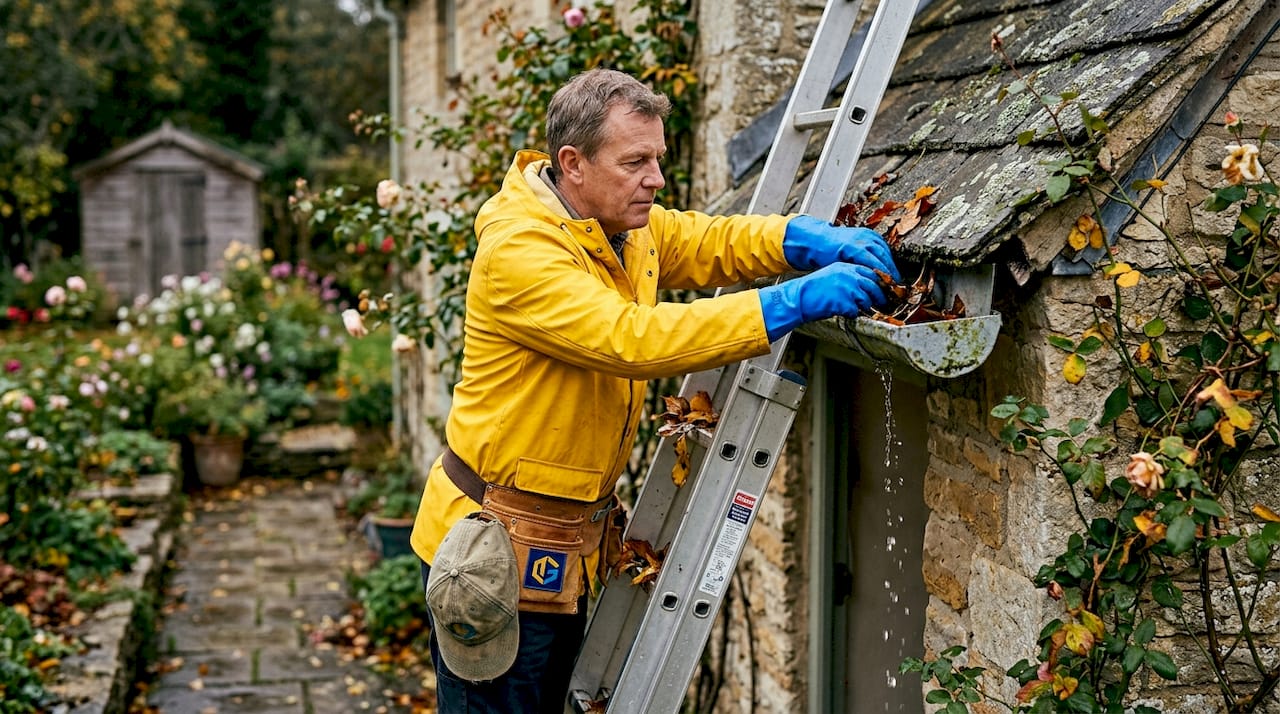
External drains and gullies also block regularly, particularly in autumn when leaf debris accumulates. A blocked drain outside a property might seem minor until it backs up into the garden, or worse, creates standing water near a doorway that freezes in winter. Blocked drains can also generate foul smells and attract pests, both of which affect tenant wellbeing and your ability to re-let the property.
Here are the common property drainage problems you should actively monitor across your properties:
- Overflowing gutters and downpipes detached from the wall
- Slow-draining external gullies and yard drains
- Damp patches on interior walls adjacent to external drainage runs
- Subsidence or soft ground near drain routes, which can indicate a collapsed pipe
- Foul smells from drainage points, especially after rainfall
Pro Tip: Ask your tenants at each annual inspection to flag any slow drains or damp patches they have noticed. Tenants often adapt to minor issues rather than report them. A direct question at inspection surfaces problems before they become serious.
How landlords can effectively maintain drainage systems to prevent costly repairs
Reactive repairs always cost more than scheduled maintenance. That is not opinion, it is straightforward property economics. The key to managing drainage maintenance for rentals is building a systematic approach rather than waiting for the phone to ring.
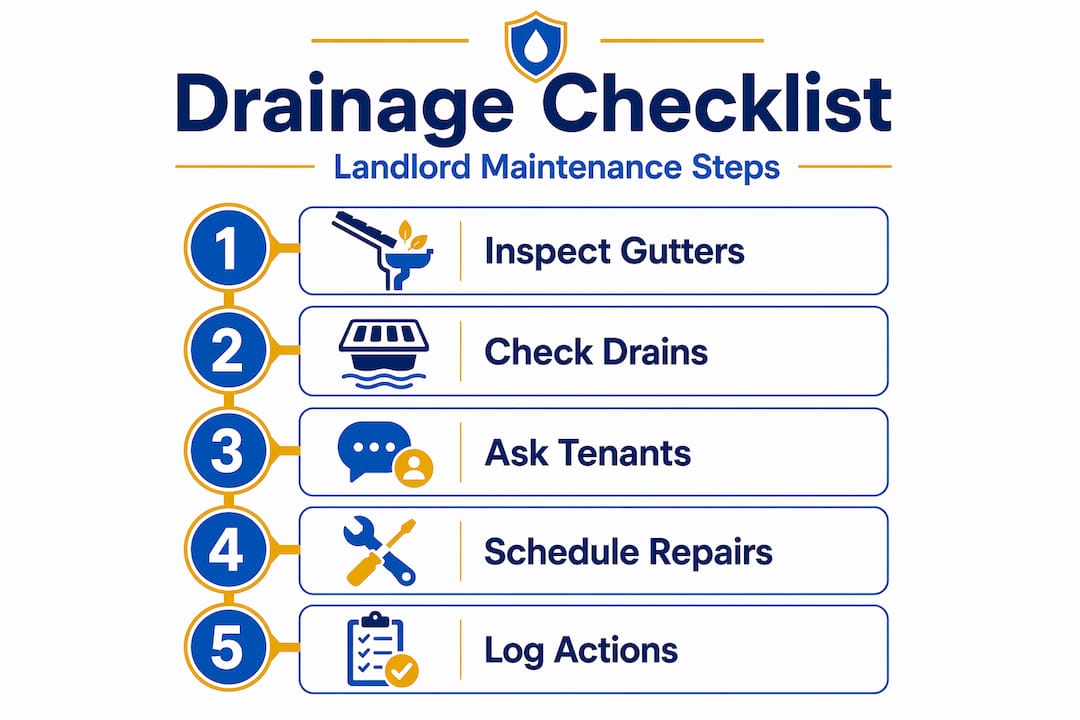
Regular inspections and prompt action when disrepair is reported are the minimum standard. Here is a practical framework:
- Schedule inspections every six to twelve months. Align at least one inspection with late autumn, after leaves have fallen but before the coldest weather sets in.
- Inspect gutters and downpipes visually from the ground. Look for blockages, sagging sections, and separation from the fascia board.
- Check external gullies and drain covers for debris and standing water.
- Commission a CCTV drain survey for any property where you suspect underground issues or for new acquisitions before the first tenancy begins.
- Categorise any identified issues by urgency: emergency (active flooding, sewage escape), urgent (blockage causing overflow), or routine (minor build-up, slow flow).
- Document everything. Photographs, inspection dates, contractor reports, and tenant notifications all form your legal defence if a disrepair claim arises.
Your drainage maintenance checklist should become as routine as your gas safety certificate schedule. It is that important.
| Approach | Cost profile | Response speed | Risk level |
|---|---|---|---|
| Reactive repairs only | High per incident | Slow, after damage | High |
| Annual inspection and clear | Moderate, predictable | Planned | Medium |
| Proactive maintenance plan | Lower long-term | Pre-emptive | Low |
| CCTV survey and relining | Higher upfront | Targeted | Very low |
Pro Tip: A home drainage inspection carried out by a qualified contractor typically costs far less than a single emergency call-out, and the inspection report can be used to prioritise budgets across multiple properties.
Exploring drainage maintenance service options for landlords in southern UK
Knowing your obligations is one thing. Finding the right professionals to meet them is another. For landlords operating in southern England, the drainage service landscape offers several distinct options, and choosing correctly affects both your costs and your legal exposure.
Professional drainage contractors offer the following core services relevant to your obligations:
- CCTV drain surveys: Camera inspection of underground pipework to identify cracks, root ingress, and blockages without excavation
- High-pressure water jetting: Effective clearance of blocked external drains and gullies
- No-dig drain relining: Repair of damaged underground pipes without costly excavation
- Gutter and downpipe clearance and inspection: Scheduled servicing to maintain free flow
- Emergency response: Same-day or next-day attendance for active flooding or sewage escape
Landlords can appoint agents or professionals to meet their duties, and these agents may be liable if they fail to comply with legal obligations. This matters because many landlords assume delegating to a letting agent transfers their legal risk entirely. It does not. You retain responsibility for ensuring the work actually happens to the required standard.
| Service type | Best for | Typical turnaround | Warranty |
|---|---|---|---|
| CCTV survey | New acquisitions, persistent issues | 1 to 3 days | Report provided |
| Jetting and unblocking | Routine blockages | Same day to 48 hours | Varies by contractor |
| Drain relining | Cracked or collapsed pipes | 2 to 5 days | Often 10 years or more |
| Maintenance plan | Multi-property portfolios | Scheduled | Ongoing |
For landlords with properties across southern England, using a single reliable drainage solutions provider across your portfolio simplifies management, ensures consistent quality, and often reduces per-property costs. Understanding the drain unblocking process also helps you evaluate whether a contractor is being thorough or simply doing the minimum.
Legal ramifications and practical tips for landlords on drainage maintenance compliance
Drainage neglect is not just costly in repair terms. The Renters’ Rights Act 2025 has strengthened enforcement significantly. Local authorities can impose fines on landlords or their agents for breaching enforcement measures under the Act, and those fines are not trivial. Civil penalties can reach into the tens of thousands for serious or repeated breaches.
Beyond fines, tenants have the right to pursue disrepair claims through the courts if their health or property has been affected by a landlord’s failure to act. Documented evidence of a reported issue that you did not address is extremely difficult to defend against.
Practical steps to protect yourself legally and maintain good tenant relations:
- Log every tenant report in writing, even if it comes in by phone. Follow up with a written confirmation of what was reported and when.
- Confirm repair timescales to your tenant at the point of notification so they know when to expect resolution.
- Keep contractor invoices and job sheets for every piece of drainage work carried out.
- Photograph drainage components at each inspection, dated and stored systematically.
- Prioritise repairs by urgency. A sewage escape requires same-day action. A slightly slow-running gutter does not, but it still needs scheduling.
Keeping meticulous records transforms your position in any dispute. A landlord who can produce a dated inspection report, a contractor’s job sheet, and a written tenant notification is in a fundamentally different legal position to one who cannot.
Your drainage compliance guide for 2026 should incorporate all the above elements as standard practice, not an optional extra.
Why a proactive approach to drainage maintenance is a landlord’s best defence
Here is the uncomfortable truth most landlords do not hear: the reactive model is a structural failure in property management, not just a bad habit. Waiting for tenants to report drainage problems before acting is how landlords end up with four-figure repair bills, formal disrepair complaints, and properties that deteriorate faster than they should.
Section 11 is best thought of as a legal floor that cannot be shifted away by tenancy terms. Landlords must keep external drainage in repair once problems are reported. But notice the implication: if the problem was developing for months before the tenant reported it, the damage is already done. The legal duty kicks in at notification, but the prevention window closed long before that.
Tenants are not drainage inspectors. They adapt to slow-running drains and damp corners. By the time a tenant formally reports a problem, it has usually been building for a significant period. An annual inspection carried out by a qualified professional, with a written report, catches issues at the early stage when they are cheap and simple to fix.
There is also a less-discussed benefit: tenant retention. Tenants who see their landlord take maintenance seriously stay longer. Voids are far more expensive than a gutter clear. A proactive drainage maintenance checklist is not just about legal compliance. It is a business case for property management done properly.
The landlords who complain loudest about drainage costs are almost always those who have never invested in planned maintenance. Their emergency call-out fees, insurance excesses, and repair bills are simply the deferred cost of the inspections they never booked.
How Local Services Drainage supports landlords with drainage upkeep in southern UK
Staying on top of your drainage maintenance duties across a rental portfolio is considerably easier with the right partner in place. Local Services Drainage works directly with landlords and property managers across southern England, providing scheduled inspections, CCTV surveys, and emergency response under a single, accountable service.

Whether you need a one-off CCTV drain survey to baseline a newly acquired property, an annual drainage maintenance checklist service across your portfolio, or fast-turnaround efficient drain unblocking when a tenant reports a problem, we have the local knowledge and technical capability to get it done correctly. Our long-term repair guarantees and no-dig relining solutions mean you get value that extends well beyond the initial job. Contact us today for a quote tailored to your portfolio size and location.
Frequently asked questions
Are landlords legally responsible for external drains and gutters?
Yes. Section 11 imposes an obligation on landlords to maintain gutters, downpipes, and external drains as part of the structure and exterior of the property, provided the tenancy is under seven years and the landlord has been notified of any defect.
What should landlords do if tenants report blocked drains?
Investigate promptly and arrange repairs according to urgency. Reported drainage disrepair must be addressed within a reasonable timeframe under Section 11, and delays can result in formal disrepair claims or enforcement action.
Can landlords delegate drainage maintenance responsibilities?
Yes, but legal responsibility does not transfer with the delegation. Both landlords and agents can be liable for breaches, so landlords must actively verify that appointed contractors or agents are completing work to the required standard.
How often should landlords inspect drainage systems?
At least once a year, ideally twice. Scheduling one inspection in late autumn before the worst weather arrives gives you the best chance of catching debris build-up in gutters and slow-running drains before they cause damage during winter rainfall, which is particularly relevant for southern UK properties.
What are the risks of ignoring drainage maintenance?
The consequences range from the immediate to the serious. Faulty gutters can lead to significant damp and mould damage within the property structure, and beyond the physical damage, landlords face legal penalties, compensation claims from tenants, and the reputational cost of being an unresponsive landlord in an increasingly regulated rental market.