TL;DR:
- Common causes of drain blockages include wet wipes, fat, and garden debris, often requiring professional repairs.
- Responsible disposal habits and periodic CCTV inspections are key to preventing costly, recurring drain issues.
- Recognizing signs of structural problems, such as repeated blockages, helps homeowners address underlying infrastructure faults early.
Most homeowners in southern UK give little thought to what goes down their drains until something stops moving. A slow sink or a gurgling toilet can feel like a minor nuisance, but left unchecked, these early signs often signal a much costlier problem building beneath your feet. Everyday habits, from rinsing a greasy pan to flushing a single wet wipe, quietly accumulate into serious blockages. This article walks you through the most common real-world examples of drain blockages, explains exactly why they happen, and gives you practical, actionable steps to prevent them before they turn into an expensive emergency.
Table of Contents
- The true cost of common drain blockages
- Blockage culprit 1: Wet wipes, sanitary products and non-flushables
- Blockage culprit 2: Fat, oil and grease (FOG)
- Less obvious causes: Roots, garden debris and misaligned drains
- Comparing drain blockage types: Impact, risk and solutions
- The uncomfortable truth about blocked drains most guides skip
- Get expert help with persistent drain blockages
- Frequently asked questions
Key Takeaways
| Point | Details |
|---|---|
| Wipes and non-flushables | These items cause the majority of drain blockages—even ‘flushable’ wipes are unsafe. |
| Fat, oil and grease | Pouring FOG down the sink leads to hard build-up and severe blockages in time. |
| Outdoor and hidden causes | Roots, debris, and damaged pipes also routinely block drains, particularly in older homes. |
| Prevention beats cure | Responsible disposal, regular maintenance, and professional inspections best protect drains. |
The true cost of common drain blockages
Blockages are not a rare inconvenience. The UK experiences roughly 300,000 blockages every year, costing an estimated £100 million to clear, with fat, oil, grease, and wet wipes identified as the leading causes. That figure represents an enormous strain on both public infrastructure and private households. When a blockage worsens, it can cause sewage to back up into homes, damage pipework, and create health hazards that require professional remediation.
To put the scale in sharper focus, consider Thames Water alone. The company clears 75,000 blockages per year and removes an astonishing 3.8 billion wet wipes annually at a cost of £18 million. These are not abstract numbers. They represent real engineering teams, real disruption to streets and homes, and real costs that ultimately filter back to bill payers.
| Blockage cause | Estimated share of UK blockages |
|---|---|
| Fat, oil and grease (FOG) | 37.5% |
| Wet wipes and non-flushables | ~55% |
| Roots, debris and structural | ~7.5% |
Perhaps the most vivid illustration of what happens when these problems go unchecked is the London fatberg phenomenon. Enormous masses of congealed fat, wipes, and other waste have been discovered in London’s Victorian-era sewers, some weighing over 100 tonnes. These formations take weeks and significant resources to remove.
“The scale of blockage-related damage in the UK is a direct reflection of what millions of households do every single day without realising the consequences.”
For homeowners, the takeaway is straightforward. Understanding the blocked drains causes that affect your property is the first and most powerful step towards avoiding a costly call-out. Prevention is genuinely cheaper than cure, and in most cases, it requires nothing more than a small change in daily routine.
Blockage culprit 1: Wet wipes, sanitary products and non-flushables
If you want to know what is most likely blocking your drain right now, the answer is almost certainly a wet wipe. Research shows that 93% of analysed blockages involved wet wipes and similar non-flushable materials. That is an extraordinary figure, and it explains why water companies and drainage professionals consistently point to this category as the single biggest culprit.
The problem extends well beyond baby wipes. Common non-flushable offenders found in blocked drains include:
- Baby wipes and makeup removal wipes
- Sanitary towels and tampons
- Cotton buds and cotton wool pads
- Paper towels and kitchen roll
- Dental floss
- Contact lenses
One of the most persistent myths is that products labelled “flushable” are safe to flush. In reality, even wipes marketed as flushable and those made without plastic often fail to break down in the sewer system. Standard toilet paper disintegrates within seconds of contact with water. Most wipes, regardless of the label, remain largely intact as they travel through your pipework, catching on joints and rough surfaces until a blockage forms.
The tenant versus landlord debate is worth noting here. In rented properties, responsibility for a blockage caused by misuse, such as flushing wipes, typically falls on the tenant. However, if the blockage results from a structural fault, the landlord is usually liable. Either way, the outcome is inconvenience and expense for everyone involved.
Understanding drain blockages from daily habits can help you make smarter choices before problems start. If you are already dealing with a slow or blocked drain, a detailed drain unblocking guide can walk you through your options.
Pro Tip: Place a small lidded bin next to every toilet in your home. It takes thirty seconds to set up and removes the temptation to flush anything other than toilet paper.
“Every wipe flushed is a future blockage waiting to happen. The drain does not care what the packaging says.”
Blockage culprit 2: Fat, oil and grease (FOG)
FOG, which stands for fat, oil, and grease, is the second major category of drain blockage and one of the most misunderstood. FOG accounts for 37.5% of sewer blockages across the UK, and it originates almost entirely from domestic and commercial kitchens.
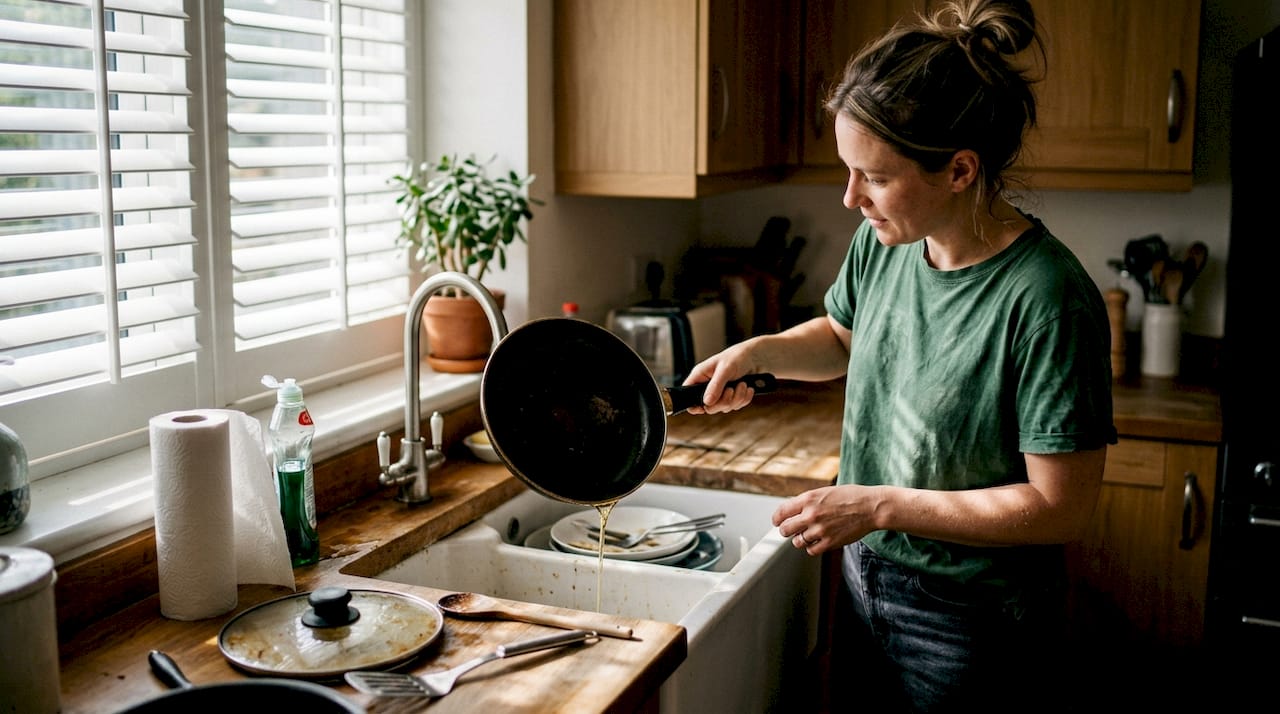
The everyday sources are things you cook with regularly: frying oil, butter, lard, meat fat, gravy, and sauces. When these substances are warm, they flow easily. The problem begins the moment they cool down inside your pipes. FOG solidifies as it cools, coating the interior of pipework and gradually narrowing the channel through which water can flow.
Here is how a FOG blockage typically develops:
- Warm cooking fat is poured or rinsed down the sink.
- It flows a short distance before the pipe temperature drops.
- The fat begins to solidify and stick to pipe walls.
- Over weeks and months, the layer thickens with each new deposit.
- Other debris, including wipes and food particles, adheres to the fatty coating.
- The pipe narrows until flow is severely restricted or completely blocked.
The most extreme version of this process is a fatberg. Thames Water’s 100-tonne fatberg in West London is one of the most dramatic examples on record, but smaller versions of the same process occur in residential pipes every day.
| FOG source | Risk level | Recommended disposal |
|---|---|---|
| Frying oil | High | Cool, then bin in a sealed container |
| Butter and lard | High | Wipe pan with kitchen roll, then bin |
| Gravy and sauces | Medium | Strain solids, cool liquid, then bin |
| Washing-up water | Low | Acceptable with minimal residue |
The fix is simple. Allow fat to cool and solidify in the pan, then scrape it into the bin. For drainage repair tips when FOG has already caused damage, professional jetting or relining may be required.
Less obvious causes: Roots, garden debris and misaligned drains
Not every blockage originates in the kitchen or bathroom. For many properties in southern UK, particularly older homes with mature gardens, the culprit is lurking underground or blowing in from outside.
Tree and shrub roots are a persistent and often invisible threat. Roots naturally seek out moisture, and a small crack or joint in a drain pipe is an irresistible entry point. Once inside, roots grow quickly and can fill a pipe entirely within a season. The frustrating reality is that cutting roots offers only temporary relief. If the underlying pipe damage is not repaired or relined, roots will simply regrow.
Garden debris is another underestimated cause. Leaves, soil, moss, and grass cuttings all find their way into gully drains and surface water channels, especially during autumn and after heavy rain. Once inside, they compact and form a dense plug that resists flushing.
Common outdoor blockage sources to watch for include:
- Leaves and twigs accumulating over gully grates
- Soil and silt washing into surface water drains
- Tree roots infiltrating older clay or concrete pipework
- Collapsed or misaligned pipe joints in ageing systems
The issue of misalignment is growing. Misaligned pipes and sewer backups increasingly reflect infrastructure age rather than user behaviour alone, which means that even responsible homeowners can face recurring blockages through no fault of their own.
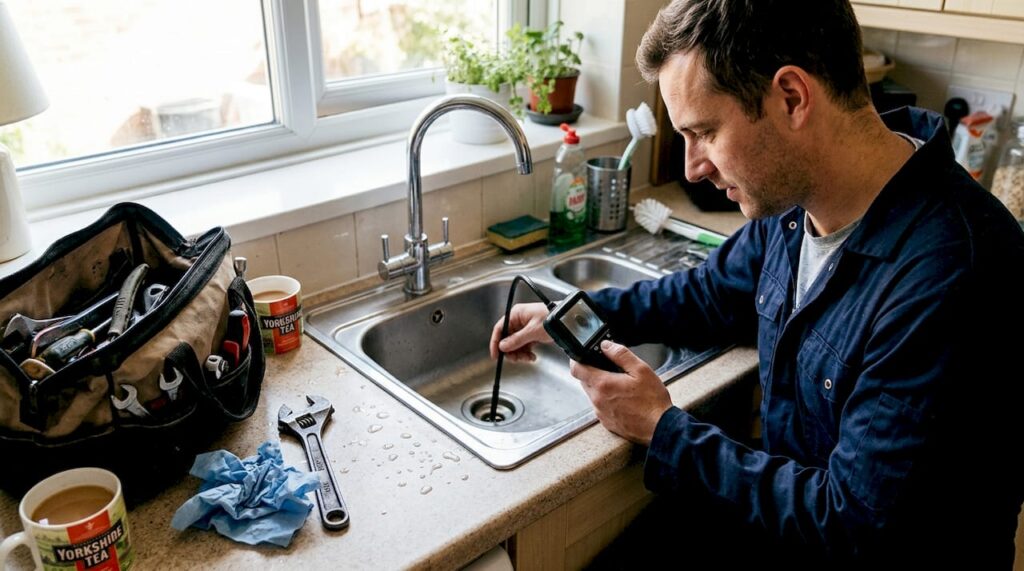
For properties with persistent or unexplained blockages, a CCTV drain survey is the most reliable diagnostic tool available. A camera inspection reveals root intrusion, pipe collapse, and joint displacement that no amount of plunging or chemical treatment can fix. Addressing property drainage issues early, before a partial blockage becomes a full collapse, saves significant time and money.
Pro Tip: If a drain blocks repeatedly in the same location, stop treating the symptom and book a CCTV survey. Recurring blockages almost always point to a structural issue that only a camera can confirm.
Comparing drain blockage types: Impact, risk and solutions
With a clear picture of the main culprits, it helps to compare them directly so you can prioritise your efforts and choose the right response for each situation.
| Blockage type | Primary cause | Risk level | Best fix | Prevention |
|---|---|---|---|---|
| Wet wipes | Flushing non-flushables | High | Jetting or rodding | Bin all wipes, never flush |
| FOG | Kitchen waste | High | Jetting, relining | Dispose of fat in the bin |
| Tree roots | Root intrusion | Very high | CCTV survey, relining | Regular inspections |
| Garden debris | Outdoor accumulation | Medium | Clearing gully drains | Fit drain guards, clear leaves |
| Misaligned pipes | Ageing infrastructure | Very high | Structural repair or relining | Annual CCTV checks |
Quick prevention priorities for southern UK homes:
- Fit drain guards on all outdoor gullies and clear them after autumn leaf fall
- Never pour fat, oil, or grease down any sink or drain
- Replace bathroom bins regularly to remove the temptation to flush wipes
- Arrange a CCTV survey if your property is over 30 years old or has mature trees nearby
- Act on slow drains immediately rather than waiting for a full blockage
Encouragingly, awareness campaigns have reduced the volume of wipes found in drains in recent years. However, structural issues are on the rise, which means that responsible behaviour alone is no longer sufficient for older properties. A proactive approach combining good habits with periodic professional inspections is the most effective strategy available to homeowners today.
The uncomfortable truth about blocked drains most guides skip
Most articles on blocked drains focus on quick fixes: plunge it, pour some soda crystals down it, and move on. We understand the appeal. Quick fixes are cheap and immediate. But in our experience, they address the symptom while the real cause continues to develop quietly underground.
The honest reality is that a significant proportion of recurring blockages are not caused by bad habits at all. They reflect the age of the infrastructure beneath your property. Pipes installed decades ago were not designed for modern water usage patterns, and they crack, shift, and corrode over time regardless of how carefully you use them.
This does not mean individual behaviour is irrelevant. Stopping FOG and wipes from entering your drains genuinely reduces risk. But if you have tried that and blockages keep returning, the answer is almost certainly structural. The drain unblocking role of a professional is not just to clear a blockage but to identify why it keeps happening. A CCTV survey followed by no-dig relining can resolve a recurring problem permanently, without excavation, and at a fraction of the cost of repeated call-outs.
Consistent maintenance, responsible daily use, and a willingness to invest in professional diagnosis when needed: that combination delivers results that no amount of drain cleaner ever will.
Get expert help with persistent drain blockages
If your drains are slow, smelly, or repeatedly blocking despite your best efforts, it is time to move beyond DIY approaches.
At Local Services Drainage, we work with homeowners and property managers across southern UK to diagnose and resolve blockages at their source, not just at the surface. Whether you need a step-by-step drain unblocking walkthrough or want to understand the full drain unblocking process before booking a professional, our guides and team are here to help. From CCTV surveys to no-dig relining, we offer fast response times and long-term guarantees. Do not wait for a minor blockage to become a major emergency. Get in touch today for a no-obligation quote.
Frequently asked questions
What are the top three causes of blocked drains in UK homes?
Wet wipes, fat and grease, and garden debris are the most common causes. Research confirms that 93% of blockages involve wipes, while FOG accounts for 37.5% of sewer blockages nationally.
Can I pour oil or fat down the kitchen sink if I use hot water?
No. Hot water carries fat further into the pipe, but it still cools and solidifies downstream, causing blockages that are harder to reach. FOG forms fatbergs regardless of water temperature.
Is it a myth that ‘flushable’ wipes do not block drains?
Yes, it is a myth. Even ‘flushable’ wipes fail to disintegrate fully and contribute to blockages in exactly the same way as standard wipes.
What signs show a deeper or structural drain blockage problem?
If blockages recur after DIY fixes, or if multiple drains are affected at once, a structural issue is likely. Misaligned pipes and recurring backups often indicate infrastructure problems that require professional inspection rather than further home remedies.