TL;DR:
- Homeowners in southern England often overlook drain maintenance until water problems cause extensive damage and costly repairs.
- Poor drain health can lead to damp, mould, and structural issues that threaten health, property value, and insurance claims.
- Proactive regular inspections and early action reduce costs, protect health, and ensure longstanding drain system efficiency.
Most homeowners in southern England only think about their drains when water stops moving. By that point, what could have been a £50 maintenance visit has often turned into a £500 repair job or worse. Damp and mould risks linked to poor drainage are well-documented, yet the connection between a slow drain and a damp bedroom wall rarely registers until damage is already done. This article covers exactly why drain health deserves your attention now, not later, and what you can practically do to stay ahead of problems before they escalate into costly, stressful emergencies.
Table of Contents
- The hidden risks of poor drain health
- Benefits of good drain health for UK homes
- Key design and maintenance factors in drain health
- Insurance, emergencies, and when to act quickly
- Why waiting for drain problems is a costly mistake
- Get expert support for your drain health
- Frequently asked questions
Key Takeaways
| Point | Details |
|---|---|
| Prevention protects health | Keeping drains clear stops damp and mould, preventing health issues in your property. |
| Regular checks save money | Spotting drain problems early avoids costly repairs and ensures insurance cover works in your favour. |
| Understand your system | Learning how your drainage works and meeting UK standards reduces your risk of unexpected issues. |
| Act fast on warning signs | A quick response when you see slow drains or water marks limits damage and insurance complications. |
The hidden risks of poor drain health
There is a widespread assumption that drains are either working or broken, with nothing in between. The reality is far more nuanced. A drain can be partially blocked, slowly deteriorating, or quietly leaking for months before any obvious sign appears indoors. During that time, moisture seeps into wall cavities, sub-floors, and foundations, creating the perfect conditions for problems that go far beyond a plumbing bill.
Damp and mould can produce allergens, irritants, and spores, and the longer these are left untreated, the worse the health impacts become. For landlords in particular, this is not just a property issue; it is a legal and duty-of-care concern under current UK housing standards. Tenants with respiratory conditions, young children, or elderly residents are especially vulnerable, and the consequences of ignoring early warning signs can be severe.
Drainage health problems can show up indirectly as damp, mould, or moisture appearing in rooms that seem completely unrelated to any drain or pipe. A blocked external drain near a foundation, for instance, can push water into a ground-floor wall. A cracked soil pipe under a kitchen floor can introduce moisture into a space you never see. Understanding the blocked drain causes and prevention that apply to UK homes is the first step toward stopping these invisible problems early.
Financial risks are equally significant. Consistent importance of home maintenance data shows that reactive repairs cost considerably more than preventive ones, and drainage is no exception. When moisture damage progresses to structural timbers, plaster, or insulation, repair bills multiply quickly. Worse still, insurance claims linked to neglected drains are frequently contested or rejected, leaving homeowners covering the full cost themselves.
Here are the warning signs that frequently go unnoticed until problems are serious:
- Slow-draining sinks, baths, or showers that seem to clear eventually
- Persistent unpleasant smells near drains, even outdoors
- Gurgling sounds from toilets or waste pipes when water drains elsewhere
- Patches of damp on walls or ceilings with no obvious source
- Unusually soft or sunken ground near drainage runs in the garden
- Mould appearing in corners of rooms on the ground floor or basement
“The most expensive drain repair we see is always the one the homeowner thought could wait another season. By the time they call, the damage has spread well beyond the drain itself.”
Catching these signs early and acting on them is the difference between a quick fix and a major project. The range of common drainage repairs needed in UK homes illustrates just how varied and preventable most problems actually are.
Benefits of good drain health for UK homes
With the hidden dangers now clear, the benefits of regular drain maintenance are not just reassuring; they are measurable. Well-maintained drains protect public health by preventing moisture build-up and reducing the risks associated with damp and mould. Beyond health, the financial and practical advantages stack up quickly.
The table below illustrates the contrast between a well-maintained and a neglected drainage system across key outcomes:
| Outcome area | Healthy drains | Neglected drains |
|---|---|---|
| Health risks | Minimal; dry, clean indoor air | High; mould, allergens, respiratory issues |
| Annual maintenance cost | £50–£150 (routine cleaning/checks) | £500–£3,000+ (reactive repairs) |
| Insurance claims | More likely to be covered (sudden events) | Often rejected (gradual neglect) |
| Property value | Maintained or improved | Reduced by water damage evidence |
| Emergency call-outs | Rare | Frequent and costly |
| Tenant satisfaction | High; fewer disruptions | Low; complaints and potential legal issues |
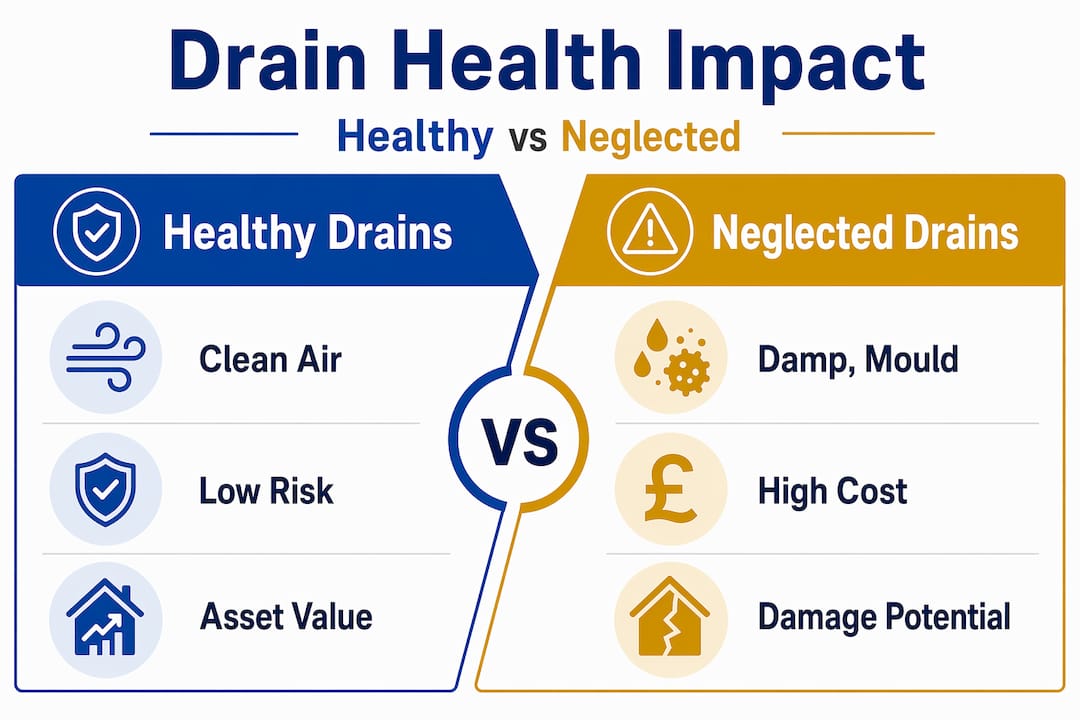
The financial difference is stark. Homeowners who invest in regular drain cleaning year-round consistently avoid the larger, unexpected bills that come from years of accumulation. A professional clean of your main drainage runs twice a year costs a fraction of what a collapsed pipe or a damp remediation project will demand.
Key benefits you gain from good drain health include:
- Lower repair costs over time through early detection and prevention
- Reduced health risks for everyone living or renting in the property
- Better insurance outcomes when issues are sudden rather than gradual
- Maintained or increased property value without drainage-related survey flags
- Greater peace of mind particularly heading into autumn and winter when rainfall intensifies
Gutter cleaning for water damage prevention is a closely related activity that works in tandem with drain health. When gutters overflow due to blockage, they send water straight into the fabric of your building, compounding any existing drainage issues at ground level.
Pro Tip: Set calendar reminders for a basic drain check every six months, ideally in April and October. These are the seasons when debris from winter and autumn most commonly builds up in gutter outlets, drain covers, and inspection chambers.
Key design and maintenance factors in drain health
Technical details matter more than most homeowners realise. The way your drainage system was designed, and the standard it was built to, will significantly influence how vulnerable it is to blockages, collapse, or overflow. Understanding this helps you identify where your property is most at risk.
In the UK, roof drainage is designed and installed using accepted technical standards. BS EN 12056 sets out specifications for roof drainage, including the requirement for overflow systems that provide a secondary route for water if primary drains become blocked. If your property lacks a compliant overflow or if original drainage runs have been modified over the years without proper specification, you are carrying more risk than you may know.
Here is a comparison of maintenance approaches and their typical outcomes:
| Approach | Time investment | Cost | Long-term outcome |
|---|---|---|---|
| Annual professional inspection | 1–2 hours | £80–£200 | Problems caught early, low repair risk |
| DIY checks only | 30 mins twice yearly | Low | May miss internal or structural issues |
| No checks until blockage occurs | None until crisis | High emergency cost | Reactive repairs, potential health impact |
| CCTV survey every 3 years | 1–2 hours | £150–£300 | Precise diagnosis, prevents major failures |
For most homes in the UK south, the following numbered steps form a solid baseline maintenance routine:
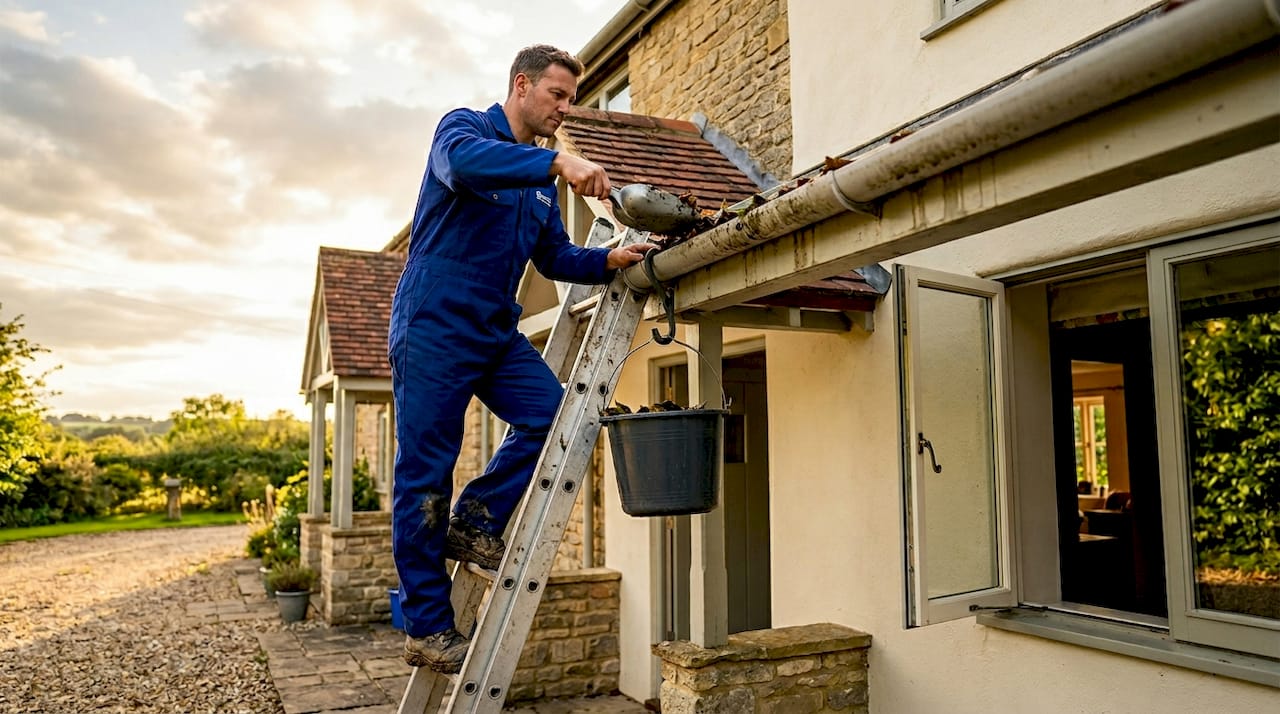
- Check and clear gutter outlets at least twice a year, removing leaf litter, moss, and debris that restrict flow.
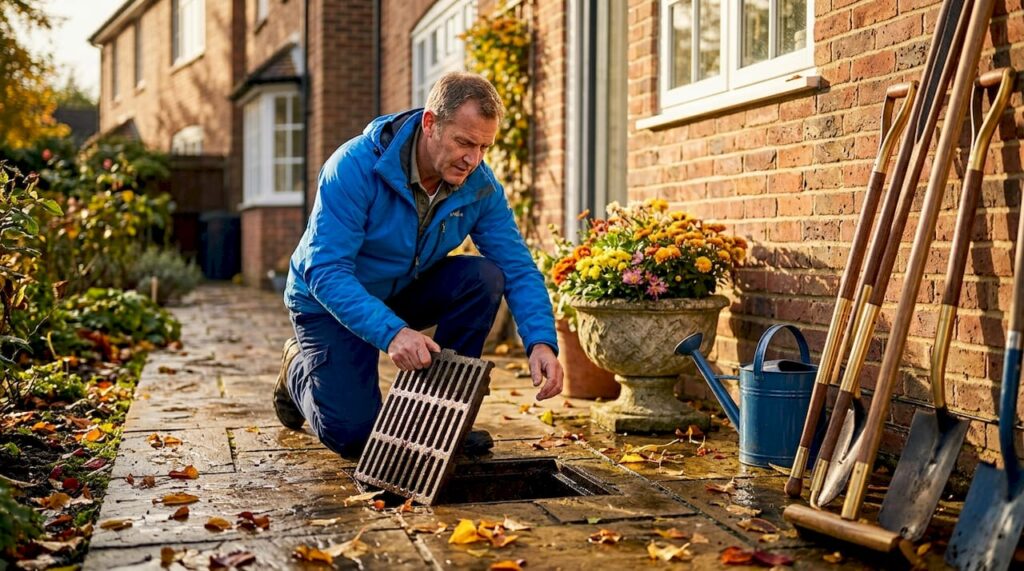
- Lift and inspect external drain covers to check for blockages, cracks, or unusual odours in the chamber below.
- Run water through all internal waste points including rarely used sinks or floor drains to maintain the water seal in traps and prevent odour.
- Look for signs of soil movement near external drainage runs; subsidence or roots near drain pipes are early indicators of failure risk.
- Book a CCTV drain survey if you notice any recurring slow drainage or odours, as this gives a precise picture without digging.
- Review overflow provisions on flat roofs or extensions, ensuring outlets are clear and secondary paths for water are functional.
If you want a clearer picture of what full-service maintenance looks like in practice, reviewing examples of drainage solutions available to UK homeowners is a useful starting point.
Pro Tip: Older properties built before the 1980s are particularly prone to root intrusion and pipe joint failure. If your home is period or pre-war, a CCTV survey every two to three years is a worthwhile investment even if no symptoms are visible.
Insurance, emergencies, and when to act quickly
Understanding drain design helps you maintain your system, but knowing when to act quickly can make the single biggest difference to both cost and outcome. Many homeowners lose money not because they ignored a blocked drain, but because they waited too long once they noticed a problem.
Plumbing and drainage insurance cover is typically most valuable in emergencies, and claims depend heavily on the source and nature of the blockage. Cover is far more likely to pay out when damage is sudden and accidental, such as a pipe burst after unexpected frost, rather than gradual deterioration caused by a lack of maintenance. This is a critical distinction. If your insurer can demonstrate that a blockage was building over months and you took no action, your claim may be declined entirely.
Circumstances where insurance is more likely to assist:
- Sudden pipe collapse due to external pressure or ground movement
- Flooding from a blocked drain following an extreme weather event
- Accidental damage to drainage infrastructure during building work
- Sewer backflow events that could not reasonably have been anticipated
Circumstances where insurance will typically not cover you:
- Gradual blockage build-up from grease, hair, or foreign objects over time
- Root intrusion that has been developing unchecked for years
- Structural failure in old pipes that have not been inspected or maintained
- Damp or mould damage that resulted from an untreated drainage fault
The good news is that blockages escalate quickly but they also respond well to fast action. The moment you notice sewage odours, water backing up, or unusual sounds from your waste system, calling an emergency drainage service within hours rather than days dramatically limits the damage.
Acting early also matters for the steps you take to prevent water damage spreading through your property. Turning off water supplies, clearing affected areas, and documenting damage with photographs all support a stronger insurance claim and limit secondary repair costs.
Key stat: Industry estimates suggest that a typical blocked drain, if left untreated for 48 to 72 hours, can cause secondary damage costing three to five times the original repair fee once flooring, plasterwork, and contents are factored in.
Why waiting for drain problems is a costly mistake
After years of working in drainage across the UK south, one truth stands out clearly: the homeowners and landlords who fare worst are not the ones who had serious drainage problems. They are the ones who knew something was wrong and waited.
There is a persistent myth that drainage issues can be managed by watching and waiting. The thinking goes that if water is still moving, even slowly, the drain is probably fine. This is simply not how drainage systems work. A partially blocked pipe creates pressure, forces sewage gases backwards through traps, and encourages root intrusion at every vulnerable joint. The problem compounds invisibly.
The drain unblocking benefits that come from acting early are not just about avoiding one repair; they are about preserving the entire system. A drain cleared at the first sign of slowness typically costs under £100. The same drain, left until it backs up completely, may need high-pressure jetting, CCTV investigation, and possibly excavation. Add damp remediation to the surrounding structure and you are looking at a very different bill.
We also see a consistent pattern with property sales in the south of England. Buyers are increasingly requesting CCTV drain surveys as a condition of purchase. Properties where drainage issues show up on survey are either renegotiated at a lower price or buyers walk away entirely. The lost equity from an ignored drain problem is often far more than the repair would have cost.
Proactive drain care is not about spending money for its own sake. It is about protecting an asset that most of us have a mortgage on, that houses our families, and that represents years of financial investment. Treating drains as an afterthought is a false economy that the evidence simply does not support.
Get expert support for your drain health
Knowing what good drain health looks like is the first step. Acting on that knowledge is what actually protects your property and your household.
If you are unsure where to start, our step-by-step drain unblocking guide walks you through what you can safely do yourself and when to call a professional. For homeowners across Hampshire, Surrey, Sussex, and the wider south, our drain unblocking guide for southern UK covers region-specific advice tailored to local infrastructure. Whether you need a routine inspection or an urgent fix, our team at Local Services Drainage provides fast response times, CCTV diagnostics, and drain repairs for southern UK homes backed by long-term guarantees. Get in touch today for a no-obligation quote and take the first step toward genuine peace of mind.
Frequently asked questions
How often should I check my drains for signs of problems?
You should check your drains at least twice a year and any time you notice slow water drainage or unpleasant odours, as catching issues early avoids far more costly repairs later.
Does home insurance cover damage caused by blocked drains?
Home insurance may cover drain damage if the problem is sudden and accidental, but drainage cover claims are typically declined when blockages developed gradually due to a lack of maintenance.
What are the most common health risks from poor drain health?
The main risks are indoor damp and mould, which produce allergens, irritants, and spores and cause worsening health outcomes the longer the problem is left untreated.
Is gutter cleaning important for drain health?
Yes, gutter cleaning prevents water damage and stops overflow from feeding moisture into your walls and foundations, which directly supports the health of your wider drainage system.
Can drain health impact property value?
Yes, unresolved drainage issues cause water damage, damp, and structural risk, all of which are flagged during property surveys and can significantly reduce your home’s market value or delay a sale.