Selecting the right drainage system for your property can feel overwhelming when faced with multiple options, each claiming to solve water management challenges. Whether you’re dealing with surface pooling after heavy rain, planning a new build, or addressing basement moisture issues, understanding the key differences between drainage types empowers you to make informed decisions. This guide walks you through essential selection criteria, explores surface and subsurface systems, examines specialised solutions for challenging properties, and provides practical comparisons to help southern UK homeowners identify the most reliable drainage approach for their specific needs.
Table of Contents
- Criteria For Choosing A Drainage System
- Surface Drainage Systems: Features And Applications
- Subsurface Drainage Systems: Components And Installation Essentials
- Specialised Drainage Solutions For Challenging Properties
- Comparing Drainage Systems And Making The Right Choice
- Discover Expert Drainage Services For Southern UK Homes
Key takeaways
| Point | Details |
|---|---|
| Surface vs subsurface drainage | Surface systems use open channels for quick water removal whilst subsurface systems employ underground perforated pipes for hidden, long-term water management. |
| Installation precision matters | Correct pipe gradients (typically 1:40) and adequate cover depths (300-600mm) prevent failures and ensure regulatory compliance. |
| Specialised options available | Sump pumps and cavity drainage systems address low-lying areas and basement moisture in flood-prone southern UK properties. |
| Regulations drive system choice | Building Regulations Part H mandate separate foul and surface water systems for new builds, with SuDS preferred in flood-risk areas. |
| CCTV surveys enhance maintenance | Regular camera inspections identify hidden blockages, root ingress, and structural damage before they escalate into costly emergencies. |
Criteria for choosing a drainage system
Before exploring specific drainage types, you need to evaluate several critical factors that determine which system suits your property best. Your location within southern UK regions influences flood risk, rainfall patterns, and soil drainage capacity. Properties in low-lying areas or near watercourses face higher water table levels and require more robust solutions. Understanding whether you’re managing surface water runoff, foul drainage from toilets and sinks, or groundwater seepage helps narrow suitable options.
Building Regulations Part H establish mandatory requirements for new builds and major renovations. Separate foul and surface water systems are required, preventing sewage contamination and reducing sewer network overload. Sustainable drainage systems (SuDS) are increasingly preferred in southern UK flood-prone areas, using permeable surfaces, soakaways, and attenuation tanks to manage water naturally rather than overwhelming public sewers. These regulations reflect environmental priorities and practical flood mitigation strategies that benefit entire communities.
Installation factors directly impact long-term performance. Pipe gradient must achieve approximately 1:40 slope (25mm drop per metre) to maintain self-cleansing flow velocity and prevent sediment accumulation. Cover depth varies by location: typically 300mm in garden areas but 600mm beneath driveways or roads to withstand vehicle loads. Soil type affects drainage capacity; clay soils drain slowly whilst sandy soils absorb water rapidly, influencing whether you need soakaways, pumps, or direct connections to public sewers.
Maintenance accessibility proves crucial for future inspections and repairs. Installing manholes at strategic junctions allows access for CCTV drain surveys and unblocking equipment. Consider proximity to buildings when positioning soakaways (minimum 5m distance prevents foundation damage) and ensure adequate space for excavation during repairs. Topography matters too; sloping sites naturally assist gravity drainage whilst flat or low properties may require pumped solutions.
Pro tip: Map existing underground utilities before planning drainage routes to avoid costly clashes with water mains, gas pipes, or electrical cables during installation.
Surface drainage systems: features and applications
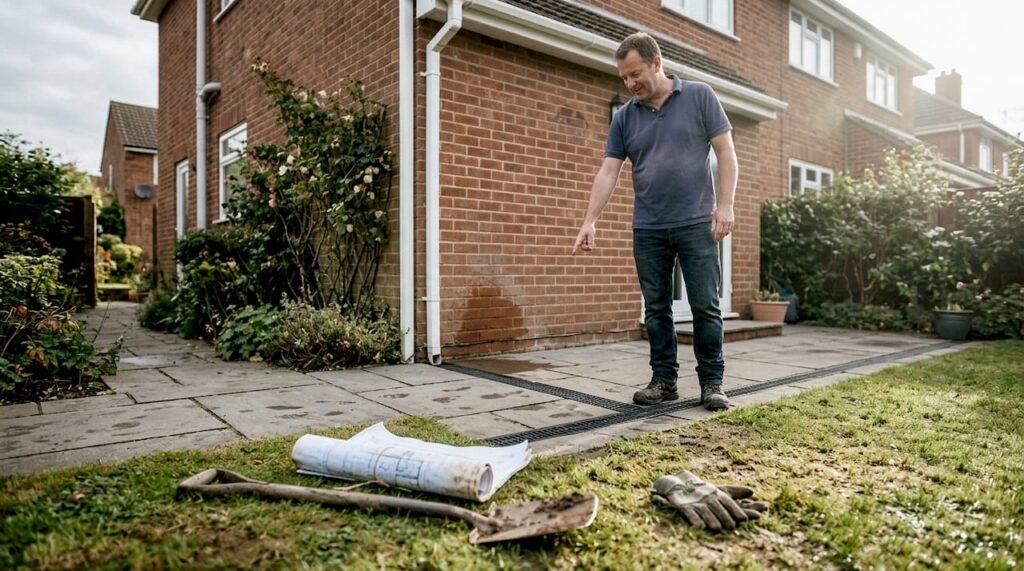
Surface drainage tackles water pooling on driveways, patios, lawns, and other exposed areas by collecting and channelling runoff quickly before it penetrates the ground or enters buildings. Open channels and ditches typically run 90cm deep with 1:40 gradients to expedite water flow towards designated discharge points. These visible systems prove ideal for properties experiencing heavy rainfall where rapid removal prevents flooding and erosion.
Common components include gullies fitted with grates at low points to capture water, linear channel drains along driveway edges, and connecting pipework that routes collected water to soakaways or public surface water sewers. Grates come in various load ratings; pedestrian areas need lighter duty whilst vehicle routes require reinforced cast iron or ductile iron grates. The simplicity of surface systems makes them cost-effective and straightforward to install compared to underground alternatives.
However, surface drainage faces vulnerability to blockages from leaves, garden debris, silt, and litter. Regular maintenance becomes essential to preserve flow capacity and prevent overflow during storms. Debris guards or mesh covers reduce blockage frequency but require periodic cleaning themselves. Winter ice formation can temporarily obstruct channels, though proper gradient design minimises standing water that freezes.
“Surface drainage excels at handling sudden heavy rainfall but demands consistent upkeep to maintain effectiveness throughout seasonal changes and debris accumulation periods.”
Ideal applications include properties with large paved areas, sloping gardens where runoff concentrates, and locations where subsurface installation proves impractical due to shallow bedrock or existing underground services. For homeowners prioritising visible, accessible drainage that allows immediate inspection and cleaning, surface systems deliver practical advantages. Yet if aesthetics matter or you need to manage water beneath landscaping, subsurface options warrant consideration.
Pro tip: Install removable debris traps at gully inlets for quick cleaning without excavation, extending system lifespan and reducing maintenance time.
Subsurface drainage systems: components and installation essentials
Subsurface drainage operates beneath ground level using perforated pipes to collect and transport water invisibly, preserving landscaping aesthetics whilst providing reliable long-term water management. Standard installations use 110mm PVC pipes laid at 1:40 gradients with cover depths of 300-600mm depending on location and load requirements. These systems handle foul water from toilets and sinks, surface water from roofs and paved areas, and groundwater seepage in wet sites.
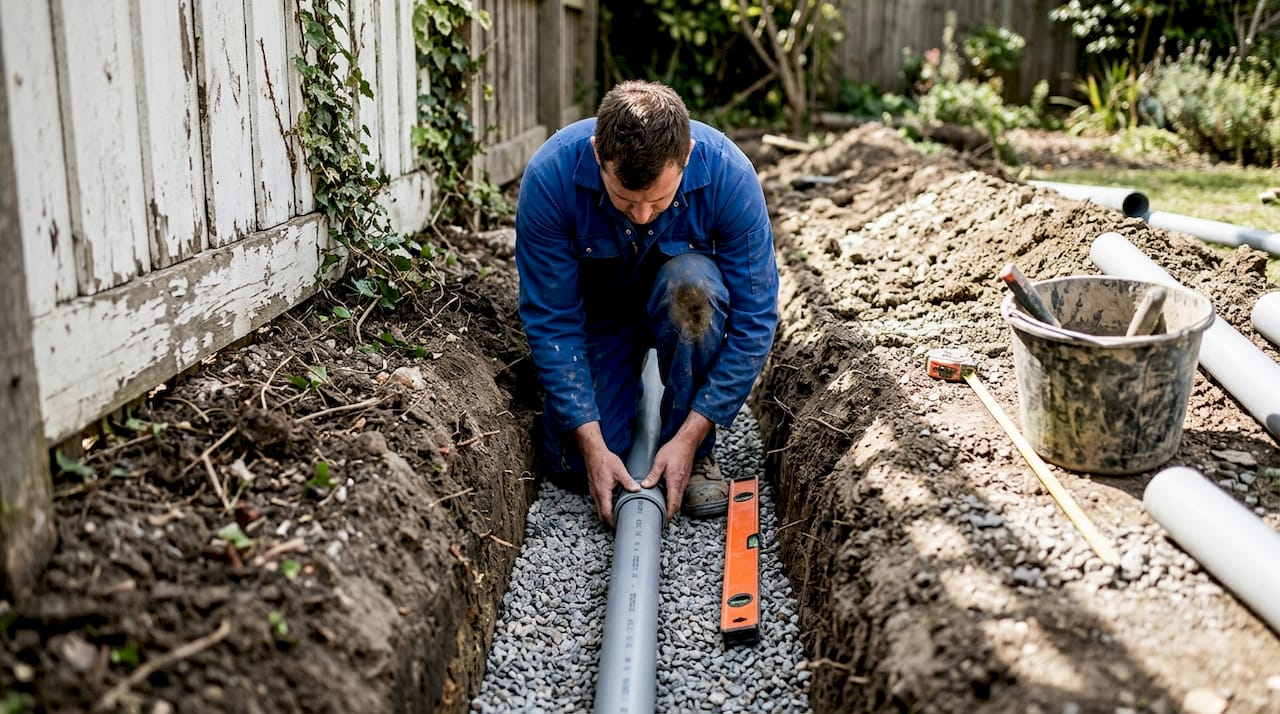
Key components include perforated pipes for water collection, solid pipes for conveyance, bends and junctions to navigate routes, inspection chambers (manholes) for access, and terminal soakaways or sewer connections for discharge. Y-junctions prove superior to T-junctions because they reduce turbulence and blockage risk at pipe intersections. Inspection chambers must be positioned at direction changes, junction points, and maximum 45-metre intervals along straight runs to facilitate camera surveys and rodding access.
Installation demands precision to ensure self-cleansing velocities that prevent silt accumulation. A gradient of 1:40 (25mm drop per metre) represents the minimum for 110mm pipes, though steeper slopes improve performance where topography allows. Pipe cover depth varies strategically: 300mm suffices in garden areas with pedestrian traffic only, whilst 600mm becomes necessary beneath driveways and roads to withstand vehicle loads without pipe crushing. Bedding material (typically pea gravel) surrounds pipes to provide support and facilitate water entry through perforations.
Soakaways require careful positioning at least 5 metres from buildings to prevent foundation undermining and structural damage. Their effectiveness depends on soil permeability; conducting percolation tests during planning confirms whether soakaways will drain adequately or if alternative discharge routes are needed. Building Regulations mandate separate systems for foul and surface water, preventing sewage contamination of watercourses and reducing treatment plant loads.
| Component | Specification | Purpose |
|---|---|---|
| Perforated pipes | 110mm PVC with slots | Collect groundwater and surface runoff |
| Solid pipes | 110mm PVC | Convey water to discharge points |
| Gradient | 1:40 minimum (25mm/m) | Maintain self-cleansing flow velocity |
| Cover depth (garden) | 300mm | Protect pipes from pedestrian loads |
| Cover depth (roads) | 600mm | Withstand vehicle traffic |
| Soakaway distance | Minimum 5m from buildings | Prevent foundation damage |
Pro tip: Wrap soakaways in geotextile membrane to prevent silt infiltration and maintain drainage capacity over decades, significantly extending system lifespan.
For comprehensive guidance on installation techniques and regulatory compliance, explore our detailed drain installation guide covering planning through completion.
Specialised drainage solutions for challenging properties
Some properties face unique water management challenges that standard surface or subsurface drainage cannot adequately address. Low-lying areas prone to flooding, basements suffering persistent dampness, and sites with high water tables require specialised solutions combining mechanical pumping and membrane systems. Understanding these options empowers you to tackle moisture problems that compromise structural integrity and living comfort.
Sump pumps actively remove water from collection pits in basements, crawl spaces, or low garden areas where gravity drainage proves impossible. These systems require reliable electrical power and regular maintenance to function effectively during critical flood events. Battery backup units provide protection against power cuts during storms when pumping capacity matters most. Float switches activate pumps automatically when water reaches predetermined levels, though manual override capability allows testing and emergency operation.
Cavity drainage systems (classified as Type C waterproofing under BS 8102:2022) manage basement water ingress through a different approach. Dimpled plastic membranes fixed to walls and floors create air gaps that intercept moisture before it reaches internal surfaces. Water tracking down membranes collects in perimeter channels connected to sump pumps for removal. This method proves particularly effective in properties where external tanking or structural waterproofing (Type A and B) cannot be retrofitted practically.
Effectiveness depends critically on identifying and sealing significant water entry points before installation. Cavity drainage manages residual seepage and vapour transmission rather than active leaks or flowing water. Professional surveys using thermal imaging and moisture meters pinpoint problem areas requiring targeted repairs. The British Standard BS 8102:2022 provides detailed guidance on system design, installation quality, and maintenance requirements to ensure long-term performance.
These specialised systems prove essential in flood-prone southern UK locations where properties sit in valleys, near rivers, or on clay soils with poor natural drainage. Properly installed sump pumps reduce basement flooding incidents by over 70%, protecting valuable storage space and preventing mould growth that threatens health and property value. Yet they introduce ongoing costs through electricity consumption and periodic servicing to replace worn components before failures occur.
- Sump pumps need annual servicing to check float switches, impellers, and discharge pipes
- Battery backup systems require replacement every 3-5 years to maintain emergency capacity
- Cavity drainage membranes last decades but channels need periodic flushing to remove silt
- Combined systems using both pumps and membranes provide redundancy for critical applications
For properties facing persistent moisture challenges, consulting drainage specialists ensures appropriate system selection and compliant installation that protects your investment long term.
Comparing drainage systems and making the right choice
With multiple drainage options available, comparing their characteristics helps identify which system aligns best with your property requirements, budget constraints, and maintenance capabilities. Each approach offers distinct advantages and limitations that suit different scenarios, making informed selection crucial for reliable long-term performance.
| System type | Best for | Typical cost | Maintenance needs | Key advantages | Main limitations |
|---|---|---|---|---|---|
| Surface drainage | Large paved areas, sloping sites | £500-£2,000 | Frequent debris clearing | Visible, accessible, quick installation | Prone to blockages, aesthetically intrusive |
| Subsurface drainage | New builds, landscaped gardens | £1,500-£5,000 | Periodic CCTV surveys | Hidden, long-lasting, regulatory compliant | Higher installation cost, excavation required |
| Sump pumps | Basements, low-lying areas | £800-£2,500 | Annual servicing, power checks | Active water removal, flood protection | Requires electricity, mechanical failures possible |
| Cavity drainage | Basement moisture, retrofit projects | £3,000-£8,000 | Channel flushing every 2-3 years | Effective for existing buildings, minimal disruption | Higher cost, ongoing pump operation |
Property type significantly influences suitable choices. New builds benefit from subsurface systems designed during construction when excavation proves straightforward and regulations mandate separate foul and surface water management. Existing properties with established landscaping may prefer surface drainage to avoid disrupting mature gardens, though targeted subsurface additions can address specific problem areas. Basement conversions virtually always require cavity drainage or sump pumps to manage below-ground moisture.
Local regulations and flood risk shape decisions too. Properties in southern UK flood zones should prioritise SuDS-compliant approaches using soakaways and permeable surfaces rather than direct sewer connections. Planning permission may require drainage impact assessments demonstrating your system won’t worsen downstream flooding. Conversely, properties on well-drained sandy soils enjoy simpler options with natural infiltration capacity.
Maintenance commitment varies dramatically between systems. Surface drainage demands monthly inspections and debris removal, particularly during autumn leaf fall. Subsurface systems need less frequent attention but benefit enormously from CCTV surveys for drains every 3-5 years to detect root ingress, joint displacement, or pipe degradation before failures occur. Sump pumps require annual servicing and immediate attention if unusual noises or cycling patterns emerge.
Pro tip: Schedule professional CCTV drainage surveys before purchasing properties to identify hidden defects that could cost thousands in repairs, giving you negotiating leverage or avoiding problematic purchases entirely.
Cost considerations extend beyond initial installation to ongoing operation and eventual repairs. Surface systems offer lowest upfront investment but accumulate maintenance labour costs over time. Subsurface drainage front-loads expense during installation yet delivers decades of low-maintenance service when properly designed. Pumped systems add electricity costs and periodic component replacements to your budget.
For most southern UK homeowners, combining approaches proves optimal. Surface drainage handles immediate runoff from driveways and patios whilst subsurface systems manage roof water and garden seepage invisibly. Adding sump pump capacity in vulnerable low spots provides insurance against exceptional rainfall events. Our drain unblocking guide offers additional insights into maintaining system performance and addressing common blockage issues promptly.
Discover expert drainage services for southern UK homes
Choosing the right drainage system represents just the first step towards effective water management. Professional installation ensures your selected approach meets Building Regulations, achieves correct gradients and depths, and integrates seamlessly with existing site conditions. Expert services transform theoretical knowledge into practical, compliant systems that protect your property for decades.
Our comprehensive drain installation guide covers planning, excavation, pipe laying, and inspection requirements for reliable home drainage. Advanced CCTV drain surveys reveal hidden blockages, structural defects, and root penetration before they escalate into emergencies, enabling targeted repairs that save thousands compared to reactive excavation. When problems arise, our drain unblocking specialists restore flow quickly using high-pressure jetting and mechanical cutting tools. Southern UK homeowners trust our local expertise, rapid response times, and long-term guarantees to maintain drainage systems that perform reliably through every season.
FAQ
What are the main types of drainage systems for homes?
Surface drainage uses open channels, gullies, and grates to remove water quickly from driveways and patios, ideal for heavy rainfall but prone to debris blockages. Subsurface systems employ perforated pipes buried underground to handle foul water, surface runoff, and groundwater invisibly with minimal maintenance. Specialised options include sump pumps for active water removal from basements and cavity drainage membranes that manage moisture in below-ground spaces.
How do building regulations affect drainage system choice?
Building Regulations Part H mandate separate foul and surface water systems for new builds and major renovations, preventing sewage contamination and reducing public sewer loads. Sustainable drainage systems (SuDS) are strongly encouraged in flood-prone southern UK areas, using soakaways and permeable surfaces to manage water naturally. Planning authorities may require drainage impact assessments demonstrating your system won’t worsen downstream flooding in sensitive locations.
Why are CCTV drain surveys important before repairs?
CCTV surveys for drains reveal blockages, root ingress, pipe collapses, and joint displacement invisible from surface inspection, enabling targeted repairs rather than speculative excavation. Camera footage provides precise location data and visual evidence of defect severity, helping prioritise urgent issues versus routine maintenance. Surveys conducted every 3-5 years detect problems early when repairs cost hundreds rather than thousands after catastrophic failures.
What maintenance do sump pumps require?
Sump pumps need annual servicing to verify float switches activate correctly, impellers spin freely without debris obstruction, and discharge pipes remain clear and properly secured. Testing pumps quarterly by pouring water into collection pits confirms automatic operation before emergency situations arise. Battery backup systems require replacement every 3-5 years to maintain reliable operation during power cuts when flooding risk peaks during storms.