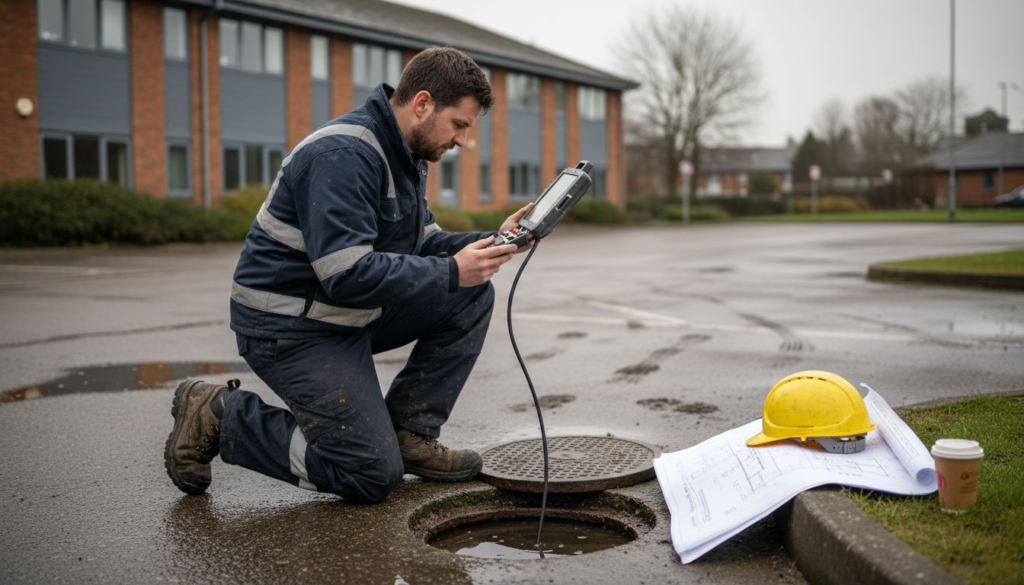
Managing commercial buildings across Southern England brings ongoing challenges, especially when it comes to keeping drainage systems running smoothly. Reliable drainage is vital for property managers and commercial landlords who want to avoid costly flooding, environmental penalties, and unexpected repairs. Understanding the structure and demands of commercial drainage systems helps you make informed decisions about emergency responses and long-term maintenance, supporting uninterrupted business operations and full legal compliance.
Table of Contents
- Defining Commercial Drainage In The UK
- Types Of Commercial Drainage Systems
- How Commercial Drainage Operates
- Key Legal Duties And Compliance Standards
- Risks, Costs And Maintenance For Businesses
Key Takeaways
| Point | Details |
|---|---|
| Importance of Compliance | Adhering to national drainage standards is crucial for environmental protection and avoiding legal penalties. |
| Types of Systems | Understanding the different drainage systems helps businesses select the most suitable for their specific needs. |
| Regular Maintenance | Routine inspections and maintenance are essential to prevent costly repairs and ensure system functionality. |
| Risk Management | Proactive financial planning for drainage infrastructure can mitigate potential costs associated with flooding and non-compliance. |
Defining commercial drainage in the UK
Commercial drainage in the United Kingdom represents a critical infrastructure system that manages water flow and waste management for business environments. These complex networks involve intricate piping systems designed to handle both surface water runoff and waste water discharge from commercial premises, ensuring environmental compliance and operational efficiency.
The national drainage standards encompass multiple critical components, including:
- Surface water management systems
- Foul water disposal networks
- Sustainable drainage principles (SuDS)
- Compliance with Building Regulations
Under the national standards for sustainable drainage systems, commercial drainage goes beyond simple water removal. These systems are engineered to manage water discharge strategically, mitigating flood risks and preventing environmental pollution.
Commercial drainage systems typically involve two primary water management streams. The first handles surface water from rainfall and external areas, while the second manages waste water from internal building facilities like toilets, sinks, and industrial processes. These systems must connect to public sewage networks or private treatment facilities, following strict drainage compliance regulations outlined in Approved Document H of the Building Regulations.
Key Drainage Components:
- Underground pipe networks
- Waste collection systems
- Rainwater management infrastructure
- Filtration and treatment mechanisms
Technical Specifications:
Commercial drainage systems require precise engineering to handle varying water volumes, prevent contamination, and ensure efficient waste management. This involves calculating pipe diameters, gradient slopes, and connection points to maintain optimal water flow and prevent system overloading.
Pro tip: Always conduct professional drainage surveys before major commercial developments to identify potential system limitations and design appropriate water management solutions.
Types of commercial drainage systems
Commercial drainage systems in the United Kingdom are designed with complex engineering principles to manage water flow efficiently and sustainably. These systems are crucial for businesses to maintain environmental compliance and prevent water-related infrastructure challenges.
The primary types of commercial drainage systems include:
- Surface Water Drainage Systems
- Foul Water Drainage Networks
- Combined Drainage Systems
- Separate Drainage Systems
Sustainable drainage systems represent advanced water management approaches that go beyond traditional piping networks. These innovative systems incorporate natural water management techniques like:
- Swales
- Infiltration basins
- Permeable pavements
- Detention ponds
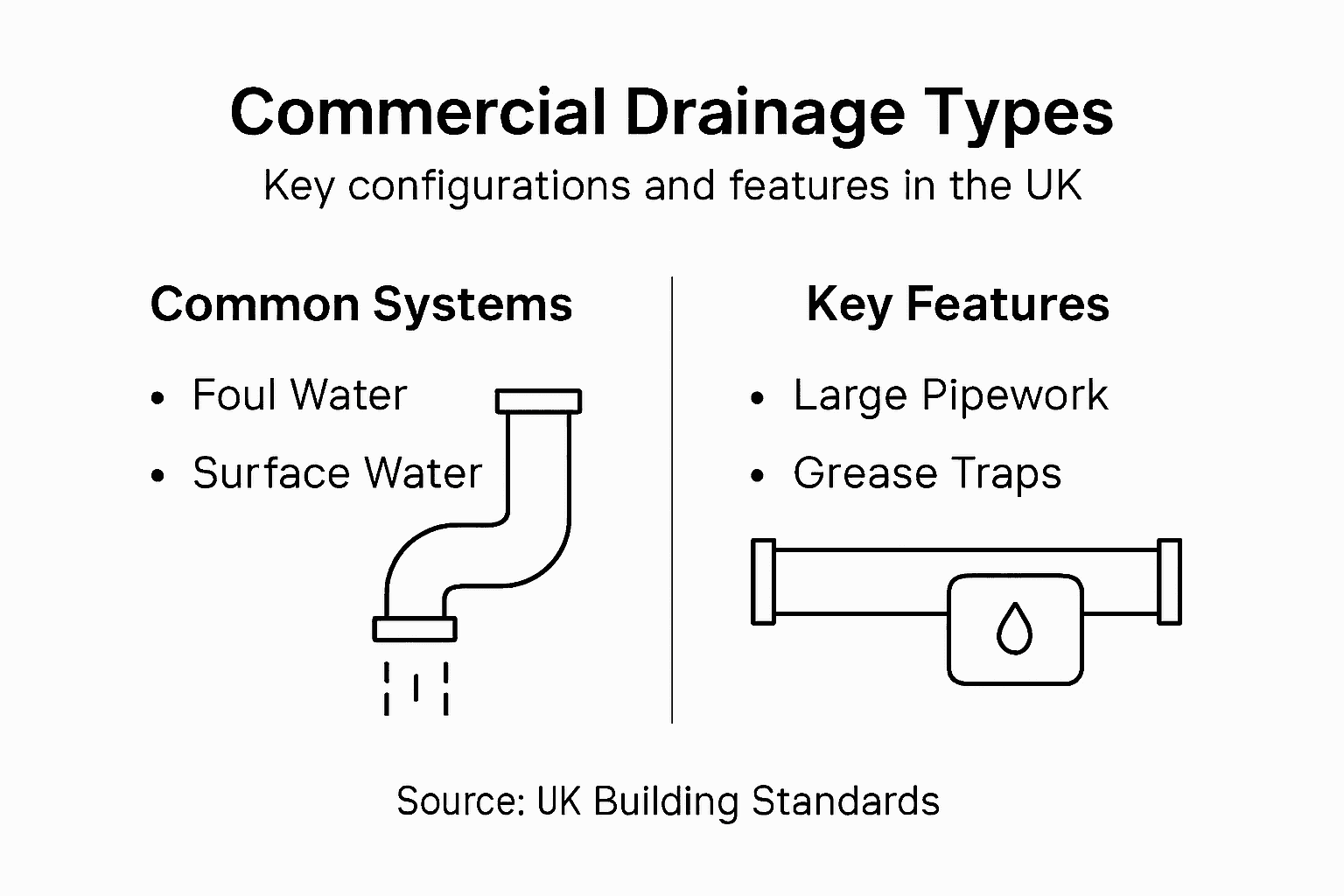
According to regulatory standards, two primary drainage configurations exist in commercial settings. The first is the combined system, which carries both foul water and rainwater through identical pipe networks. However, drainage compliance regulations increasingly discourage this approach due to potential system overloading risks.
The separate drainage system represents the preferred modern approach, featuring distinct pipe networks for:
Here is a comparison of the main commercial drainage system types and their typical applications:
| System Type | Main Function | Suitable Environments |
|---|---|---|
| Surface Water Drainage | Diverts rain and run-off | Car parks, roofs, external areas |
| Foul Water Network | Manages wastewater | Offices, restaurants, factories |
| Combined System | Handles both foul and surface | Older sites, legacy buildings |
| Separate System | Segregates water streams | Modern developments, retail parks |
- Rainwater management
- Waste water disposal
- Industrial process water
Technical Considerations:
Each drainage system requires precise engineering calculations considering factors like water volume, gradient, pipe diameter, and environmental impact. Professional assessment ensures optimal design and long-term functionality.
Pro tip: Conduct comprehensive drainage surveys before implementing any commercial drainage system to identify specific site requirements and potential infrastructure challenges.
How commercial drainage operates
Commercial drainage systems are sophisticated networks designed to manage water flow efficiently and safely in business environments. These complex infrastructures ensure that water from various sources is collected, transported, and discharged in compliance with strict environmental and regulatory standards.
Sustainable drainage systems operate through a hierarchical approach that prioritizes water management objectives:
- Minimising surface water runoff
- Reducing flood risks
- Preventing environmental pollution
- Managing water quality
The operational mechanism involves multiple critical components:
- Water Collection Points
- Underground Pipe Networks
- Filtration Systems
- Discharge Destinations
According to drainage compliance regulations, commercial drainage systems must segregate different water types to prevent infrastructure strain. This means:
- Foul Water: Directed to sewage treatment facilities
- Surface Water: Managed through separate channels
- Industrial Process Water: Treated according to specific industrial standards
Technical Operational Principles:
Drainage networks rely on precise engineering calculations involving gradient, pipe diameter, water volume, and environmental impact considerations. Professional design ensures optimal water flow, preventing potential structural damages and maintaining system integrity.
System Flow Mechanics:
- Gravity-based water transportation
- Pressure-assisted drainage in complex terrains
- Filtration and treatment processes
- Environmental compliance monitoring
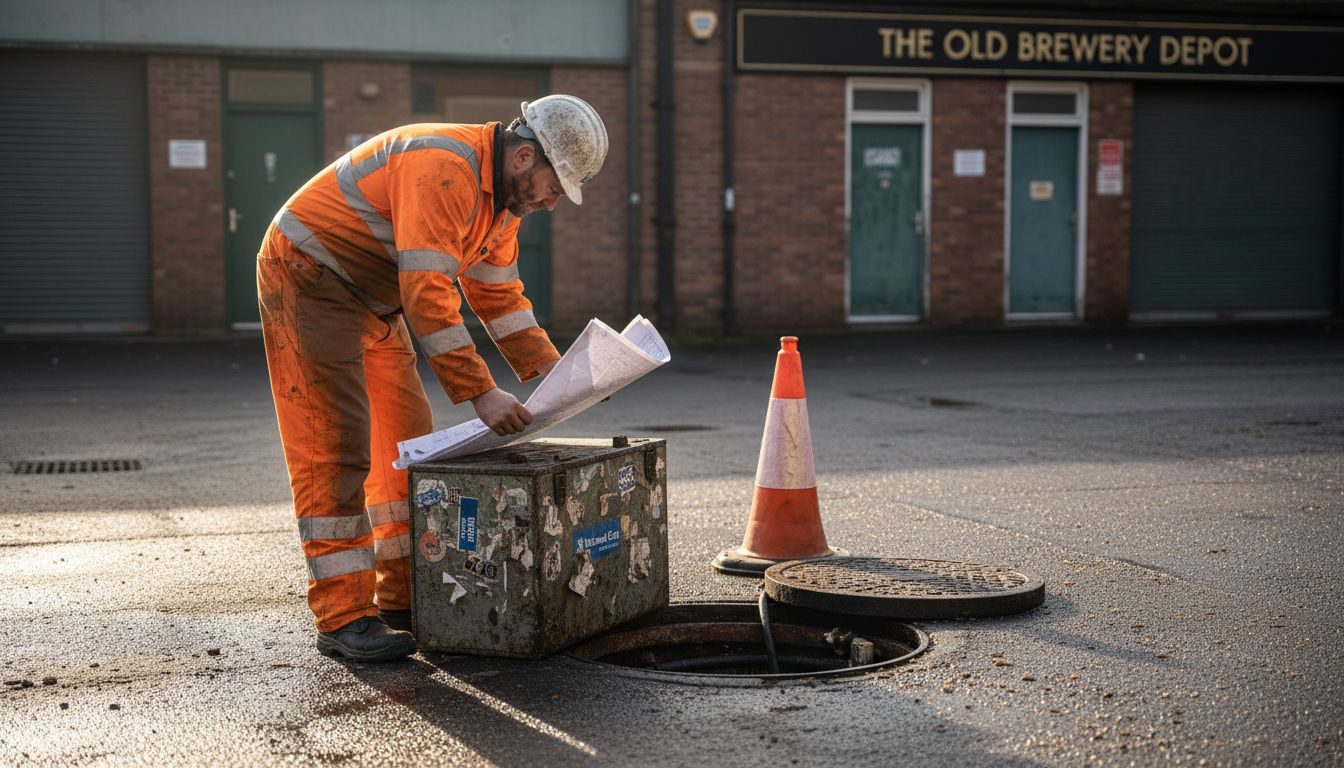
Pro tip: Regularly inspect drainage infrastructure to identify potential blockages or structural weaknesses before they escalate into significant operational challenges.
Key legal duties and compliance standards
Commercial drainage systems in the United Kingdom are governed by a comprehensive framework of legal requirements designed to protect environmental integrity, public health, and infrastructure safety. Businesses must navigate a complex landscape of regulatory obligations to ensure their drainage infrastructure meets national standards.
Sustainable drainage system standards impose critical legal responsibilities on property developers and managers, including:
- Obtaining necessary environmental permits
- Designing drainage systems that minimise environmental impact
- Liaising with relevant authorities
- Implementing pollution control measures
The key regulatory frameworks encompass multiple levels of compliance:
- Environmental Protection Regulations
- Building Regulations
- Water Management Guidelines
- Health and Safety Standards
Building Regulations Approved Document H provides specific statutory guidance for commercial drainage installations. These regulations mandate:
- Precise design specifications
- Proper installation protocols
- Regular maintenance requirements
- Inspection and testing procedures
Legal Compliance Checklist:
- Obtain all necessary environmental permits
- Ensure drainage system design meets national standards
- Implement approved waste management protocols
- Maintain comprehensive documentation
- Conduct regular professional inspections
Regulatory Oversight Mechanisms:
Business owners must engage with multiple regulatory bodies, including the Environment Agency, local sewage undertakers, and building control authorities. These organisations ensure drainage systems meet stringent health, safety, and environmental protection standards.
Pro tip: Maintain a comprehensive compliance portfolio documenting all drainage system designs, installations, and maintenance activities to demonstrate regulatory adherence and protect against potential legal challenges.
The table below summarises key legal and operational duties for business owners managing commercial drainage:
| Duty | Purpose | Consequence if Neglected |
|---|---|---|
| Obtain environmental permits | Ensures lawful site development | Regulatory fines, project delays |
| Schedule regular inspections | Detects early system faults | High repair costs, flood risk |
| Maintain full documentation | Demonstrates legal compliance | Increased audit scrutiny |
| Design for national standards | Avoids structural/environment damage | Mandatory remedial work |
Risks, costs and maintenance for businesses
Commercial drainage systems represent a critical infrastructure investment with significant financial and operational implications for businesses across the United Kingdom. Understanding the potential risks, associated costs, and maintenance requirements is essential for proactive management and long-term system reliability.
Sustainable drainage system standards highlight several key risk categories businesses must manage:
- Flooding potential
- Environmental pollution risks
- Infrastructure strain
- Regulatory compliance challenges
Cost Components for Commercial Drainage:
- Initial installation expenses
- Regular maintenance expenditures
- Potential repair and replacement costs
- Environmental penalty risks
Maintenance strategies play a crucial role in managing drainage system risks and controlling long-term expenses. Businesses should focus on:
- Planned preventative maintenance
- Regular professional inspections
- Comprehensive documentation
- Proactive system monitoring
Financial Risk Management:
Effective drainage infrastructure management requires strategic financial planning. Companies must budget for:
- Annual maintenance programmes
- Emergency repair contingencies
- System upgrade investments
- Compliance monitoring expenses
Potential Financial Implications:
- Non-compliance penalties can range from £1,000 to £50,000
- Emergency repairs might cost between £500-£5,000
- Major system replacements could exceed £20,000
- Flood damage potentially reaching hundreds of thousands of pounds
Pro tip: Implement a comprehensive drainage maintenance log and budget for annual professional inspections to mitigate unexpected costs and maintain regulatory compliance.
Protect Your Business with Expert Commercial Drainage Solutions
Managing commercial drainage in the United Kingdom demands precise engineering and strict compliance with legal standards to avoid costly floods, environmental pollution, and regulatory fines. If you are facing challenges with drainage system maintenance, risk of infrastructure strain, or need guidance on sustainable drainage systems as outlined by national regulations, partnering with seasoned professionals is essential. At Local Services Drainage, we specialise in providing comprehensive drainage services tailored for commercial properties across the southern regions of the UK.
Benefit from our advanced technology like CCTV diagnostics, no-dig relining, and rapid emergency response to keep your drainage operating efficiently and compliant with Building Regulations and environmental protection guidelines. Don’t wait for expensive repairs or downtime. Explore our drain unblocking and repair services today and secure your business’s drainage integrity with guaranteed long-term solutions. Act now to protect your premises from costly damage and meet all your compliance responsibilities seamlessly.
Frequently Asked Questions
What are the main components of commercial drainage systems?
Commercial drainage systems consist of underground pipe networks, waste collection systems, rainwater management infrastructure, and filtration and treatment mechanisms designed to efficiently handle both surface and foul water.
How do sustainable drainage systems differ from traditional drainage systems?
Sustainable drainage systems use natural water management techniques such as swales, infiltration basins, and permeable pavements to reduce surface water runoff and improve environmental compliance, whereas traditional systems often rely solely on piping networks.
What are the legal compliance standards for commercial drainage in the UK?
Legal compliance standards include adherence to environmental protection regulations, building regulations, water management guidelines, and required regular inspections to ensure that drainage systems are designed and maintained according to national standards.
What are the risks associated with poorly managed commercial drainage systems?
Poorly managed commercial drainage systems may lead to flooding, environmental pollution, increased maintenance costs, structural damage, and non-compliance penalties, which can significantly impact business operations.