TL;DR:
- Many UK homeowners mistakenly believe that drains under their property are their sole responsibility, risking costly repair bills. Drainage compliance involves maintaining, connecting, and operating systems according to law, with responsibility transferring to water authorities once shared sewers are involved. Regular inspections, proper maintenance, and understanding regulations protect property value, prevent penalties, and simplify future transactions.
Most UK homeowners assume that any drain running under their property is automatically their problem to fix. That assumption is wrong, and it costs people thousands of pounds every year. Drainage compliance is one of the most misunderstood areas of property ownership in Britain, sitting at the crossroads of building regulations, environmental law, and tenancy obligations. Whether you own a Victorian terrace, a new-build flat, or a portfolio of rental properties, understanding your legal position on drainage is not optional. This guide covers exactly what the law expects, where responsibilities truly lie, and how to stay on the right side of it.
Table of Contents
- What is drainage compliance and who is responsible?
- Essential UK drainage regulations all homeowners should know
- How drainage compliance is checked: inspections and common pitfalls
- Practical steps to maintain drainage compliance
- Why drainage compliance is easier (and more valuable) than you think
- Get expert help with drainage compliance and repairs
- Frequently asked questions
Key Takeaways
| Point | Details |
|---|---|
| Compliance is a legal duty | Homeowners and landlords are legally responsible for proper drainage to avoid fines and repairs. |
| Know the disposal hierarchy | Surface water must be separated from foul water, using a soakaway if possible, per current UK standards. |
| Inspections prevent surprises | Regular check-ups help avoid common pitfalls and keep drainage compliant. |
| Professional help is available | Experts can deal with inspections, repairs, and upgrades to maintain compliance. |
What is drainage compliance and who is responsible?
Drainage compliance means operating, maintaining, and connecting drainage systems in line with UK law, building regulations, and local authority requirements. It is not just about keeping drains clear. It covers what your drainage connects to, how surface water is handled, and whether your setup meets the standards expected at the time of any building work.
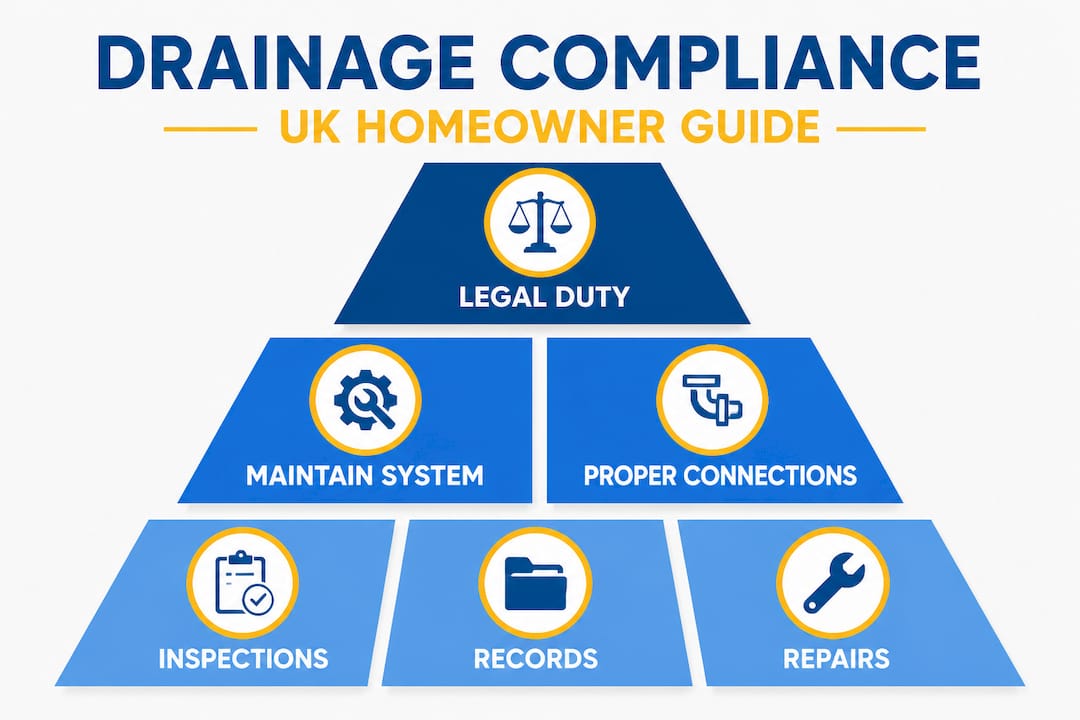
The first thing to understand is the distinction between private and public drains. A drain that serves only your property, running within your boundary, is your responsibility. Once it joins a shared sewer or public sewer, responsibility typically transfers to the local water authority. Since October 2011, private sewers that serve more than one property were adopted by water companies under the Water Industry Act 1991, which means many homeowners are no longer liable for sections of pipework they previously maintained at their own cost.
Landlords carry additional obligations. They must ensure that drainage systems within their properties are functional and compliant before a tenancy begins, and they must address any drainage issues that arise during a tenancy if those issues are structural or maintenance-related. Tenants can be held responsible for blockages caused by their own behaviour, such as pouring grease or flushing unsuitable items, but the underlying system must be landlord-maintained.
Key responsibilities at a glance:
- Homeowner: Responsible for private drains within property boundaries, including connections to public sewers.
- Landlord: Responsible for structural drainage maintenance; must ensure compliance before and during any tenancy.
- Tenant: Responsible only for day-to-day misuse that directly causes blockages.
- Local water authority: Responsible for public sewers and shared drains adopted since 2011.
- Local council: Involved in planning permissions and surface water management for new developments.
Always check your title deeds and any tenancy agreements carefully. Deeds can contain easements that give water companies rights across your land, and tenancy agreements may specify maintenance duties that affect how compliance obligations are split.
Surface water must be separated from foul water where possible, with a disposal hierarchy: soakaway first, then surface water sewer, watercourse, or combined sewer as a last resort. Sustainable drainage systems (SuDS) are preferred for new developments.
This separation principle is not just good practice. It is a legal standard, and failing to meet it can result in enforcement notices from your local authority.
Essential UK drainage regulations all homeowners should know
Once you know your baseline responsibilities, it is vital to understand exactly which UK legal rules affect your home’s drainage.
Building Regulations Part H is the central piece of legislation that governs drainage for buildings in England and Wales. It covers foul water drainage, wastewater treatment systems, rainwater drainage, and solid waste storage. Part H applies to new builds and to extensions, meaning any building work that alters your drainage requires compliance sign-off from Building Control.
Here are the five most important regulatory points every homeowner should understand:
- Foul and surface water must be kept separate. Connecting a surface water drain to a foul sewer without authorisation is an illegal connection and can attract enforcement action, fines, and compulsory repair costs.
- The disposal hierarchy must be followed for surface water. Under national SuDS standards, surface water should go to a soakaway first, then a surface water sewer, then a watercourse, and only to a combined sewer if no other option exists.
- New extensions trigger fresh drainage obligations. Adding a conservatory, extension, or additional bathroom requires approval that includes drainage sign-off. This is where many homeowners are caught out years later when they sell or remortgage.
- Sustainable drainage is now expected in new developments. Local planning authorities require SuDS as a condition of planning approval for major developments, and this expectation is moving toward all new residential builds.
- Illegal drainage connections carry significant penalties. Under the Water Industry Act, connecting to a public sewer without consent can result in fines of several thousand pounds and may require the homeowner to fund rectification works at their own expense.
Read up on how surface water drainage works in practice, because the disposal hierarchy becomes very practical when you are deciding how to manage water from a new patio or driveway. Commercial properties have a separate and more detailed regulatory framework, and you can review business drainage regulation differences if you are managing non-residential premises.
Pro Tip: After any building work, extension, or even a significant paving job, request a copy of the drainage drawings from your builder and check them against your original plans. This single habit prevents the most common compliance disputes when you come to sell.
How drainage compliance is checked: inspections and common pitfalls
Understanding the rules is one thing. How compliance is actually checked, and where many get caught out, is another matter entirely.
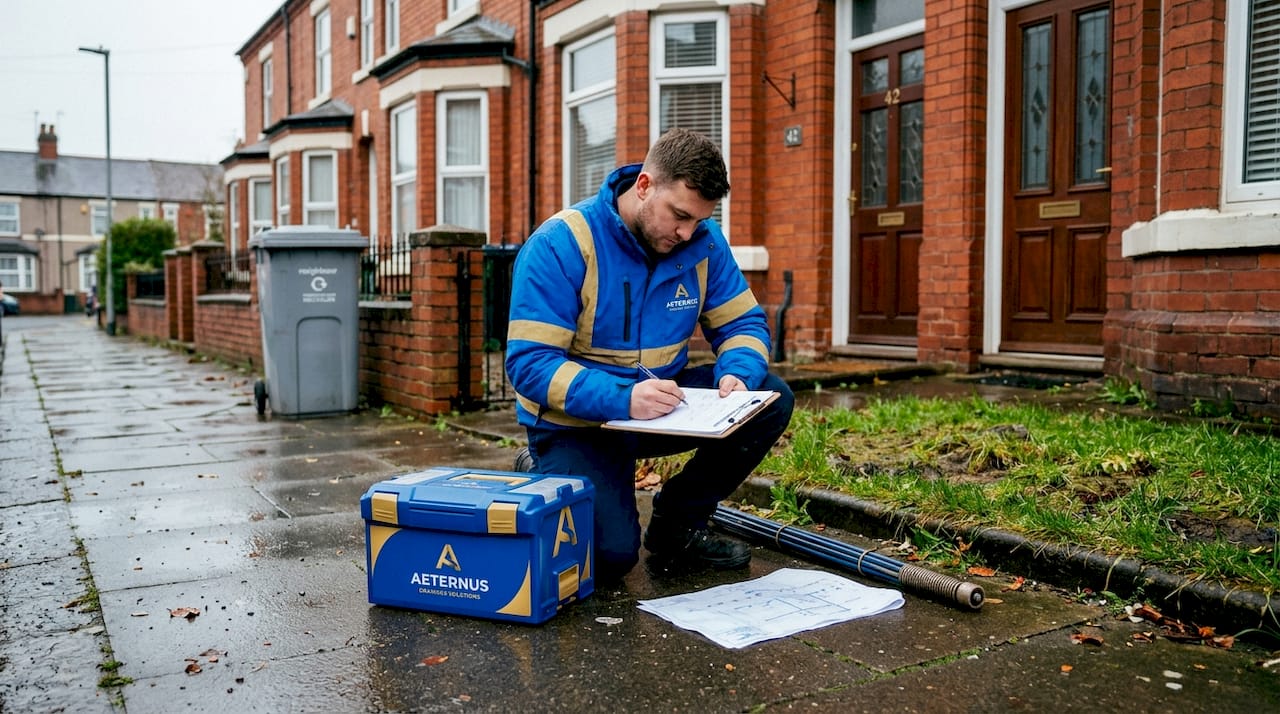
Building Control officers inspect drainage during and after construction. For existing properties, it is usually surveyors, mortgage lenders’ valuers, or the local water authority who flag issues. A drainage inspection can be triggered by a property purchase, a planning application, an insurance claim, or a neighbour’s flooding complaint.
What a typical drainage inspection covers
| Inspection area | What is checked | Why it matters |
|---|---|---|
| Drain connectivity | Which drains connect to which sewers | Confirms legal separation of foul and surface water |
| Condition of pipework | Cracks, root ingress, collapse | Affects structural integrity and compliance |
| Soakaway performance | Whether surface water disperses correctly | Required by the disposal hierarchy |
| Illegal connections | Any unauthorised connections to public sewers | Can result in fines and compulsory works |
| Drainage gradients | Correct fall to prevent pooling and blockages | Affects drainage function and Part H compliance |
| Manhole access | Condition and accessibility of inspection chambers | Required for maintenance and emergency access |
The most common compliance pitfalls we encounter include:
- Connecting rainwater downpipes directly to foul sewers without authorisation, which is both illegal and a significant contributor to sewer flooding during heavy rain.
- Missing soakaways on properties with hard landscaping. A new driveway that directs water to the road or a neighbour’s garden rather than into a proper soakaway is a compliance failure.
- Post-extension drainage never signed off. This is far more widespread than people realise. Extensions built without formal drainage approval are flagged by conveyancing solicitors, causing delays or collapsed sales.
- Deteriorated or misconnected old pipework. Victorian-era drainage especially tends to be connected in ways that no longer meet modern standards, and this only becomes an issue when inspected.
- No records of drainage layout. Without plans, proving compliance is almost impossible without a professional survey.
Understanding common drainage issues before they escalate is critical. Many of the problems above start as minor observations and become costly enforcement matters only because nobody addressed them early.
Pro Tip: Before purchasing a property or signing a new tenancy agreement, commission an independent drainage survey. Catching an illegal connection or a failed soakaway before contracts exchange saves you from inheriting someone else’s compliance problem.
Practical steps to maintain drainage compliance
To turn compliance into a habit rather than a one-off task, here is what you should do regularly and when you should call in professional support.
Regular maintenance checklist
- Annual visual inspection. Walk around your property in autumn and spring, checking gullies, downpipes, and visible drains for blockages, overgrowth, or damage.
- Clear gutters at least twice a year. Blocked gutters overflow and can direct water against walls or foundations. Clearing them costs very little but prevents significant damage.
- Check soakaway performance after heavy rain. If puddles persist for more than 24 hours near a soakaway area, it may be saturated or blocked and needs investigation.
- Flush inspection chambers with a garden hose. A simple annual flush confirms flow is clear and helps identify any partial blockages before they develop fully.
- Review drainage plans after any building work. Every extension, loft conversion, or new outbuilding changes drainage requirements. Confirm with Building Control that your drainage remains compliant after each project.
- Keep records. A folder or digital file containing original drainage drawings, completion certificates, and survey reports is essential for future sale, remortgage, or insurance claims.
When to DIY versus when to call a professional
| Task | DIY appropriate? | Professional needed? |
|---|---|---|
| Clearing a blocked gully or drain with a plunger | Yes | No |
| Rodding a slow kitchen or bath drain | Yes (with care) | If repeated blockages occur |
| Checking soakaway drainage performance | Partial (visual only) | Yes for testing permeability |
| Installing a new soakaway or drainage run | No | Always |
| Connecting drainage to a public sewer | No (requires consent) | Always, with Building Control sign-off |
| Diagnosing drainage layout after purchase | No | Professional CCTV survey essential |
| Repairing cracked or collapsed pipework | No | Always, no-dig relining may apply |
Following drainage best practices consistently is far cheaper than reactive repair. The most expensive drainage jobs we see are almost always those that were left too long. As guidance on drain installation makes clear, proper system design from the outset, whether for a new build or a significant renovation, prevents the majority of compliance issues from occurring in the first place.
Under the national SuDS standards, the hierarchy for surface water disposal applies to any new drainage installation, so whenever you upgrade your property’s drainage, the rules must be applied from scratch, not retrofitted around an old layout.
Why drainage compliance is easier (and more valuable) than you think
The mainstream view treats drainage compliance as pure red tape. Something you deal with reluctantly, usually because a solicitor flags it or a Building Control officer turns up. We think that view is genuinely mistaken, and not just as a professional opinion.
Compliance is, at its core, a financial protection tool. A properly compliant drainage system is one that has been documented, inspected, and maintained. That record of care directly supports your property’s value. Buyers and mortgage lenders increasingly scrutinise drainage during the conveyancing process, and a clear compliance history removes one of the most common reasons surveys stall a sale.
There is also an insurance angle that most people entirely miss. When you make a claim for flood damage or a subsidence event linked to drainage, your insurer will ask about drainage maintenance and compliance. A compliant system with documented maintenance history makes it substantially easier to demonstrate that you were not negligent. Conversely, an undocumented, non-compliant system can give an insurer grounds to reduce or reject a claim entirely.
A drainage survey conducted before you buy or renovate is not just a compliance step. It is negotiating intelligence. Identifying a drainage fault before exchange gives you the option to renegotiate the purchase price or insist on remediation by the vendor.
“Most people miss compliance until the bill lands. Savvy owners never do.”
The counterintuitive truth is that the homeowners who invest the least attention in their drainage are the ones who end up paying the most. A blocked drain that costs £100 to clear today can become a collapsed pipe, a sinkholes event, or a contaminated soakaway within a few years of neglect. Treat compliance as an ongoing insurance policy with tangible returns in emergencies avoided, and the attitude shift changes everything about how you manage your property.
Get expert help with drainage compliance and repairs
If you suspect your drainage may not be compliant, or if you simply want confidence before buying, selling, or extending your property, the right time to act is now.
At Local Services Drainage, we offer professional drainage surveys, CCTV inspections, and repair services across southern England, designed specifically to help homeowners and landlords identify and resolve compliance issues quickly. Whether you need to know how to unblock a drain safely or require a full CCTV drain survey to map your drainage layout before a property transaction, our experienced engineers are equipped to help. For properties requiring new drainage runs or compliant soakaway installations, our drain installation services ensure Building Control sign-off from the start. Get in touch for a quote or to book an inspection at a time that suits you.
Frequently asked questions
What is the difference between surface water and foul water?
Surface water is rainwater run-off from roofs and gardens, while foul water is wastewater from toilets, baths, and sinks. Under national drainage standards, the two must be kept separate wherever possible.
Who checks if my home’s drainage system is compliant?
Checks are performed by Building Control officers during or after construction, and by property surveyors during conveyancing or mortgage valuations. The local water authority may also inspect if there is a reported issue with the public sewer network.
What is a soakaway and why does it matter?
A soakaway is an underground structure, typically filled with rubble or plastic crates, that allows surface water to disperse gradually into the surrounding soil. According to SuDS national standards, a soakaway is the preferred first option for surface water disposal and must be sited at least five metres from any building.
What are the penalties for illegal drainage connections?
Illegal drainage connections can lead to fines, compulsory repair notices, and in serious cases, prosecution under the Water Industry Act 1991. You can also be held liable for damage caused to neighbouring properties or the public sewer network as a result.
How often should homeowners inspect their drainage?
An annual visual check is considered good practice, along with an inspection after any significant building works or heavy storms. If you are purchasing a property, a professional drainage survey before exchange is strongly advisable.
Recommended
- Drainage compliance for UK businesses: regulations guide
- Drainage terminology explained: a guide for UK homes
- Surface water drainage explained: UK homeowner’s guide
- Drainage inspection guide: diagnose and maintain your home
- Drain Surveys London | CCTV Drainage Inspections & Reports – Pest Control 24 London