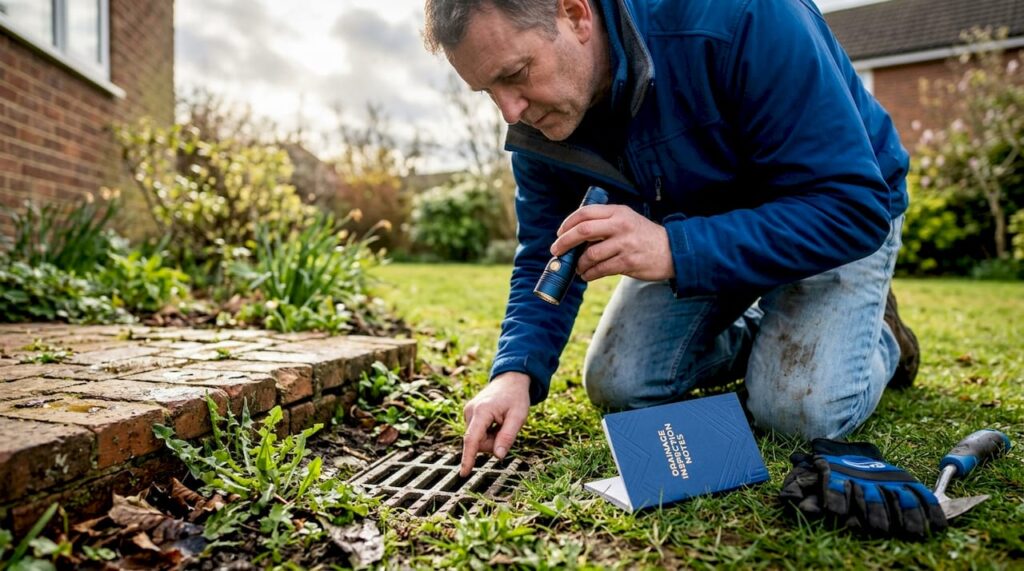
TL;DR:
- Understanding your property’s drainage system helps identify common faults like blocked gullies and cracked pipes before issues arise.
- Following a structured workflow with proper tools allows effective unblocking, inspection, and maintenance, reducing long-term costs.
- Regular preventative checks and professional CCTV surveys prevent recurring problems and ensure drain health, saving money and effort.
Water pooling on your patio after a shower of rain, or a sink that simply refuses to drain fast enough. These are the moments most homeowners dread, yet they often arrive without warning. What follows is usually a frantic search for answers, a rushed DIY attempt, or an expensive emergency call-out. The truth is that handling drainage efficiently is far less complicated once you understand the process properly. This guide walks you through every stage of a practical drainage workflow, from identifying the problem to keeping it from returning.
Table of Contents
- Understanding your property drainage system
- Must-have tools and safety checks before you start
- Step-by-step drainage workflow: unblock, inspect, maintain
- Troubleshooting recurring or stubborn drainage issues
- Preventative measures and routine maintenance tips
- Why skipping proper diagnosis is riskier than most think
- Get expert help and keep your drains flowing
- Frequently asked questions
Key Takeaways
| Point | Details |
|---|---|
| DIY first, escalate if needed | Always start with safe, simple DIY steps, but escalate to professionals for persistent or complex problems. |
| Routine checks matter | Regular inspections and maintenance prevent costly emergencies and extend system lifespan. |
| Don’t skip diagnosis | Proper diagnosis, including professional CCTV surveys, is vital to avoid expensive, recurring repairs. |
| Safety comes first | Use safety gear and know your limits—certain drainage issues are hazardous and need expert attention. |
Understanding your property drainage system
Before you can fix anything, you need to know what you are dealing with. Most residential properties in southern England share a broadly similar drainage layout. Surface water from your roof, driveway, and garden paths travels through gullies and downpipes into a surface water drain, while waste from your kitchen, bathroom, and toilets moves through internal soil pipes into the foul sewer. These two systems are separate in most modern properties, though older homes sometimes combine them.
The points where problems most commonly appear are predictable once you know where to look:
- Gullies at the base of downpipes or along paths, which collect leaves and silt
- Soil pipe joints and bends, where fatty deposits and scale tend to build up
- Inspection chambers (also called manholes), which are access points for both systems
- Drain runs beneath patios and driveways, where ground movement causes cracks and root intrusion
- Soakaways in older properties, which can collapse or become saturated over time
Understanding the causes of blocked drains is the single most useful thing you can do before a blockage even occurs. It shifts your thinking from reactive to preventative.
| Drain component | Function | Common fault |
|---|---|---|
| Gully | Collects surface run-off | Leaf and silt blockage |
| Soil pipe | Carries waste to sewer | Grease build-up, joint failure |
| Inspection chamber | Provides maintenance access | Cracked walls, root intrusion |
| Drain run | Connects all points | Ground movement, cracking |
| Soakaway | Disperses surface water | Saturation or collapse |
A useful habit is to carry out a quick visual check of these components every few months using a proper drainage inspection guide. Catching a blocked gully early costs almost nothing to fix. Leaving it for a season can mean water backing up under your flooring.
When a blockage does appear, the unblocking process starts with DIY steps such as boiling water, a plunger, or a baking soda and vinegar flush for minor issues, with escalation to professional jetting or CCTV survey for stubborn or recurring problems.
Must-have tools and safety checks before you start
With the groundwork set, it is vital to gather the right tools and observe crucial safety steps to avoid making the situation worse.
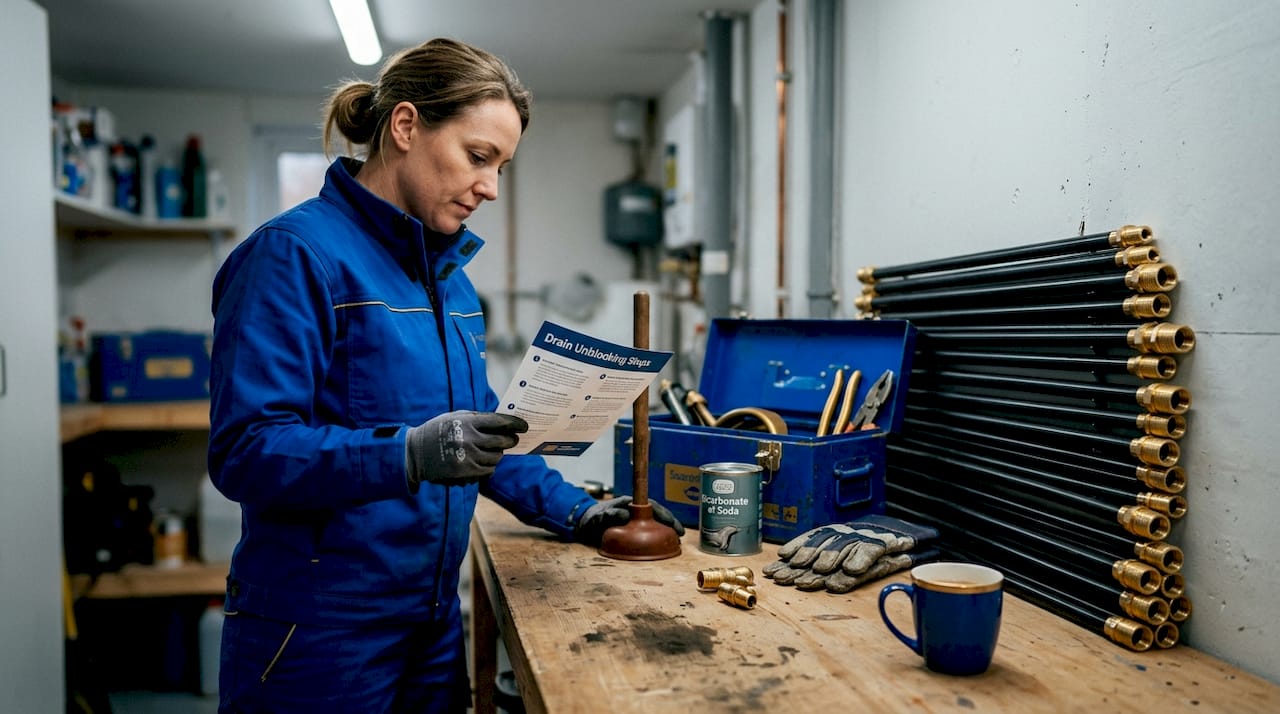
You do not need a van full of specialist equipment to handle a minor blockage. A solid basic kit covers most situations:
- A standard plunger for sink and gully blockages
- Drain rods (available from any hardware shop) for pushing through debris in outdoor drains
- Heavy-duty rubber gloves and safety goggles to protect yourself from contaminated water
- A bucket and old towels to manage overflow and spillage
- Baking soda, white vinegar, and boiling water as chemical-free treatment options
- A garden hose for flushing after clearing
Knowing when not to DIY is just as important as knowing how. If you can see sewage backing up, smell persistent foul odours, or have already tried rodding once without success, it is time to seek advice on blocked sewage drains from a professional rather than risk pushing a blockage deeper or damaging pipes.
| Task | DIY equipment | Professional equipment |
|---|---|---|
| Surface gully blockage | Plunger, rods, bucket | High-pressure water jetting |
| Grease build-up in soil pipe | Baking soda and vinegar flush | Chemical descaling agents |
| Root intrusion in drain run | Not suitable | CCTV survey, root cutting |
| Cracked pipe section | Not suitable | No-dig patch lining or re-lining |
| Persistent foul odour | Baking soda flush | CCTV diagnosis, professional treatment |
Safety first: Never mix bleach with any other cleaning product. If you are working near an inspection chamber, always ensure you are not working alone. Sewer gases, including hydrogen sulphide, can be dangerous in confined spaces. If the chamber is deep or the odour is particularly strong, call a professional immediately.
Pro Tip: Always wear old clothes when rodding, not just gloves. Drain rods can spring back with considerable force, and contaminated water can splash several feet. Goggles are not optional.
The step-by-step drain unblocking process becomes far more effective when you have the right kit assembled before you start, rather than improvising mid-way through the job.
Step-by-step drainage workflow: unblock, inspect, maintain
Once equipped and aware of risks, the next move is a clear workflow that addresses the actual problem without waste or repeat effort.
Follow this numbered process for most minor to moderate residential drain blockages:
- Identify the affected point. Check which drain or gully is slow or blocked. Lift the nearest inspection chamber lid to see whether the issue is isolated or affecting the whole run.
- Clear visible debris. Remove leaves, silt, and surface material by hand using gloved hands or a small trowel.
- Apply a hot water flush. Pour a full kettle of boiling water slowly down the drain to soften any grease or organic matter below.
- Use a plunger. For sinks or gullies, apply a plunger with a steady rhythmic action for one to two minutes.
- Try baking soda and vinegar. Pour half a cup of baking soda followed by half a cup of white vinegar, leave for thirty minutes, then flush with hot water.
- Use drain rods if needed. For outdoor drains, assemble rods carefully and push through in a clockwise direction only. Never rotate anticlockwise, as this can unscrew the heads.
- Flush and monitor. After clearing, flush thoroughly with a hose. Monitor drainage speed over the next forty-eight hours. Slow recovery suggests a deeper issue.
- Escalate if unresolved. If the drain remains slow or re-blocks within days, book a professional inspection.
Planned maintenance cuts costs by 30 to 78 percent, and repeat unblocking without proper diagnosis often masks deeper defects that eventually lead to repairs costing over £1,000. That figure is not an abstraction. It represents cracked pipes, collapsed sections, and root-infested runs that could have been caught far earlier with a CCTV survey.
| Step | Equipment needed | Escalation point |
|---|---|---|
| Clear debris | Gloves, trowel | Skip if access is difficult |
| Hot water flush | Kettle | Move to plunger if no improvement |
| Plunger | Standard plunger | Move to rods if still blocked |
| Baking soda and vinegar | Kitchen staples | Move to rods or professional |
| Drain rods | Rod set | Call professional if rods fail |
| Professional jetting | High-pressure equipment | CCTV survey if problem recurs |
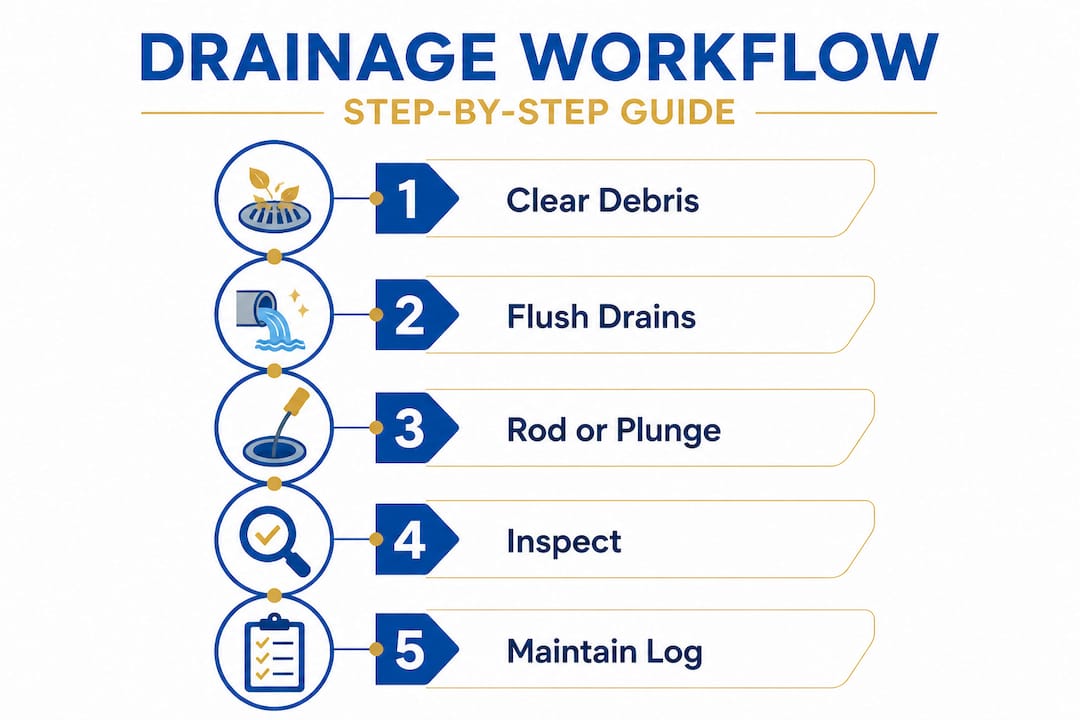
For a thorough walkthrough of the detailed unblock process, including diagrams and guidance for specific drain types, it is worth reviewing the full guide before you begin.
Pro Tip: Keep a short written log of any blockages, including the date, which drain was affected, and what you did to fix it. If you call a professional later, this record helps them diagnose patterns and reach a solution faster.
Understanding CCTV drain surveys at this stage is worthwhile, because it changes how you think about escalation. A CCTV survey is not a last resort. It is often the most cost-effective second step when basic DIY does not produce a lasting fix.
Troubleshooting recurring or stubborn drainage issues
Even a solid workflow can falter if deeper faults persist, so understanding what to do next makes the process robust.
Blockages that keep coming back after you have cleared them are not bad luck. They are a signal. The most common reasons for recurring blockages include:
- Fat and grease accumulation that builds up in layers on pipe walls, narrowing the bore gradually
- Tree root intrusion into cracked pipe joints, which is extremely common in older properties
- Pipe misalignment or collapse caused by ground movement or poor original installation
- Inadequate fall in the drain run, meaning waste moves too slowly and settles
- Shared sewer overload during heavy rainfall, pushing water back into your system
The symptoms to watch for are consistent: foul odours that return within days of cleaning, multiple fixtures draining slowly at the same time, gurgling sounds from toilets or sinks, and wet patches appearing in your garden without obvious explanation.
A note from experience: Homeowners often spend months repeatedly rodding the same drain, assuming it is a minor issue they simply have not cleared properly. In most cases, the real problem is structural and only becomes visible with a camera survey.
Planned maintenance cuts costs by 30 to 78 percent, but the savings only materialise if you actually diagnose what is causing the problem rather than repeatedly treating the symptom. Without proper investigation, £1,000-plus repairs become almost inevitable.
A CCTV drain inspection gives a drainage engineer a real-time view of the inside of your pipes. It locates the exact position and nature of any fault, which means any repair can be planned precisely rather than guessed at. For landlords managing multiple properties, this kind of documented survey is also valuable evidence for insurance claims or tenant disputes.
Pro Tip: If you have had the same drain unblocked more than twice in a twelve-month period, insist on a CCTV survey before agreeing to further unblocking work. Repeated jetting without diagnosis is money spent on a temporary fix.
For blockages specifically affecting unblocking outside drains, the approach differs slightly from internal drain issues, particularly where gullies and surface water systems are involved.
Preventative measures and routine maintenance tips
Finally, to avoid repeated emergencies, readers should embed preventative measures into their property upkeep.
Most drainage problems are preventable. The habits and checks below are straightforward, and the time they save compared to emergency call-outs is considerable.
Routine tasks to carry out regularly:
- Inspect all visible gullies and clear leaves or debris every month during autumn
- Flush external drains with a hose every six to eight weeks to remove sediment
- Check inspection chamber lids are secure and not cracked after any periods of heavy frost
- Look for wet patches in your garden after dry periods, which can indicate a leaking drain beneath
- Clear any vegetation growing near drain runs, as roots follow moisture towards joints
Habits that prevent blockages from forming:
- Never pour cooking fat, oil, or grease down the kitchen sink. Let it cool in a container and dispose of it with solid waste
- Use a sink strainer over every plug hole to catch food particles and hair
- Avoid flushing anything other than toilet paper. Wet wipes, cotton pads, and similar products are a primary cause of sewer blockages across the UK
- Run hot water for thirty seconds after washing greasy dishes to keep the drain run clear
Annual professional inspections are one of the most cost-effective investments a homeowner or landlord can make. Planned maintenance reduces costs by up to 78 percent compared to emergency repairs, meaning the fee for a routine inspection pays for itself many times over.
The CCTV drain survey benefits go beyond fault-finding. A survey carried out as part of a routine maintenance plan gives you documented evidence of your system’s condition, which is useful when selling a property or managing a rental.
Pro Tip: Create a simple seasonal checklist pinned inside your kitchen cupboard. Spring: flush all gullies. Summer: check inspection chamber lids. Autumn: clear leaves from gullies weekly. Winter: check for frost damage to external components. This four-step habit takes under an hour per season and significantly reduces your risk of a drainage emergency.
Building drain inspection routines into your broader property maintenance schedule means issues are caught early, before they become expensive.
Why skipping proper diagnosis is riskier than most think
Most drainage guides focus on how to fix a blockage. Fewer talk honestly about the cost of fixing it the wrong way, repeatedly.
Here is what we see in practice. A homeowner notices a slow drain. They rod it, it clears, and they assume the job is done. Six weeks later it blocks again. They rod it again. This cycle continues for six months, sometimes longer. Each time, the underlying cause, whether a cracked pipe, a root ingress, or a collapsed section, remains completely untouched. By the time a professional is finally called, the damage has progressed to the point where a full repair is required rather than a simple fix.
The financial reality is clear. Planned maintenance reduces costs by 30 to 78 percent versus reactive repairs, and repeat unblocking without CCTV diagnosis routinely leads to bills exceeding £1,000. These are not edge cases. They are the predictable consequence of treating a symptom without ever identifying its cause.
We think the framing around professional drainage services needs to shift. A CCTV survey is not an admission that DIY failed. It is simply the most efficient way to understand what your drainage system actually needs. Engineers who use advanced drainage technology are not selling you something unnecessary. They are giving you the information required to make a cost-effective decision.
The homeowners and landlords who spend least on drainage over the long term are not the ones who avoid professionals. They are the ones who involve professionals at the right stage, before a small issue becomes a structural problem.
Get expert help and keep your drains flowing
If you have worked through this guide and found that your drainage issue goes beyond straightforward DIY, or if you simply want the assurance of a professional assessment, Local Services Drainage is ready to help.
We cover a wide range of southern UK locations and offer rapid response times for both emergency and planned work. Whether you need to unblock a drain urgently, want to understand our full drain unblocking process before booking, or are considering a routine CCTV drain survey to benchmark your system’s condition, our team provides clear, no-obligation guidance at every stage. We believe in fixing problems properly the first time, with the technology and expertise to back that up.
Frequently asked questions
What is the basic workflow for unblocking a property drain?
Begin with DIY steps using boiling water, a plunger, or a baking soda and vinegar flush, and escalate to drain rods or professional jetting and CCTV survey if the blockage is stubborn or returns quickly.
How can I prevent blockages from coming back?
Cut recurrence by arranging regular inspections, avoiding fats and wet wipes in drains, and using CCTV surveys to identify hidden defects before they develop into costly structural repairs.
When should I call a professional instead of fixing a drain myself?
If DIY steps fail after a thorough attempt, if odours persist after clearing, or if blockages recur within weeks, escalate to a professional for a proper inspection and a permanent repair.
What is the advantage of a CCTV drain survey during the workflow?
CCTV surveys locate hidden damage with precision, preventing repeated reactive repairs and ensuring that any fix addresses the root cause rather than simply clearing the symptom temporarily.