Flood alerts in England surged by 32% in 2024, signalling unprecedented risks to southern UK properties. Yet most drainage problems lurk beneath the surface, invisible until a costly emergency strikes. Wetter winters and severe storms now threaten homes across the region, making proactive drainage care more critical than ever. This guide reveals why regular drainage inspections are essential for early detection, explaining how professional assessments protect your property from hidden defects and prevent expensive flood damage before it happens.
Table of Contents
- Why Drainage Inspections Matter In Increasing Flood Risk Conditions
- How Drainage Inspections Detect Problems Before They Escalate
- Cost Benefits And Practical Applications Of Regular Drainage Inspections
- What A Comprehensive Drainage Condition Report Includes And Why It Matters
- Professional Drainage Inspection And Repair Services For Southern UK Homeowners
- Frequently Asked Questions About Drainage Inspections
Key takeaways
| Point | Details |
|---|---|
| Early detection saves money | Drainage inspections identify problems before they escalate into costly emergency repairs |
| Two-stage inspection process | High-pressure jetting cleans pipes, then CCTV surveys assess condition accurately |
| Climate risks demand action | Rising flood alerts make regular inspections vital for southern UK homeowners |
| Detailed reports guide planning | Condition assessments provide maintenance schedules and budgeting recommendations |
| Preventative maintenance extends lifespan | Scheduled inspections reduce disruption and protect drainage systems long-term |
Why drainage inspections matter in increasing flood risk conditions
Climate change has fundamentally altered the threat landscape for southern UK homeowners. Wetter winters and intense storm events now arrive with alarming frequency, placing unprecedented pressure on residential drainage systems. Properties with basements or below-ground living spaces face particularly acute risks, as combined and rainwater sewers can surcharge during heavy rainfall, forcing water back into homes through drainage systems.
The statistics paint a sobering picture. Thousands of properties suffer sewer flooding annually, with many incidents traced directly to neglected or failing drainage infrastructure. When Storm Henk and similar severe weather events strike, homes with compromised drainage systems experience the worst damage. The financial and emotional toll on families can be devastating, with repair costs often running into tens of thousands of pounds.
Critical risk factors for southern UK properties:
- Combined sewer systems that handle both rainwater and wastewater
- Ageing Victorian-era drainage infrastructure in many towns
- Increased surface water runoff from urban development
- Tree root intrusion into older clay pipe networks
- Inadequate maintenance allowing gradual deterioration
Proactive drainage maintenance preventing floods has shifted from optional to essential. Regular inspections provide the early warning system homeowners need to address vulnerabilities before extreme weather exposes them catastrophically.
“Properties built before 1960 often have combined drainage systems particularly vulnerable to surcharge during heavy rainfall, making regular inspections critical for flood prevention.”
The reality is stark: waiting for visible problems means you’ve already lost the preventative advantage. Blocked pipes, structural cracks, and root intrusion develop gradually over months or years, silently compromising your drainage system’s capacity. When the next major storm arrives, these hidden weaknesses become emergency disasters.
How drainage inspections detect problems before they escalate
Professional drainage inspections follow a proven two-stage process designed to reveal every potential issue within your system. The first stage involves high-pressure water jetting to thoroughly clean pipes, removing accumulated debris, grease, and minor blockages that could obscure defects during visual inspection. This cleaning step is essential, as even thin layers of residue can hide cracks or structural damage.
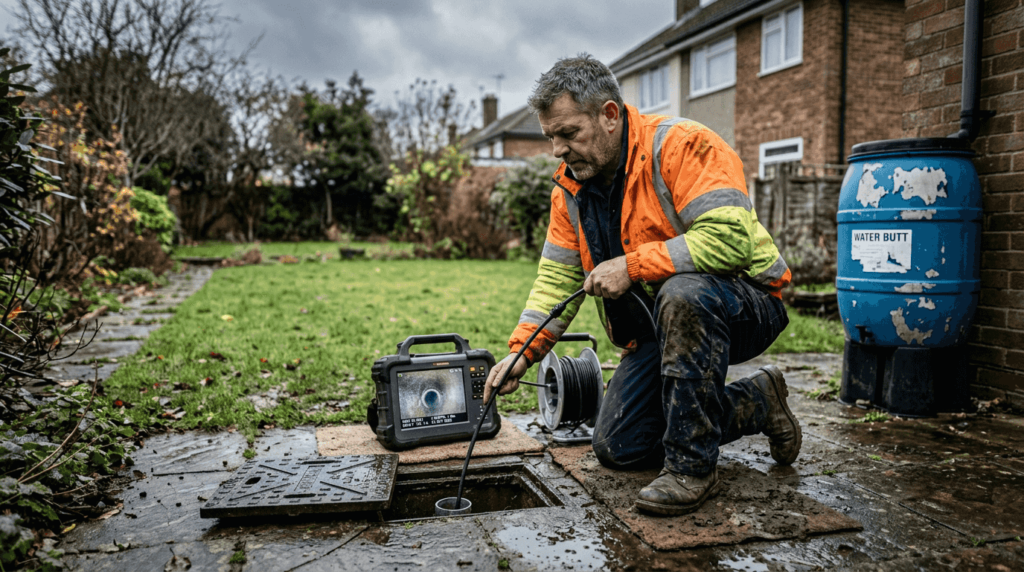
Once pipes are pristine, technicians deploy high-definition waterproof cameras through the system. These CCTV inspections identify cracks, root ingress, displaced joints, and blockages with remarkable precision. The camera transmits live footage to monitors above ground, allowing specialists to document every metre of your drainage network. Modern equipment captures crystal-clear images even in challenging conditions, ensuring no defect goes unnoticed.
The systematic inspection process:
- Initial consultation to understand your drainage concerns and property layout
- High-pressure water jetting to clean all accessible pipes thoroughly
- CCTV camera survey documenting the entire drainage system
- Real-time assessment using industry-standard condition grading (WRc MSCC)
- Comprehensive report with photographic evidence and repair recommendations
- Follow-up consultation to discuss findings and maintenance planning
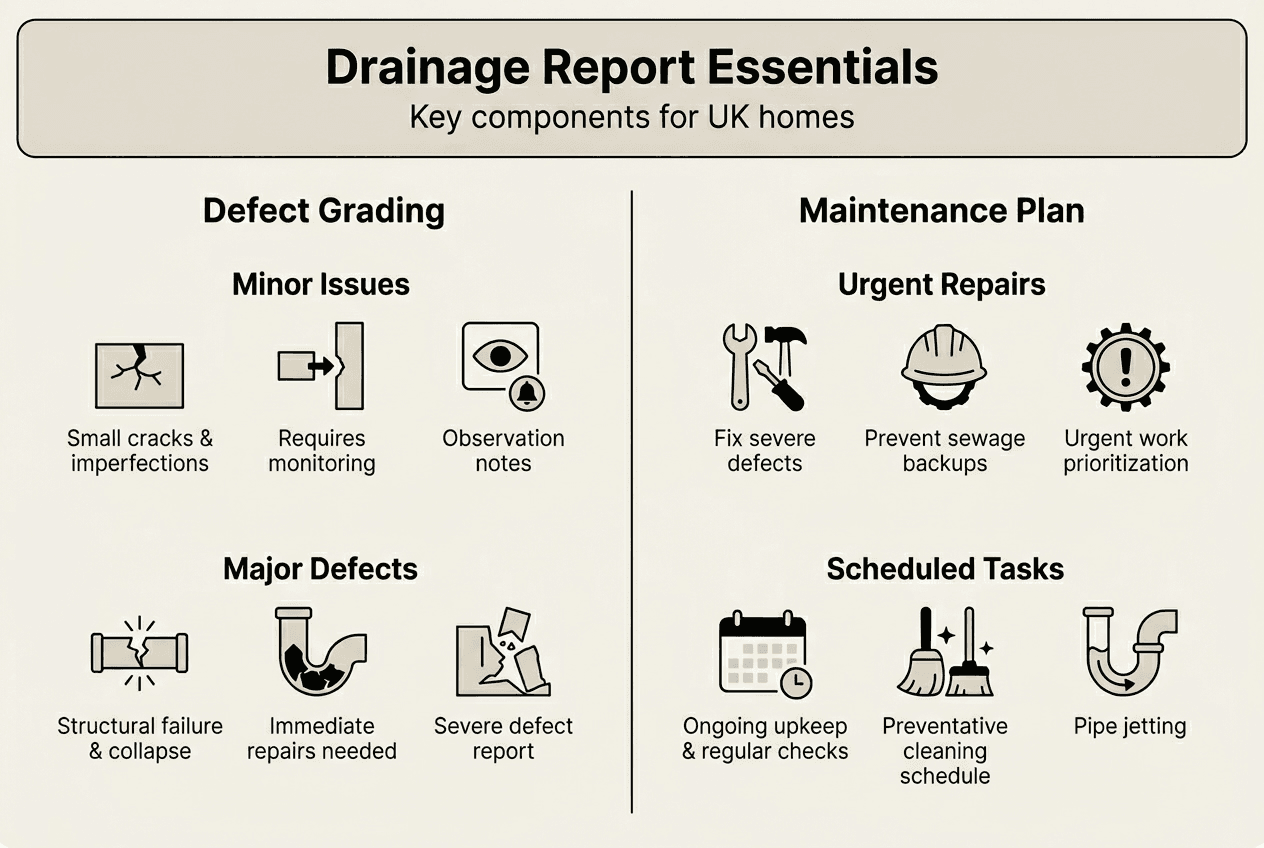
Condition grading provides objective assessment of every defect discovered. Inspectors classify issues by severity, from minor wear requiring monitoring to critical failures demanding immediate repair. This standardised approach removes guesswork, giving you clear priorities for maintenance spending. You’ll know exactly which problems need urgent attention and which can be scheduled for future work.
Pro Tip: Schedule inspections during dry weather when possible. Lower water levels in pipes provide clearer CCTV footage and more accurate condition assessment, though modern cameras work effectively in most conditions.
Early detection transforms drainage management from reactive crisis response to planned maintenance. Instead of facing emergency callouts at inconvenient times, you control the timing and budget for repairs. CCTV drain inspection services reveal problems while they’re still manageable, before they cascade into major failures requiring extensive excavation or emergency intervention.
The technology also creates a permanent record of your drainage system’s condition. This documentation proves invaluable for insurance claims, property sales, or future maintenance planning. You’ll have detailed maps showing pipe locations, materials, and condition grades for every section of your network. This home drainage inspection guide approach provides peace of mind and practical information for years to come.
Cost benefits and practical applications of regular drainage inspections
The financial case for scheduled inspections is compelling. Preventative drainage inspections reduce emergency repair costs by up to 60%, shifting expenditure from crisis management to planned maintenance. Emergency callouts typically cost three to four times more than scheduled work, as they involve rushed labour, premium rates, and often more extensive damage requiring repair.
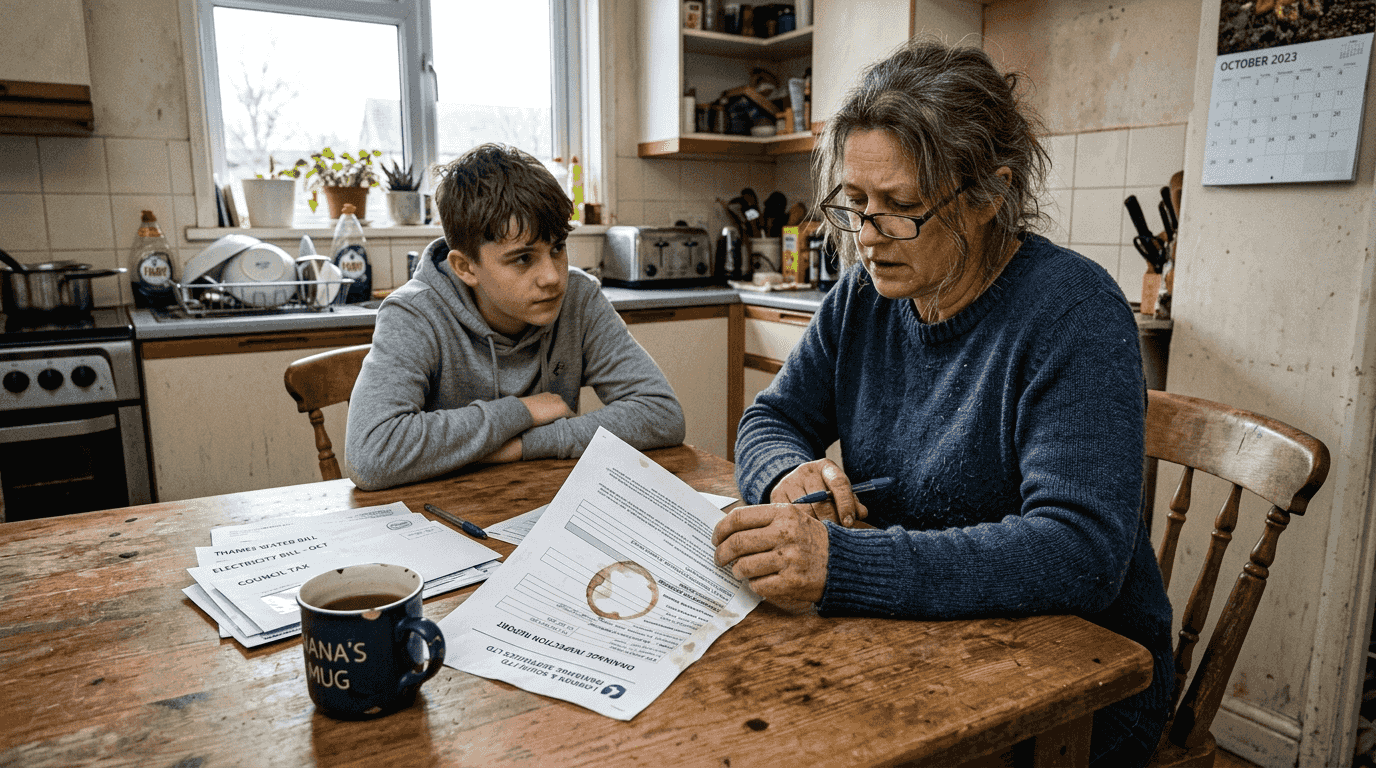
Consider the numbers. Typical residential CCTV surveys cost around £500, with pre-jetting adding approximately £150 if required. Compare this to emergency drain repairs averaging £1,500 to £3,000, or complete pipe replacement costing £5,000 to £15,000 for extensive work. The inspection investment represents a fraction of potential emergency costs.
| Service Type | Typical Cost Range | Timeframe | Disruption Level |
|---|---|---|---|
| Standard CCTV inspection | £400-£600 | Half day | Minimal |
| High-pressure jetting | £100-£200 | 1-2 hours | Low |
| Emergency unblocking | £150-£400 | Immediate | High |
| Pipe relining repair | £800-£2,500 | 1-2 days | Moderate |
| Full pipe replacement | £5,000-£15,000 | 1-2 weeks | Severe |
Regular inspections uncover common problems before they escalate. Root intrusion from garden trees gradually penetrates joints and cracks, eventually causing complete blockages. Inspections catch this early, allowing targeted root removal and joint sealing. Collapsed or displaced pipe sections show warning signs like minor settlement or slow drainage long before total failure occurs.
Typical defects discovered during inspections:
- Tree root penetration through pipe joints or cracks
- Structural damage from ground movement or traffic loading
- Scale buildup reducing pipe capacity over time
- Displaced or separated pipe sections causing misalignment
- Corrosion in older metal pipes approaching failure
- Foreign objects lodged in pipes creating partial blockages
Pro Tip: Schedule inspections every three to five years for properties over 20 years old, or annually if you’ve experienced previous drainage issues. This frequency catches developing problems early while remaining cost-effective.
Inspection reports provide evidence-based maintenance plans tailored to your property’s specific needs. Rather than guessing when repairs might be necessary, you’ll have documented condition assessments showing exactly which sections need attention and realistic timescales for deterioration. This allows intelligent budgeting, spreading costs over time rather than facing sudden large expenditures.
Pre-purchase drain surveys for new home buyers offer particular value. Discovering drainage defects before completing a property purchase gives you negotiating power or the option to withdraw from problematic properties. Many buyers have avoided expensive mistakes by investing £500 in a survey that revealed £10,000 worth of hidden drainage repairs. The importance of CCTV drain surveys becomes crystal clear when you consider the potential savings and stress avoided.
What a comprehensive drainage condition report includes and why it matters
A professional drainage condition report transforms raw inspection data into actionable intelligence for property owners. These documents grade every defect discovered using industry standards like WRc MSCC, providing objective severity ratings from Grade 1 (good condition) through Grade 5 (collapsed or blocked). This standardised approach ensures consistent assessment regardless of which technician performs your inspection.
Photographic and video evidence accompanies every significant finding. You’ll see exactly what inspectors observed, with clear images showing cracks, root intrusion, or structural damage. This visual documentation proves invaluable when discussing repairs with contractors or making insurance claims. There’s no ambiguity about what needs fixing or why the work is necessary.
Essential components of quality condition reports:
- Detailed pipe-by-pipe condition grading with severity classifications
- High-resolution photographs or video clips of all defects found
- Scaled drainage asset maps showing pipe locations and materials
- Prioritised repair recommendations with urgency indicators
- Estimated costs for recommended maintenance and repairs
- Suggested inspection intervals based on current condition
- Technical specifications for any replacement materials needed
Maintenance recommendations form the report’s most practical section. Inspectors specify which repairs require immediate attention to prevent failure, which can be scheduled within the next year, and which simply need monitoring during future inspections. This prioritisation helps you allocate maintenance budgets effectively, addressing critical issues first while planning for less urgent work.
Scheduled preventative maintenance programmes emerge naturally from quality condition reports. Rather than waiting for problems to announce themselves through slow drains or backups, you’ll have a roadmap for keeping your drainage system healthy. Regular jetting to remove buildup, targeted root treatment, or joint sealing can all be planned at convenient times when costs and disruption are minimised.
Drainage asset maps provide lasting value beyond immediate repair needs. These scaled drawings show your entire drainage network, including pipe diameters, materials, depths, and connection points. Future homeowners, contractors, or inspectors will reference these maps, saving time and reducing the risk of accidental damage during garden work or renovations. You’ll know exactly where pipes run and what condition they’re in at every point.
The CCTV drain survey report details you receive become part of your property’s permanent maintenance record. Keep these documents with other important property information, updating them after each subsequent inspection or repair. This historical record tracks how your drainage system ages and helps identify patterns or recurring issues that might indicate deeper problems requiring attention.
Professional drainage inspection and repair services for southern UK homeowners
Protecting your property from hidden drainage problems requires expert assessment and timely intervention. Professional services combine advanced technology with experienced interpretation to deliver the insights homeowners need for confident decision-making.
Expert CCTV drain survey services provide comprehensive condition assessments that reveal every aspect of your drainage system’s health. These detailed inspections use the latest camera technology and standardised grading to document current condition accurately. When repairs become necessary, professional drain repair best practices ensure work meets industry standards and provides long-lasting solutions. Regular maintenance guided by inspection findings keeps systems flowing freely, whilst comprehensive resources like the guide to drain unblocking help homeowners understand their options. Schedule your inspection today to gain the peace of mind that comes from knowing your drainage system’s true condition.
Frequently asked questions about drainage inspections
How often should I schedule a drainage inspection for my home?
Properties over 20 years old benefit from inspections every three to five years, whilst newer homes can extend to five to seven years between surveys. If you’ve experienced previous drainage issues or have mature trees near pipes, annual inspections provide better protection. Pre-purchase surveys are essential when buying any property to avoid inheriting expensive problems.
What problems can a CCTV drainage survey find that are not visible?
CCTV surveys reveal hairline cracks before they widen into major breaks, early-stage root intrusion before complete blockages form, and pipe misalignment from ground settlement before collapse occurs. Inspections also detect scale buildup reducing capacity, corrosion in metal pipes approaching failure, and structural damage from traffic loading that hasn’t yet caused surface symptoms. These hidden issues develop slowly over years, remaining invisible until they cause sudden emergencies.
Is high-pressure water jetting always included in an inspection?
Jetting is typically performed before CCTV surveys to ensure clean pipes for accurate footage, though some properties with recently maintained systems may not require it. Most professional inspections include jetting as standard because even minor debris can obscure defects during camera surveys. If your drains are flowing well and were recently jetted, discuss with your inspector whether pre-cleaning is necessary for your specific situation.
How much does a typical residential drainage inspection cost?
Standard residential CCTV surveys cost between £400 and £600 for average-sized properties, with high-pressure jetting adding £100 to £200 if required. Larger properties or extensive drainage networks may cost more, whilst basic inspections of limited pipe runs cost less. These prices represent exceptional value compared to emergency repair costs averaging £1,500 to £3,000, or complete system replacement costing £5,000 to £15,000.
Can drainage inspections help prevent basement flooding?
Regular inspections are crucial for basement flood prevention, as they identify vulnerabilities in combined sewer systems before surcharge events occur. Inspections reveal whether your drainage has adequate capacity for heavy rainfall, detect structural defects allowing water ingress, and confirm that non-return valves function properly. Properties with basements face higher flooding risks, making proactive inspection and maintenance essential for protection during severe weather.