
TL;DR:
- Most drain blockages in UK homes are caused by fats, oils, grease, and non-flushable items, but they are largely preventable through simple habits. Implementing measures like proper FOG disposal, using strainers, and regular maintenance can save homeowners substantial repair costs. Routine inspections and expert support further ensure drain health, reducing emergency issues and extending pipe longevity.
Blocked drains are one of the most frustrating and expensive problems a homeowner or property manager can face, yet most blockages are entirely avoidable. In southern UK homes, the ways to prevent drain issues often come down to a handful of everyday habits that, once changed, can save you hundreds of pounds in emergency call-out fees and repair bills. This guide cuts through the noise and gives you the practical, specific steps that actually work, from what goes down your sink to when to book a professional inspection.
Table of Contents
- Practical ways to prevent drain issues: understanding the causes first
- Practical steps for preventing kitchen-related drain blockages
- Managing bathroom waste to reduce drain blockages
- Regular maintenance and inspections to ensure drain health
- Comparing prevention methods for drain issues
- Our perspective: prevention is not just cheaper, it is smarter
- Keep your drains healthy with expert support
- Frequently asked questions
Key Takeaways
| Point | Details |
|---|---|
| Main blockage causes | Drain issues mainly stem from fats, oils, grease and non-flushable items like wipes and sanitary products. |
| Kitchen prevention | Avoid pouring fats down sinks and use strainers to trap food scraps before they cause blockages. |
| Bathroom best practice | Flush only the three Ps and provide bins with clear signage for correct waste disposal. |
| Regular maintenance | Periodic inspections and prompt clearing of early signs prevent costly emergencies. |
| Best prevention strategy | Controlling waste at source with good habits and professional inspections is more effective than reactive treatments. |
Practical ways to prevent drain issues: understanding the causes first
Before you can prevent a problem, you need to know what is causing it. In UK homes, the two biggest culprits behind blocked drains are fats, oils and grease (known in the industry as FOG) and non-flushable items that end up in the sewage system.
FOG is deceptive. When hot, it flows freely down the plughole. Once it cools inside your pipes, it solidifies into a stubborn coating that narrows the pipe bore over time. Combine that with food debris, and you have the recipe for a full blockage. The scale of this problem is significant: fats, oils and grease cause more than 20,000 blockages each year in the Thames Water network alone, contributing to over 60% of sewer flooding incidents. The infamous “fatbergs” found in sewers across the south of England are a direct result of this habit.
The second major contributor is the flushing of non-flushable items. Sewers are designed for what water companies call the “three Ps”: pee, poo, and toilet paper. Nothing else. Yet mis-flushed items such as wet wipes, sanitary products, and paper towels are linked to approximately 215,101 sewer blockages annually across the UK, at a cost of over £143 million per year.
Understanding the causes of drain blockages is not just academic. It directly shapes the habits you need to change.
Common causes of drain blockages at a glance:
| Cause | Frequency | Typical repair cost |
|---|---|---|
| Fats, oils and grease (FOG) | Very common | £100 to £500+ |
| Wet wipes and sanitary items | Common | £80 to £400 |
| Food debris and coffee grounds | Common | £80 to £300 |
| Hair and soap scum | Frequent | £60 to £200 |
| Root intrusion | Less common | £500 to £3,000+ |
- FOG solidifies in pipes, reducing flow and building fatbergs over months
- Wet wipes do not break down like toilet paper, even those labelled “flushable”
- Coffee grounds and food scraps accumulate in bends and traps
- Hair tangles around soap residue, forming dense plugs in bathroom drains
- Tree roots exploit tiny cracks in older clay pipes, causing recurring blockages
Having understood the main causes of drain blockages, let us explore practical steps to prevent these issues in your property.
Practical steps for preventing kitchen-related drain blockages
The kitchen is where most preventable blockages begin. The good news is that changing a few habits here takes almost no effort and costs virtually nothing.
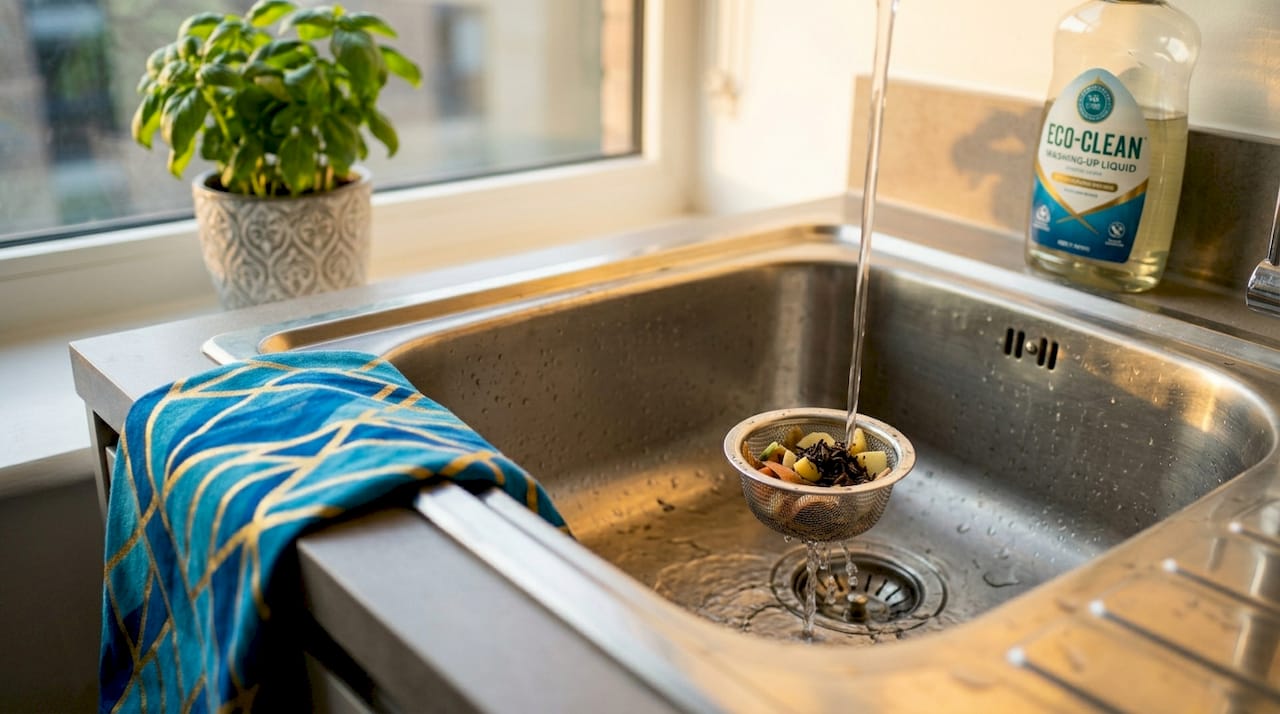
Never pour fats, oils or grease down the sink. After cooking, allow the fat to cool and solidify in the pan, then scrape it into a sealed container or old jar and put it in the bin. Pouring FOG down sinks leads to hardened blockages that can require excavation to clear, at significant cost to you or the wider community. A dedicated grease pot kept next to your hob makes this habit effortless.
Use a plughole strainer in every kitchen sink. These inexpensive mesh or silicone catchers trap food scraps, coffee grounds, and vegetable peel before they enter the drain. Empty and rinse the strainer after every wash-up session. It takes ten seconds and prevents weeks of slow-build accumulation.
Flush your kitchen sink with hot (not boiling) water after washing up to help shift any residual grease before it can cool and adhere to the pipe walls. Once a month, pour a kettle of hot water slowly down the drain as a simple maintenance flush. Avoid using boiling water if you have plastic pipework, as it can soften older fittings.
Check out these drain maintenance tips for a fuller set of actions suited to UK properties.
Pro Tip: Place a small laminated reminder near your kitchen sink listing what should never go down the drain. It sounds simple, but shared households and rental properties benefit enormously from this visual cue, especially when multiple people are cooking.
Key kitchen prevention habits:
- Scrape all plates and pans into the bin before washing
- Use a mesh strainer in every sink plughole
- Dispose of fats and cooking oils in a sealed jar, not down the drain
- Avoid rinsing grounds, rice, or pasta waste into the sink
- Run hot water for 30 seconds after each wash-up to clear residual grease
With kitchen habits addressed, let us turn to how bathroom practices can further prevent drain problems.
Managing bathroom waste to reduce drain blockages
Bathrooms are the second front in the battle against blockages. The rules here are straightforward, but they require consistency, especially in properties with multiple occupants or guests.
Only toilet paper should ever be flushed. Nothing else. Not “flushable” wipes, not cotton buds, not sanitary towels, not nappy liners. The mis-flushed items problem costs the UK well over £143 million annually, and a substantial share of that burden falls on individual property owners through repair bills and insurance claims.
Here is a step-by-step approach to managing bathroom waste correctly:
- Install a lidded bin in every toilet cubicle. This is the single most effective measure for preventing non-flushable items from entering the drain. Make it convenient and people will use it.
- Put up clear signage above the toilet. A simple printed notice stating “Please bin it, do not flush it” works. Many water companies offer free signage for exactly this purpose.
- Place a small bin beside the bathroom basin for cotton wool pads, cotton buds, and dental floss, all of which regularly end up down the plughole.
- Use a hair catcher over the shower drain. Hair is a leading cause of bathroom blockages, and a simple rubber catcher prevents most of it from entering the system.
- Remind cleaning staff and tenants not to rinse cleaning cloths or disposable wipes into the drain. This is a surprisingly common cause of blockages in rental properties and commercial premises.
Understanding why blocked drains occur in UK homes makes it much easier to communicate these rules clearly to tenants and household members.
Pro Tip: If you manage multiple rental units, include a one-page drain care guide in your welcome pack. It takes minutes to produce and can prevent a costly call-out that eats into your rental yield.
Now that kitchen and bathroom waste management are covered, let us consider maintenance routines to catch and prevent blockages early.
Regular maintenance and inspections to ensure drain health
Even with excellent habits, drains still need periodic attention. Drainage systems are largely out of sight, which means problems can develop slowly without any obvious sign until they become serious.
Watch for early warning signs. Slow-draining water, gurgling sounds from your pipes, unpleasant smells rising from plugholes, and water backing up in a sink or toilet are all signals that something is building up inside your drains. Catching these signs early is the difference between a straightforward unblocking and a full repair job.
Clear your drain strainers and external gullies at least once a month, and more frequently during autumn when leaves are falling. Southern UK properties with mature gardens are particularly vulnerable to leaf and debris accumulation in external drains.
For a deeper level of assurance, a CCTV drain survey uses a small camera fed through your pipework to identify hidden issues including root intrusion, misaligned joints, and collapsed sections. Recurring blockages often signal structural issues that only a CCTV survey can pinpoint, averting expensive excavations through early diagnosis. For older properties, this is money well spent.
Pro Tip: Book a drain inspection in early spring before root growth peaks and again in late autumn after leaf fall. These are the two periods when external drains are most vulnerable in the southern UK.
| Maintenance task | Frequency | DIY or professional? |
|---|---|---|
| Empty drain strainers | Weekly | DIY |
| Hot water flush | Monthly | DIY |
| External gully clearance | Monthly (more in autumn) | DIY |
| Full drain inspection | Annually | Professional |
| CCTV survey | Every 2 to 3 years | Professional |
Follow these drain maintenance steps to build a reliable schedule tailored to your property type.
Comparing prevention methods for drain issues
Not all prevention methods are equal. Some are highly effective and essentially free; others cost money but provide deeper protection. Here is an honest comparison to help you decide where to focus.
| Prevention method | Upfront cost | Effectiveness | Best suited for |
|---|---|---|---|
| FOG disposal habits | Free | Very high | All households |
| Plughole strainers | £2 to £10 | High | Kitchens and bathrooms |
| Bin provision and signage | £5 to £20 | High | Rentals and commercial |
| Enzymatic drain treatments | £5 to £15/month | Moderate | Supplementary use |
| Chemical drain cleaners | £3 to £10 | Low to moderate | Short-term only |
| Annual professional inspection | £80 to £150 | Very high | Older or high-use properties |
| CCTV drain survey | £150 to £300 | Very high | Recurring problems |
Prevention focused on stopping FOG and non-flushables at the point of use is consistently more cost-effective than relying on chemical treatments or emergency clearance. Chemical cleaners are worth a specific note: caustic products can damage older pipes and should never be your first resort. Enzymatic treatments, which use bacteria to break down organic matter, are gentler and safer for regular use, but they are a supplement to good habits, not a replacement.
What actually works, in order of impact:
- Changing disposal habits (FOG, non-flushables) is the single highest-impact action
- Physical barriers like strainers and hair catchers provide constant, passive protection
- Bins and signage make correct behaviour the easy choice for all users
- Enzymatic treatments keep drains fresher between cleanings
- Professional inspections catch what habits cannot prevent
Read more about drainage best practices to further protect your property over the long term.
Pro Tip: If you rent out property, factoring in an annual drain inspection as part of your maintenance budget is genuinely more economical than a single emergency call-out. One blocked drain at an inconvenient time can cost three times as much as a planned inspection.
Our perspective: prevention is not just cheaper, it is smarter
Here is the uncomfortable truth that the drainage industry rarely says out loud: most emergency call-outs are preventable, and many property owners know it. The real problem is not ignorance. It is the “it will be fine” mindset that treats drains as an invisible utility until they stop working.
We have seen properties where every kitchen drain was blocked within a year of new tenants moving in, simply because nobody had explained what should and should not go down the sink. We have also seen century-old drainage systems in southern UK properties that remain in excellent condition purely because the owners have maintained them consistently.
The shift worth making is this: stop thinking of drain maintenance as something you do reactively, and start treating it like boiler servicing. You would not wait for your boiler to break down before checking it annually. Your drains deserve the same logic. A planned inspection on a dry afternoon costs a fraction of an emergency repair on a wet January evening when the whole household is affected.
One thing that surprises many property managers is how effective simple, low-cost measures like a bin beside the toilet and a printed sign above it can be. You do not always need professional intervention. Sometimes the most powerful tool in preventing plumbing problems is a two-pound mesh strainer and a conversation with your tenants.
Keep your drains healthy with expert support
If you have followed the guidance in this article, you are already doing more than most homeowners to protect your drainage system. But habits alone cannot address hidden structural problems, ageing pipework, or root intrusion that is already underway.
At Local Services Drainage, we serve homeowners and property managers across the southern UK with everything from routine unblocking to CCTV drainage surveys and no-dig pipe relining. Whether you want a planned annual inspection or need fast assistance with a persistent blockage, our team responds quickly with the right equipment. Check our current offers and book online for a no-fuss quote. Prevention starts with the right habits; we are here when you need the technical backup.
Frequently asked questions
What should I never flush down my toilet to prevent drain blockages?
Never flush wet wipes, sanitary products, cotton buds, paper towels, or items labelled “flushable,” as none of them break down in the sewage system. Mis-flushed items are linked to more than 215,000 UK drain blockages every year.
How can I safely dispose of fats, oils and grease from cooking?
Allow fats, oils and grease to cool and solidify, then scrape them into a sealable jar and put it in your household rubbish bin. Pouring FOG down the drain creates hardened blockages known as fatbergs that cost millions to clear from UK sewers.
How often should I schedule professional drain inspections?
Annual or biennial inspections are recommended for most UK homes, particularly if your property is older than 30 years or has mature trees nearby. Regular CCTV surveys detect root intrusion and structural faults before they develop into costly emergencies.
Are chemical drain cleaners safe for my pipes?
Caustic chemical cleaners can corrode old drainpipes over time and should be used sparingly; gentler enzymatic treatments are a safer option for regular maintenance, though prevention remains the best approach.
What signs indicate I need to call a professional drain service?
Persistent slow drainage, recurring blockages at the same location, gurgling sounds, bad odours, or water backing up are all clear indicators. Recurring blockages often point to structural issues that require a CCTV survey and targeted repairs rather than a simple unblocking.