
TL;DR:
- Water damage from drainage issues accounts for nearly one-third of UK home insurance claims, costing millions annually. Certification through insurance-backed guarantees offers long-term protection and peace of mind, especially in regions with aging infrastructure. Proper maintenance and verifying guarantee terms are essential for ensuring effective repair and safeguarding property value.
Water damage from drainage issues accounts for nearly 1 in 3 UK home insurance claims, with £585 million paid out in 2024 for weather-related damage often linked to failing drains. For homeowners across southern England, that figure is not an abstract statistic — it is a very real financial threat sitting beneath your feet. Yet many people still sign off on drainage repairs without asking a single question about what happens if something goes wrong afterwards. This guide covers exactly what drainage guarantees are, why the fine print matters enormously, and how to make sure you are properly protected every step of the way.
Table of Contents
- What are drainage guarantees and why are they important?
- The risks of ignoring drainage guarantees
- How drainage guarantees work: Making sense of the fine print
- Signs of a trustworthy drainage provider
- Getting maximum value from your guarantee
- Why guarantees are more than paperwork: A homeowner’s perspective
- Get guaranteed drainage protection for your home
- Frequently asked questions
Key Takeaways
| Point | Details |
|---|---|
| Guarantees protect investments | Drainage guarantees shield you from costly repairs and unforeseen damages to your home. |
| Insurance-backed is best | An insurance-backed guarantee keeps you protected even if your drainage company shuts down. |
| Check the fine print | Always review the details of any guarantee so you understand your coverage and responsibilities. |
| Maintenance matters | Keeping up with routine drain inspections and maintenance can ensure your guarantee remains valid. |
What are drainage guarantees and why are they important?
A drainage guarantee is a formal commitment from a contractor that their repair or installation work will remain effective for a defined period. If the work fails within that timeframe, the contractor agrees to fix it at no additional cost to you. Simple enough in theory. In practice, the quality and enforceability of these guarantees varies enormously, and that gap is where homeowners often get caught out.
There are two main types you will encounter:
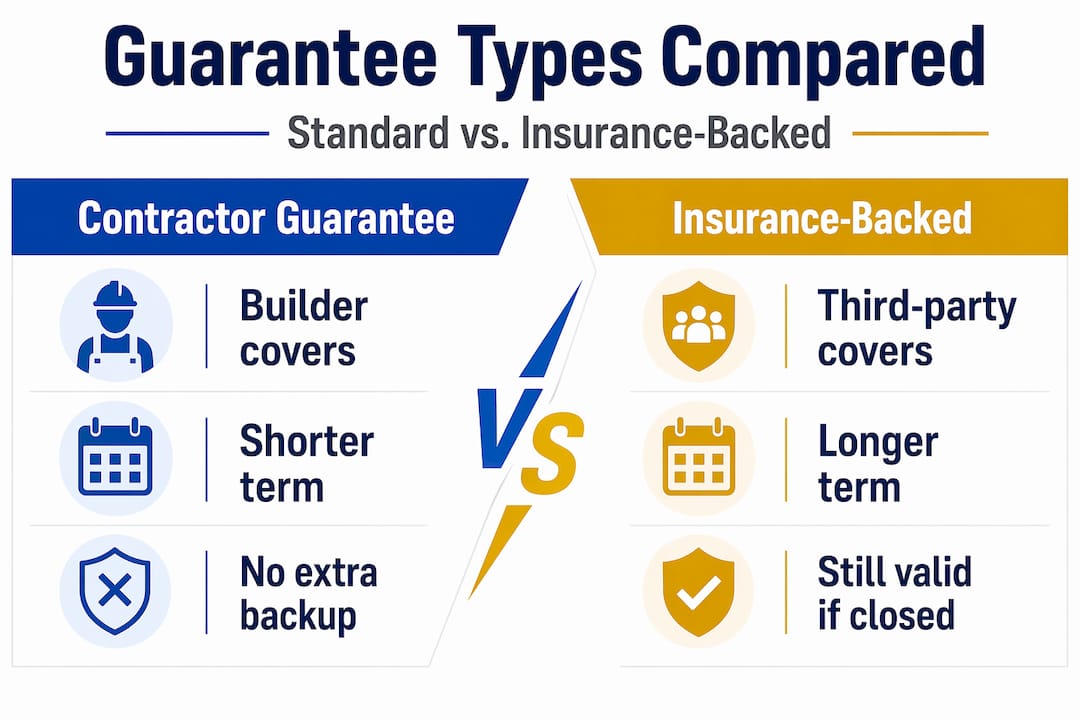
- Standard contractor guarantees: These are issued directly by the drainage firm. If the company goes bust or stops trading, the guarantee becomes worthless — there is nobody left to honour it.
- Insurance-backed guarantees (IBGs): These are underwritten by a third-party insurer. An insurance-backed guarantee remains valid even if the contractor ceases trading, protecting homeowners long-term. Your cover survives regardless of what happens to the business.
This distinction is critical, and far too many homeowners only discover it after something has already gone wrong. You can read more about how drainage warranties explained in practice and what the key terms actually mean before you commit to any work.
One common misconception is that all guarantees provide equal protection. They absolutely do not. A verbal promise from a tradesman carries no legal weight. A written standard guarantee is better, but carries the risks if drainage firms close unexpectedly. An IBG is the gold standard because it does not depend on the contractor remaining solvent.
Pro Tip: Always ask for the guarantee terms in writing before any drainage work begins. A contractor who hesitates or becomes vague at this stage is telling you something important about their confidence in their own work.
The risks of ignoring drainage guarantees
Skipping the question of guarantees entirely might feel like a time-saver when you are dealing with a blocked drain at 11 pm. But the financial consequences of that shortcut can follow you for years.
Water damage is consistently one of the most expensive problems a homeowner can face. Weather-related water damage cost UK insurers £585 million in 2024 alone. Much of this is preventable with properly guaranteed repair work carried out to a high standard. The difficulty is that poor drainage repairs often do not fail immediately. They fail six months later, or after the next heavy rainfall, or when the root cause was never properly addressed in the first place.
Here is what can go wrong when guarantees are absent or inadequate:
- The contractor goes bust. Without an IBG, you have no recourse and must pay for the same repair twice.
- Shoddy workmanship is not rectified. Without written terms, there is nothing enforceable to hold the contractor to.
- Your home insurer rejects the claim. Insurers frequently deny claims linked to pre-existing issues or repairs that were not carried out to a recognised standard.
- Property value drops. Estate agents and conveyancers can identify drainage problems during surveys, and a history of unguaranteed repairs is a red flag for buyers.
- Secondary damage compounds costs. A failed drain repair can lead to damp, structural movement, and garden subsidence, each of which carries its own repair bill.
“Homeowners who skip guarantee documentation often face double costs: paying for the original repair and then the remedial work when it fails.”
Understanding property drainage issues in depth helps you see exactly how quickly a small problem can become a very large one. Southern UK homeowners are particularly exposed given the region’s ageing clay pipe infrastructure and the increased frequency of intense rainfall events in recent years.
How drainage guarantees work: Making sense of the fine print
Now that you understand the stakes, it is worth looking closely at what a strong guarantee actually contains. Not all guarantee documents are created equal, and knowing what to look for prevents nasty surprises later.
A well-structured drainage guarantee should cover:
- The specific repair or installation work carried out
- The materials and parts used
- A clearly stated duration (commonly one to ten years depending on the work)
- The process for making a claim
- Any exclusions or conditions that could void coverage
The most important factor to understand is the difference between contractor-issued and insurance-backed protection. Here is a straightforward comparison:
| Feature | Standard contractor guarantee | Insurance-backed guarantee |
|---|---|---|
| Who underwrites it | The contractor | A third-party insurer |
| Remains valid if contractor closes | No | Yes |
| Legal enforceability | Limited without written contract | Stronger, backed by insurer |
| Typical duration | 1 to 5 years | 1 to 10 years |
| Claiming process | Contact contractor directly | Contact insurer directly |
| Cost to homeowner | Usually included in job price | May carry a small additional premium |
When reviewing drain repair warranties, pay close attention to the exclusions section. Many standard guarantees exclude damage caused by tree root intrusion, ground movement, or anything the contractor labels “external factors.” These exclusions can render a guarantee nearly useless for the very problems that drainage systems in southern England are most prone to.
It is also worth arranging drainage inspections before and after significant repair work. A CCTV survey before the job creates a documented baseline, and a follow-up survey confirms the repair was completed to the agreed standard. This documentation supports any future claim.
Good insurance-backed service guarantees tie the coverage directly to the completed work rather than the contractor’s ongoing trading status, giving you genuine long-term security.
Pro Tip: Request a copy of the insurer’s details alongside your guarantee certificate. If the contractor provides neither, that is a strong indicator the guarantee is not actually backed by anything enforceable.
Signs of a trustworthy drainage provider
Choosing the right contractor upfront is the single most effective way to avoid guarantee disputes later. A reputable drainage firm will not make you ask twice about their guarantee terms — they will offer the information proactively because it is part of how they build trust.
Here is a numbered checklist to work through before agreeing to any drainage repair work:
- Request written guarantee terms before the job starts. The length, coverage, and claims process should all be documented clearly.
- Confirm whether the guarantee is insurance-backed. As noted, insurance-backed guarantees protect homeowners even if the contractor ceases trading, so this is non-negotiable for larger or more complex repairs.
- Check for professional accreditations. Membership of recognised trade bodies indicates a contractor operates to defined standards.
- Ask about their CCTV survey process. Firms that use camera diagnostics before and after repair work are demonstrating both thoroughness and accountability.
- Read reviews that specifically mention follow-up visits. A company that honours its commitments after the invoice is paid is one worth trusting.
- Verify their public liability insurance. This is separate from a guarantee but equally important — it protects you if their work causes damage to your property.
Red flags to watch for:
- Verbal promises only, with no written documentation offered
- Vague answers when you ask what specifically is covered
- Reluctance to name the insurer behind the guarantee
- No clear process for raising a claim
- Pressure to decide quickly without time to review terms
Following drainage best practices when choosing a contractor is not overly cautious — it is simply sensible. Pairing that with a solid drain maintenance checklist keeps your system in good order and your guarantee coverage valid.
Getting maximum value from your guarantee
Securing a strong guarantee is only half the job. The other half is making sure you remain eligible to use it when you need it most.
Most drainage guarantees include maintenance conditions. This means that if you fail to carry out reasonable upkeep of your drainage system, the provider can argue the subsequent failure was caused by neglect rather than their workmanship. Staying ahead of this is straightforward with a few consistent habits.
Key actions to protect your guarantee:
- Keep all paperwork, including the original survey report, the work completion certificate, and the guarantee document itself
- Store the insurer’s contact details separately from the contractor’s, so you can reach them directly if needed
- Follow any maintenance schedule outlined in your guarantee terms
- Address minor issues promptly rather than waiting, since spotting early signs of drainage problems is far cheaper than waiting for a full blockage or collapse
- Keep a dated record of any maintenance you carry out yourself
Here is a practical reference table for typical maintenance intervals that support guarantee validity:
| Maintenance task | Recommended frequency | Why it matters for your guarantee |
|---|---|---|
| Visual inspection of drain covers | Every 3 months | Identifies blockages before they cause backflow |
| Jetting or rodding of main lines | Annually | Prevents buildup that voids workmanship claims |
| CCTV survey of repaired sections | Every 2 to 3 years | Confirms repair integrity over time |
| Grease trap cleaning (if applicable) | Every 3 to 6 months | Prevents fat buildup linked to avoidable blockages |
| Roof gutter and downpipe clearance | Twice yearly (autumn and spring) | Reduces stormwater overload on drain connections |
Following this schedule also reduces the risk of expensive claims — given that nearly 1 in 3 UK home insurance claims involve water damage, keeping your drainage system well-maintained is one of the smartest investments a homeowner can make.
Why guarantees are more than paperwork: A homeowner’s perspective
Here is an honest view that goes beyond what most drainage guides will say: a guarantee is not just protection against poor workmanship. It is a signal about the entire culture of a drainage business.
Contractors who operate without proper guarantees are not simply cutting corners on admin. They are telling you that their confidence in their own work has a time limit. The moment the van leaves your driveway, their accountability ends. That is a fundamentally different relationship to a contractor who backs their repairs with ten years of documented, insurer-supported cover.
We have spoken with many homeowners across southern England who felt relieved after a repair, only to discover months later that the underlying problem was never properly diagnosed. In one case, a homeowner had a recurring collapse in a clay pipe section that two separate contractors “fixed” without guarantees. It was only when a third firm carried out a full CCTV survey and provided an IBG-backed repair that the issue was genuinely resolved. The guarantee documentation itself gave this homeowner something concrete to present to their insurer, which made the claim process far smoother.
Southern UK weather patterns are becoming increasingly unpredictable. Extended dry summers followed by intense autumn rainfall place enormous stress on drainage systems, particularly older clay or concrete pipework. In this climate, a drainage guarantee is not a luxury — it is a practical necessity. The cost of upgrading drainage systems is almost always less than the combined cost of multiple unguaranteed repairs.
The paperwork is not the point. The protection behind it is.
Get guaranteed drainage protection for your home
If this guide has clarified one thing, it should be that the quality of your drainage guarantee is just as important as the quality of the repair itself. Choosing a provider who offers documented, insurance-backed protection is not overcautious — it is the standard every southern UK homeowner should expect.
At Local Services Drainage, we offer drain repair warranties that are clearly documented and backed by genuine protection, not just a verbal promise. Whether you need help understanding the drain unblocking process or are looking for reliable drain repairs in southern UK, our team provides full transparency on coverage terms from the very first conversation. Get in touch today for a no-obligation quote and find out exactly what our guarantees cover before any work begins.
Frequently asked questions
What does an insurance-backed drainage guarantee actually cover?
It typically covers the repair work, materials, and sometimes call-out fees — and crucially, an IBG remains valid even if the original contractor goes out of business, so you are never left unprotected.
Are all drainage guarantees the same quality or length?
No — guarantee terms vary considerably, so always check the documentation carefully for duration, specific coverage details, and any exclusions before agreeing to the work.
Will my home insurance cover drainage problems?
Home insurance may cover sudden damage but frequently excludes pre-existing issues or unguaranteed workmanship — given that water damage drives nearly 1 in 3 UK home insurance claims, having a proper guarantee in place is vital alongside your policy.
How do I know if my guarantee is still valid if my contractor closes?
If your guarantee is insurance-backed, it remains valid regardless of whether the contractor continues trading — always check your paperwork to confirm whether your cover is IBG-protected.
What maintenance is needed to keep a drainage guarantee active?
Follow the maintenance schedule outlined in your guarantee terms, carry out regular checks, and keep dated records of any servicing to ensure you remain eligible for coverage if a claim becomes necessary.