Many property managers assume drainage problems only plague older buildings. Yet modern commercial properties face just as many challenges from poor drainage design, inadequate maintenance, and unexpected blockages. Efficient drainage protects your property value, prevents costly water damage, and keeps operations running smoothly. This guide walks you through selecting the right drainage solutions, maintaining systems effectively, and responding to emergencies across southern UK commercial properties. You’ll learn practical strategies to safeguard your investment and minimise disruption.
Table of Contents
- Key takeaways
- Understanding commercial drainage systems
- Choosing the right drainage solutions for your commercial building
- Maintenance and emergency repair essentials for commercial drainage
- Working with professional drainage contractors in southern UK
- Discover expert drainage services for your commercial property
- FAQ
Key Takeaways
| Point | Details |
|---|---|
| Proactive drainage planning | Proactive planning helps avoid costly disruptions by aligning design maintenance and upgrades with the property’s needs. |
| Regular maintenance and surveys | Regular maintenance and CCTV surveys help detect problems early and prevent failures. |
| Emergency repair readiness | Emergency repair services minimise downtime and limit damage when faults occur. |
| Professional contractor selection | Choosing professional contractors ensures reliable installation and timely repairs. |
Understanding commercial drainage systems
Commercial drainage systems manage water flow from buildings and surrounding areas to prevent flooding, structural damage, and health hazards. These systems comprise interconnected components including surface drains, underground pipes, gutters, downpipes, and soakaways that work together to channel rainwater and wastewater away from your property. The complexity varies dramatically based on building size, usage patterns, and site characteristics.
Your drainage needs differ significantly depending on whether you manage an office block, retail centre, warehouse, or industrial facility. Office buildings typically handle moderate water volumes from toilets, kitchens, and roof drainage. Retail properties face higher demands from public toilets and food preparation areas. Industrial sites often contend with process water, chemical runoff, and heavy rainfall on large roof areas. Effective commercial drainage requires tailored solutions to building size, use, and regional conditions.
Southern UK’s climate and soil composition directly influence drainage design choices. The region experiences moderate rainfall with occasional intense downpours that can overwhelm inadequate systems. Clay-heavy soils common across southern counties drain slowly, requiring careful soakaway design or alternative discharge methods. Coastal properties face additional challenges from high water tables and salt exposure that accelerates pipe corrosion.
Modern commercial drainage systems typically use these materials:
- uPVC pipes for underground drainage (lightweight, corrosion-resistant, cost-effective)
- Cast iron for internal soil stacks (durable, fire-resistant, noise-dampening)
- Concrete channels for surface water collection (robust, high load-bearing capacity)
- Clay pipes for traditional installations (long-lasting, environmentally stable)
- HDPE for no-dig repairs and relining (flexible, seamless, quick installation)
Each material offers distinct advantages for specific applications. uPVC dominates new installations due to affordability and ease of handling. Cast iron remains preferred for multi-storey buildings where noise reduction matters. Concrete channels suit high-traffic areas like loading bays. Understanding these options helps you make informed decisions when planning installations or upgrades.
Pro tip: Consulting drainage experts during your building’s design phase or before major renovations can identify potential problems early. This foresight prevents expensive retrofitting and ensures your system handles current and future demands efficiently. Early planning also allows you to explore commercial drainage tips for southern UK properties that address regional challenges proactively.
Choosing the right drainage solutions for your commercial building
Selecting appropriate drainage infrastructure requires balancing performance, cost, and long-term maintenance needs. The wrong choice leads to recurring blockages, premature failures, and unexpected capital expenditure. Understanding your options empowers you to make decisions that serve your property for decades.
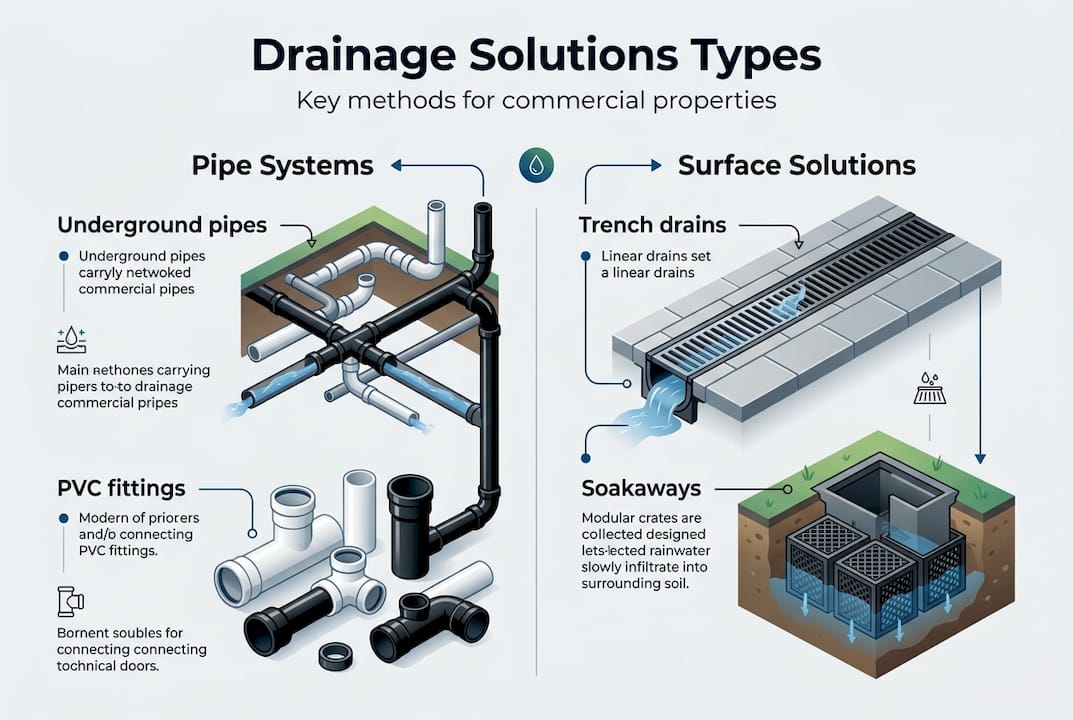
Traditional pipe systems form the backbone of most commercial drainage networks. These underground networks collect wastewater from fixtures and surface water from roofs and paved areas, directing flow to public sewers or private treatment facilities. Modern installations use gradient-optimised layouts that promote self-cleansing flow, reducing blockage risk. Traditional systems work reliably when properly designed and installed but require periodic inspection and cleaning.
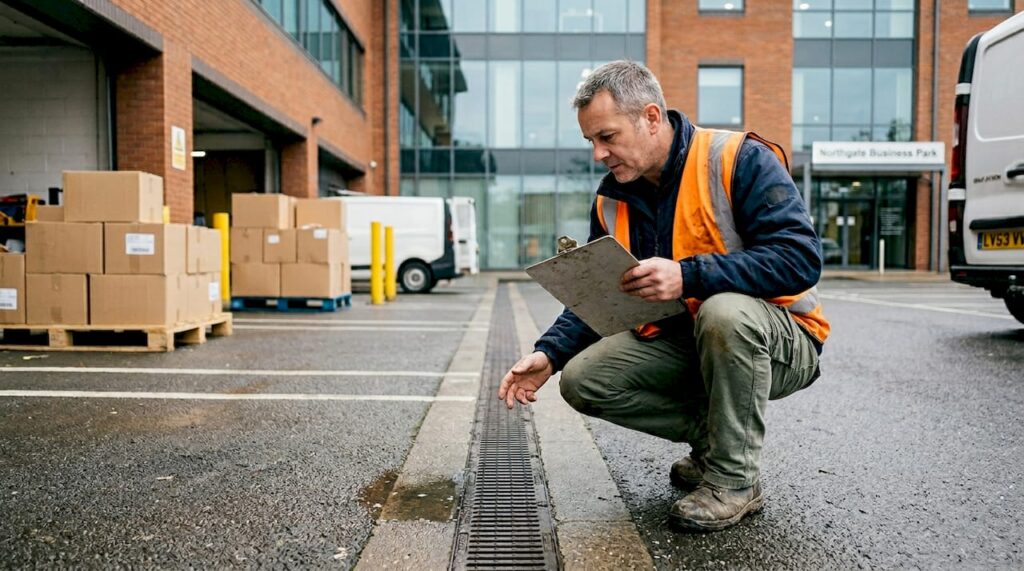
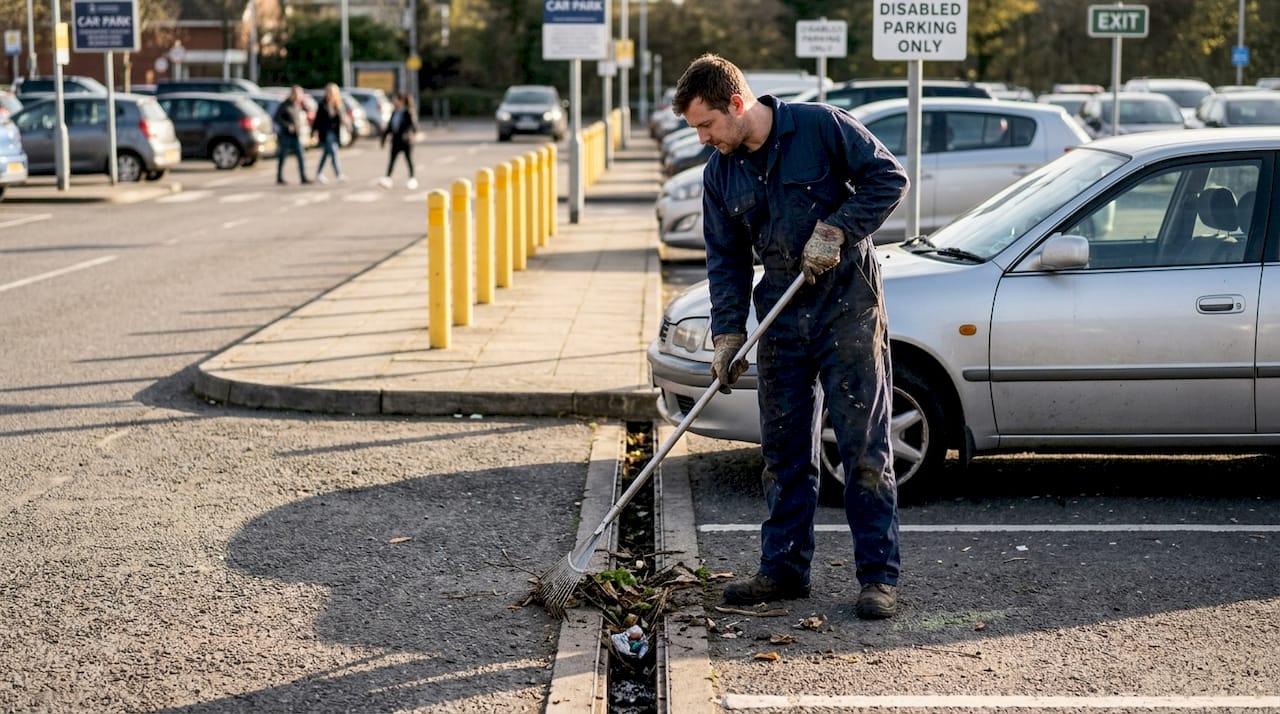
Trench drains excel at managing surface water across large paved areas like car parks, loading bays, and pedestrian zones. These linear drainage channels collect water along their entire length, preventing pooling and slip hazards. Modular construction allows customisation to match site dimensions and load requirements. Stainless steel or polymer concrete options resist chemical damage and heavy vehicle traffic. Trench drains integrate seamlessly with underground pipe networks.
Soakaways provide sustainable drainage by allowing surface water to percolate naturally into surrounding soil. These underground structures suit properties with adequate garden space and permeable soil conditions. Soakaways reduce strain on public sewer systems and support environmental compliance. However, clay soils or high water tables may render soakaways ineffective, requiring alternative solutions like storage tanks or controlled discharge systems.
Land drains address subsurface water problems that cause damp foundations and structural instability. Perforated pipes laid in gravel-filled trenches intercept groundwater before it reaches buildings. Agricultural land drains use similar principles on larger scales to manage field drainage. These systems protect foundations in areas with high water tables or poor natural drainage.
| Solution type | Typical cost range | Installation time | Maintenance frequency | Best suited for |
|---|---|---|---|---|
| Traditional pipe system | £3,000-£15,000 | 1-3 weeks | Annual inspection | All commercial buildings |
| Trench drains | £150-£400 per metre | 3-7 days | Quarterly cleaning | Car parks, loading areas |
| Soakaways | £2,000-£8,000 | 3-5 days | Minimal if designed correctly | Properties with permeable soil |
| Land drains | £50-£150 per metre | 1-2 weeks | Every 3-5 years | Sites with groundwater issues |
Selecting drainage solutions depends on property layout, budget, usage, and regulatory compliance. Several factors influence your decision:
- Building footprint and roof area determine water volumes your system must handle
- Site topography affects drainage routes and whether pumping stations are necessary
- Soil permeability dictates whether soakaways are viable or alternative discharge methods are required
- Local authority requirements specify connection points, discharge rates, and environmental protections
- Budget constraints balance initial installation costs against long-term maintenance expenses
- Future expansion plans may require oversized infrastructure or modular systems
Commercial properties benefit from hybrid approaches combining multiple drainage types. A typical office building might use traditional pipe systems for internal wastewater, trench drains around entrances, and soakaways for roof water. This layered strategy optimises each system’s strengths whilst providing redundancy if one component fails.
Pro tip: Future-proofing your drainage infrastructure saves money over your building’s lifecycle. Specify slightly oversized pipes and channels to accommodate increased capacity from building extensions or intensified use. Choose materials with proven 50-year lifespans rather than cheaper alternatives requiring replacement within 20 years. Consider drainage installation UK essentials that emphasise quality over short-term savings. Scalable, low-maintenance solutions deliver better returns despite higher upfront costs.
Maintenance and emergency repair essentials for commercial drainage
Proactive maintenance prevents the majority of drainage failures whilst significantly reducing repair costs. Neglected systems deteriorate gradually until catastrophic blockages or structural failures force expensive emergency interventions. Establishing systematic maintenance routines protects your property and maintains operational continuity.
Follow these essential maintenance steps to keep your commercial drainage functioning reliably:
- Schedule quarterly visual inspections of all accessible drainage components including gullies, inspection chambers, and surface drains
- Arrange annual professional cleaning using high-pressure water jetting to remove accumulated debris, grease, and mineral deposits
- Commission biennial CCTV drain surveys to identify developing problems like root intrusion, pipe displacement, or internal corrosion
- Maintain detailed records of all inspections, cleaning sessions, and repairs to track system condition over time
- Clear gutters and downpipes seasonally, particularly after autumn leaf fall and before winter storms
- Test drainage flow rates after heavy rainfall to confirm adequate capacity and identify slow-draining areas
- Establish emergency contact protocols with trusted drainage contractors for rapid response outside normal hours
Regular maintenance and CCTV surveys significantly reduce drainage failure risks in commercial buildings. These preventive measures identify issues whilst they remain minor and inexpensive to rectify. Tree root intrusion detected early requires simple cutting and chemical treatment. Left unaddressed, roots fracture pipes necessitating excavation and replacement costing thousands.
Common drainage failures stem from predictable causes that maintenance directly addresses. Grease accumulation from kitchen operations gradually narrows pipes until complete blockage occurs. Scale buildup in hard water areas restricts flow and creates rough surfaces where debris catches. Ground movement from subsidence or heavy vehicle traffic displaces pipe joints, creating leaks and allowing soil infiltration. Maintenance programmes target these specific risks through appropriate cleaning methods and timely repairs.
Recognise these emergency warning signs demanding immediate professional attention:
- Multiple fixtures backing up simultaneously indicates main drain blockage
- Foul odours from drains suggest trapped waste or ventilation problems
- Visible flooding around buildings or in car parks signals overwhelmed or failed drainage
- Gurgling sounds when water drains point to partial blockages or ventilation issues
- Slow drainage across multiple areas reveals developing capacity problems
- Damp patches on walls or floors near drainage routes indicate leaks
Emergency drain repairs minimise business downtime and extensive property damage. Rapid response prevents minor problems escalating into major incidents. A blocked drain cleared within hours avoids flooding that damages stock, disrupts operations, and requires expensive cleanup. Delayed action transforms manageable repairs into insurance claims and potential business interruption.
| Maintenance approach | Average annual cost | Typical repair frequency | Total 5-year cost | Business disruption |
|---|---|---|---|---|
| Planned maintenance programme | £800-£1,500 | Once every 3-4 years | £5,000-£9,000 | Minimal, scheduled |
| Reactive emergency repairs only | £0 preventive | 2-3 times per year | £12,000-£20,000 | Significant, unplanned |
The data clearly demonstrates that planned maintenance delivers substantial savings whilst avoiding the operational chaos of emergency failures. Properties following structured maintenance schedules experience 60-70% fewer emergency callouts and half the total drainage expenditure over five years compared to reactive approaches.
Pro tip: Establishing a relationship with a trusted drainage contractor before emergencies occur ensures rapid response when problems strike. Contractors familiar with your property’s drainage layout respond more efficiently, reducing downtime and repair costs. Many specialists offer maintenance contracts bundling regular inspections, cleaning, and priority emergency response at predictable annual rates. These agreements provide budget certainty whilst guaranteeing access to CCTV drain survey services and emergency repairs when needed.
Working with professional drainage contractors in southern UK
Selecting qualified drainage specialists ensures your commercial property receives compliant, reliable installations and repairs. The drainage sector includes capable professionals and unqualified operators. Knowing how to distinguish between them protects your investment and prevents substandard work that fails prematurely.
Evaluate potential commercial drainage contractors using these essential criteria:
- Valid public liability insurance covering minimum £5 million for commercial work protects you from liability if accidents occur
- Relevant trade certifications such as WRc approved contractor status or Construction Skills Certification Scheme cards demonstrate technical competence
- Proven experience with commercial projects similar in scale and complexity to yours indicates capability to handle your requirements
- Local knowledge of southern UK soil conditions, water tables, and council requirements ensures designs suit regional challenges
- Positive client reviews and verifiable references from other commercial property managers confirm reliability and quality
- Comprehensive written quotes detailing materials, labour, timescales, and guarantees prevent misunderstandings and hidden costs
- Emergency response capabilities including 24/7 availability and rapid callout times for urgent repairs
- Modern equipment including CCTV survey technology, high-pressure jetting, and no-dig repair methods
Professional drainage contractors follow systematic workflows that ensure successful outcomes. Initial site surveys assess existing infrastructure, identify problems, and establish capacity requirements. Detailed designs specify pipe routes, gradients, materials, and connection points complying with Building Regulations and water authority requirements. Installation proceeds methodically with regular quality checks and pressure testing before backfilling. Final documentation includes as-built drawings and operation manuals for future reference.
Partnering with expert contractors ensures compliance with UK regulations and high-quality drainage outcomes. Building Regulations Part H governs drainage design, specifying minimum pipe sizes, gradients, and ventilation requirements. Water companies impose additional standards for connections to public sewers. Environmental regulations restrict discharge rates and water quality. Qualified contractors navigate these requirements routinely, securing necessary approvals and avoiding costly compliance failures.
Southern UK specialists bring invaluable regional expertise to commercial drainage projects. They understand local soil conditions affecting soakaway viability and foundation protection. Familiarity with council planning departments and water authority procedures accelerates approvals. Knowledge of regional suppliers ensures prompt material availability and competitive pricing. These advantages translate into smoother projects, shorter timescales, and fewer unexpected complications.
Request detailed written quotes covering all project aspects before committing to contractors. Comprehensive quotes specify pipe materials and dimensions, excavation depths, reinstatement methods, and disposal of excavated material. Clear timescales outline project duration and any phasing required to minimise business disruption. Warranty terms should guarantee workmanship for minimum five years and materials for manufacturer-specified periods. Payment schedules tied to project milestones protect both parties and maintain cash flow.
Ask contractors about their approach to commercial drainage tips for southern UK properties during initial consultations. Their responses reveal technical knowledge and customer focus. Competent professionals discuss site-specific challenges proactively and propose solutions addressing your property’s unique requirements. They explain options clearly without jargon, helping you make informed decisions. This consultative approach indicates the partnership quality you can expect throughout your project.
Discover expert drainage services for your commercial property
Protecting your commercial property requires reliable drainage infrastructure and responsive maintenance support. Local Services Drainage specialises in comprehensive solutions tailored for commercial buildings across southern UK regions. Our team combines technical expertise with regional knowledge to deliver installations, maintenance programmes, and emergency repairs that keep your property operating smoothly.
We understand the unique pressures commercial property managers face. Drainage failures disrupt operations, damage property, and frustrate tenants. Our unblocking services provide rapid response when blockages threaten business continuity. Advanced CCTV drain surveys identify developing problems before they escalate into emergencies. Our structured approach to the commercial drain repair process minimises downtime whilst delivering lasting solutions.
Pro tip: Engaging drainage professionals early in your property planning prevents costly problems later. Whether you’re developing new facilities, refurbishing existing buildings, or simply seeking to improve maintenance practices, expert guidance ensures your drainage infrastructure serves your needs reliably for decades. Contact us to discuss how our commercial drainage services can protect your property investment.
FAQ
How often should commercial drainage systems be inspected and maintained?
Commercial properties benefit from quarterly visual inspections and annual professional cleaning using high-pressure jetting. Arrange CCTV surveys every two years to identify developing issues like root intrusion or pipe damage before they cause failures. High-use facilities such as restaurants or industrial sites may require more frequent attention due to grease buildup or process water contaminants.
What are the first actions to take if a drainage emergency occurs?
Immediately contact your drainage contractor for emergency response to prevent damage escalation. Stop using affected fixtures to avoid worsening blockages or flooding. Document the situation with photographs for insurance purposes if significant damage occurs. Move valuable equipment or stock away from affected areas whilst awaiting professional assistance.
Are CCTV drain surveys necessary for all commercial properties?
CCTV surveys provide invaluable diagnostic information for all commercial properties, particularly older buildings or those experiencing recurring drainage problems. These surveys identify blockages, structural damage, and root intrusion without excavation. Properties with complex drainage networks benefit significantly from periodic surveys that map infrastructure and establish baseline conditions. Review the commercial drainage checklist to determine survey frequency for your property type.
Can drainage system upgrades reduce long-term repair costs?
Modern drainage materials and designs significantly reduce maintenance requirements and extend system lifespan. Upgrading from clay to uPVC pipes eliminates root intrusion problems. Installing adequate access points simplifies future inspections and cleaning. Properly sized systems handle capacity demands without strain, preventing premature failures. Initial upgrade investments typically recover within five to seven years through reduced emergency repairs and maintenance costs.
How do I find a reliable commercial drainage contractor in the UK southern regions?
Seek contractors with WRc approved status, comprehensive insurance, and proven commercial project experience. Request references from similar properties and verify their credentials with trade associations. Local specialists familiar with southern UK soil conditions and council requirements deliver better outcomes than generalist contractors. Arrange consultations with multiple contractors to compare technical approaches, pricing, and customer service quality before making your selection.