TL;DR:
- Many old UK drainage systems are deteriorating, risking structural damage and health hazards.
- Modern solutions like SuDS, French drains, and no-dig relining offer effective, less disruptive upgrades.
- Upgrading drains increases property value, reduces insurance costs, and prevents costly emergency repairs.
Many southern UK homeowners quietly live above a ticking problem: drainage systems laid down over a century ago, never designed for today’s rainfall intensity or population density. These ageing pipes crack, collapse, and corrode while remaining entirely invisible beneath gardens and foundations. The consequences range from flooded living rooms to subsidence that quietly erodes your property’s structural integrity. Over 3 million properties in England face heightened flood risk, with southern counties particularly exposed due to impermeable urban surfaces and shifting climate patterns. This guide explains what is really happening beneath your feet, what modern solutions exist, and how to decide when a new installation is no longer optional.
Table of Contents
- The hidden risks of old drainage systems
- Modern drainage solutions: What are your options?
- Signs you need new drains: When is installation essential?
- Benefits beyond prevention: What new drains actually deliver
- Our perspective: Why proactive upgrades save money and stress
- Get expert help and peace of mind with your drainage
- frequently asked questions
Key Takeaways
| Point | Details |
|---|---|
| Old drains are high risk | Victorian systems often fail against modern rainfall and urban conditions, causing severe property damage. |
| Modern upgrades bring lasting value | SuDS and trenchless repairs minimise disruption and enhance flood prevention, compliance, and property value. |
| Early action saves money | Proactive CCTV surveys and timely replacement prevent costly emergencies and futureproof homes. |
| Expert help ensures compliance | Professional installation is vital for long-term safety, legal compliance, and environmental benefit. |
The hidden risks of old drainage systems
Most people only think about their drains when something goes visibly wrong. A blocked toilet, a puddle that will not drain, a smell from the garden. By that point, however, the damage is often already well underway. The real danger with old drainage infrastructure is how quietly it deteriorates.
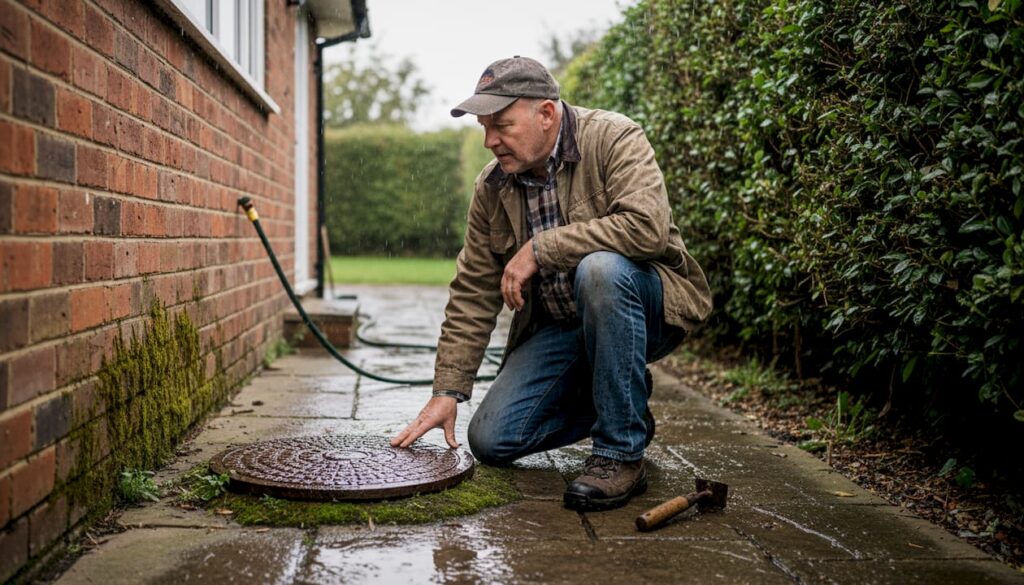
Victorian clay and pitch fibre pipes were never engineered to withstand the volume of water that modern rainfall events now deliver, nor the additional load from decades of extensions, driveways, and infill housing. Clay pipes crack under ground movement. Modern intense rainfall leads to flooding, structural damage, subsidence, and sewage backflow in systems that were simply never built to cope. The cracks let in tree roots, which then widen the fractures further. It becomes a slow spiral of deterioration.
Here are the most common hidden consequences of failing drainage:
- Foundation subsidence caused by soil erosion as water escapes through broken joints
- Internal damp and mould that develops when leaking pipes saturate adjacent walls
- Garden sinkholes forming above collapsed pipe runs
- Raw sewage backflow into ground-floor fixtures, posing serious health hazards
- Rising pest activity, including rats using fractured pipes as access routes into properties
Urbanisation compounds everything. As more land is covered by concrete and tarmac, natural ground absorption disappears. Surface water has nowhere to go except into drainage systems that are already struggling. Southern counties, with dense commuter towns, coastal developments, and clay-heavy soils, feel this acutely.
“The danger is not just the inconvenience of a blocked drain. It is the silent structural and health damage that accumulates over months or years before anyone notices.”
If you are unsure whether your current system is showing early warning signs, learning about identifying drainage issues can help you spot problems before they escalate into costly emergencies. Understanding the full reasons to upgrade drains gives you a clearer picture of why action sooner rather than later makes financial sense.
Modern drainage solutions: What are your options?
Given the dangers posed by old drains, what solutions can today’s homeowners rely on? The good news is that the drainage industry has changed significantly over the past two decades. You are no longer limited to digging up your entire garden and replacing pipes the old-fashioned way.
SuDS (sustainable drainage systems) are one of the most important innovations for southern UK properties. Rather than sending all surface water directly into an already-strained sewer network, SuDS slow water down and allow it to filter naturally through permeable surfaces, soakaways, or retention ponds. They improve both flood protection and water quality, and they are now a requirement in many new developments. For homeowners retrofitting older properties, SuDS can be introduced through permeable driveways, rain gardens, or below-ground attenuation tanks.
French drains offer a simpler solution for properties struggling with garden waterlogging or surface water ponding. A trench filled with gravel and a perforated pipe redirects water away from foundations and into a suitable outlet. They are cost-effective, low-maintenance, and surprisingly effective for properties on heavy clay soils.
No-dig trenchless technologies are perhaps the most practical advancement for existing homeowners. Rather than excavating your garden, trenchless relining inserts a resin-impregnated liner into the damaged pipe, which hardens to create a pipe within a pipe. Read about types of drainage systems to understand which approach suits your property layout.
| Solution | Best for | Key advantage | Key consideration |
|---|---|---|---|
| SuDS | Surface water and flood risk | Long-term resilience | May need space or planning approval |
| French drain | Garden waterlogging | Simple and affordable | Must have suitable outfall |
| No-dig relining | Failed existing pipes | No excavation required | Only for structurally intact pipes |
| Full pipe replacement | Major collapse or root damage | Complete fresh start | Higher cost, more disruption |
All installations must comply with Building Building regulations Part H, which governs gradients, pipe sizing, and connection points. Non-compliant work can affect insurance and property sales. You can explore examples of drainage solutions and a detailed surface water drainage guide for more context.
Pro tip: Always get a written confirmation that any new drainage installation complies with Building regulations before sign-off. This protects you if you sell the property and the buyer’s surveyor raises questions.
Signs you need new drains: When is installation essential?
Knowing modern alternatives is one thing, but how do you decide if your drains need replacing at all? Not every drainage problem demands a full new installation. Some issues genuinely are minor repairs. But there are clear indicators that patching up old pipes is throwing good money after bad.
Here are the key signs to take seriously, in order of urgency:
- Multiple blockages in under twelve months. One blockage might be a coincidence. A pattern is a system telling you something is structurally wrong.
- Raw sewage or foul water backing up into fixtures. This is both a health risk and evidence of significant pipe failure or capacity problems.
- Garden sinkholes or sudden ground settlement. These appear above collapsed pipe runs and can deepen very quickly.
- Foundation or interior wall cracks appearing without obvious cause. This can indicate subsidence driven by escaping drain water saturating the soil beneath your home.
- A persistent damp smell inside the house, even in dry weather. Underground leaks that are not visible can still affect air quality indoors.
- A surge in pest activity, particularly rats. They enter through fractured pipes and set up in wall cavities.
A professional preventing flood damage assessment can help quantify your actual risk level. But the single most useful diagnostic step is a drain inspection using a camera survey. A proactive survey and upgrade prevents escalating costs and health risks before they become crises.
Pro tip: If you are spending more than £300 per year on drain callouts and reactive repairs, that money is almost certainly better directed towards a properly specified new installation. Run the maths before your next emergency booking.
Benefits beyond prevention: What new drains actually deliver
So, what actual benefits can you expect after installing new drains? The obvious answer is fewer emergencies and less worry. But the genuine rewards go considerably further than that.
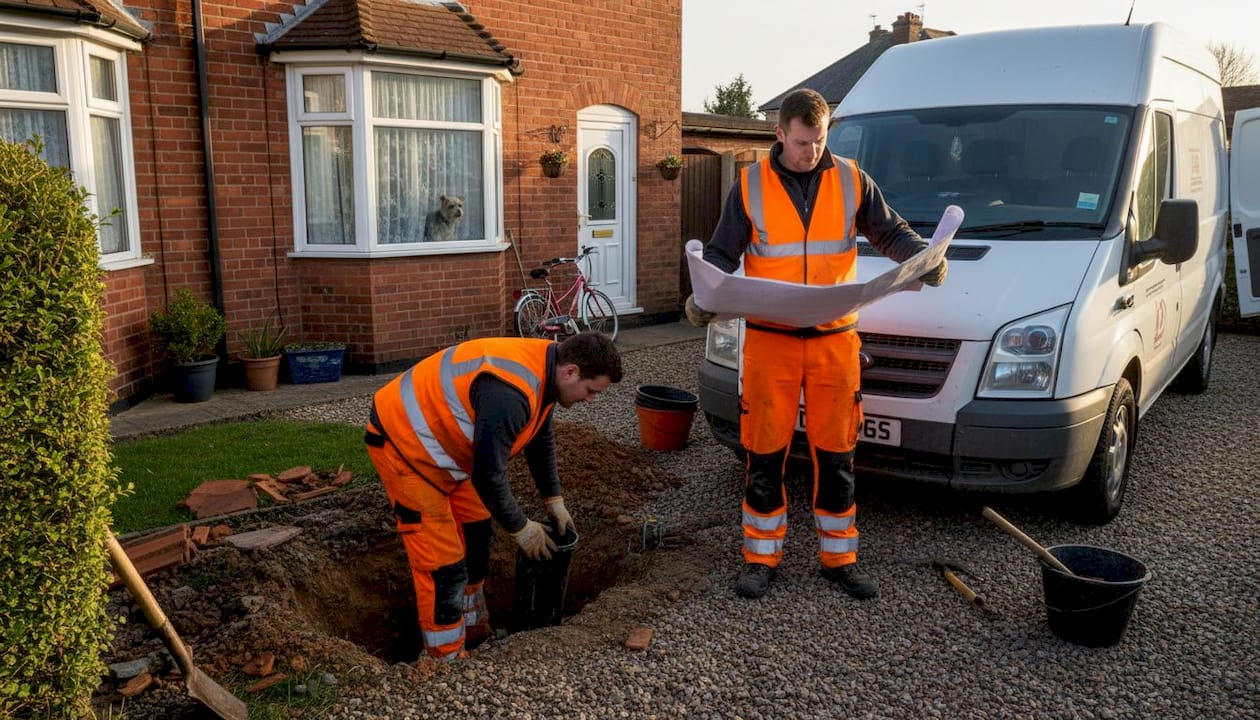
Property value is a significant factor. Estate agents increasingly report that buyers in flood-risk areas ask specific questions about drainage before making offers. A new, certified drainage system with a compliant installation record is a tangible selling point. New compliant drains boost property value and appeal to buyers seeking low-maintenance, flood-resistant homes.
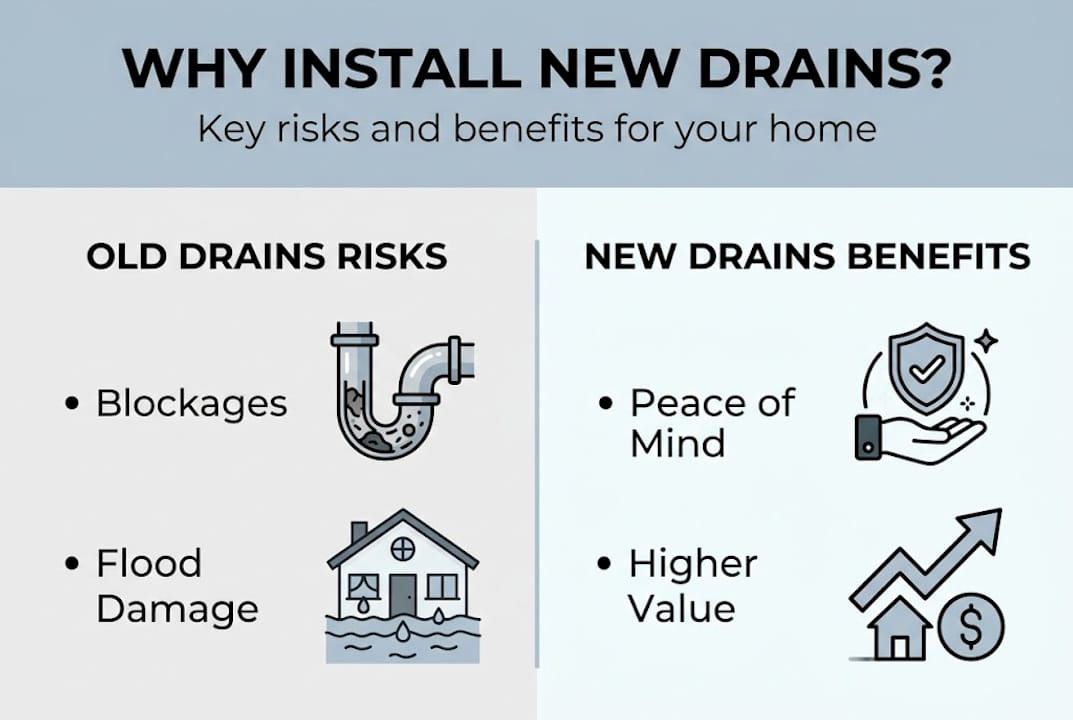
Insurance benefits are real. Properties with documented drainage upgrades can sometimes access lower flood insurance premiums or avoid being declined altogether. Given that over 3 million English properties face elevated flood risk, this matters enormously for southern UK homeowners.
Here is a summary of what a drainage upgrade typically delivers:
| Area of benefit | Before upgrade | After upgrade |
|---|---|---|
| Annual maintenance spend | High and unpredictable | Low and stable |
| Property insurance | Higher risk rating possible | Better standing with insurers |
| Property saleability | Can deter buyers | Strong positive signal |
| Environmental impact | High surface runoff risk | Better water management |
| Legal compliance | May be non-compliant | Building regulations aligned |
Additional advantages include:
- Lower environmental footprint through reduced surface water discharge into combined sewers
- Future-proofing against increasingly extreme southern UK weather events
- Peace of mind from knowing your system was designed for current conditions
Following best drainage practices after installation will extend the life of your new system considerably. If you manage a commercial property, commercial drainage tips offer further relevant guidance on maintaining larger and more complex systems.
Our perspective: Why proactive upgrades save money and stress
After working across drainage projects throughout the southern UK, we have seen one pattern repeat itself with almost predictable regularity. A homeowner notices a slow drain or a faint smell. They call someone out, get a quick fix, and move on. Six months later, a more serious problem surfaces. Then another. By the time a full drain replacement is unavoidable, they have spent considerably more on reactive callouts than a planned upgrade would ever have cost.
The evidence for proactive upgrades is clear, but the psychology of waiting is powerful. Nobody wants to spend money on something they cannot see or touch. But drainage is one of those rare categories where inaction is genuinely the expensive option. No-dig technologies have removed the biggest practical objection, which was disruption. Modern trenchless methods mean a planned upgrade rarely requires more than a day’s work in most residential situations.
Proactivity, not panic, is what separates homeowners who feel in control of their property from those constantly managing the next emergency. The stress of sewage backflow or a flooded hallway is rarely factored into the ‘wait and see’ calculation. It should be.
Get expert help and peace of mind with your drainage
If anything in this guide has made you think twice about your current drainage setup, you are not alone. Many southern UK homeowners only discover the true condition of their system when something goes wrong at the worst possible moment.

At Local Services, we offer reliable drain installation alongside professional inspection and surveys to give you a clear picture of what is actually happening underground. Where repairs are possible without digging, our no-dig relining service keeps disruption to a minimum. From first assessment through to long-term aftercare, our team works with southern UK homeowners to protect their property, their budget, and their peace of mind.
frequently asked questions
How do I know if my drains need replacing?
Persistent blockages, sewage smells, garden sinkholes, or repeated callouts all suggest your system needs more than a patch repair. A camera survey confirms the true extent of the problem and prevents escalating costs and health risks.
Are modern drainage installations disruptive?
Not necessarily. No-dig trenchless relining eliminates the need for major excavation in most cases, meaning your garden and daily routine are largely unaffected during the work.
Is it worth replacing drains for environmental reasons?
Absolutely. SuDS and modern systems reduce surface water runoff, limiting pollution entering waterways and cutting the risk of urban flooding that affects your neighbours as well as your own property.
Do new drains add value to my property?
Yes. New, compliant drainage installations are a genuine selling point. They reassure buyers and surveyors, and they can improve your standing with flood insurers, particularly in higher-risk southern UK locations.